Pressing Olives

The Olive season crept up on me this year. Was it really one year ago that I was up the ladder in the Olive tree?

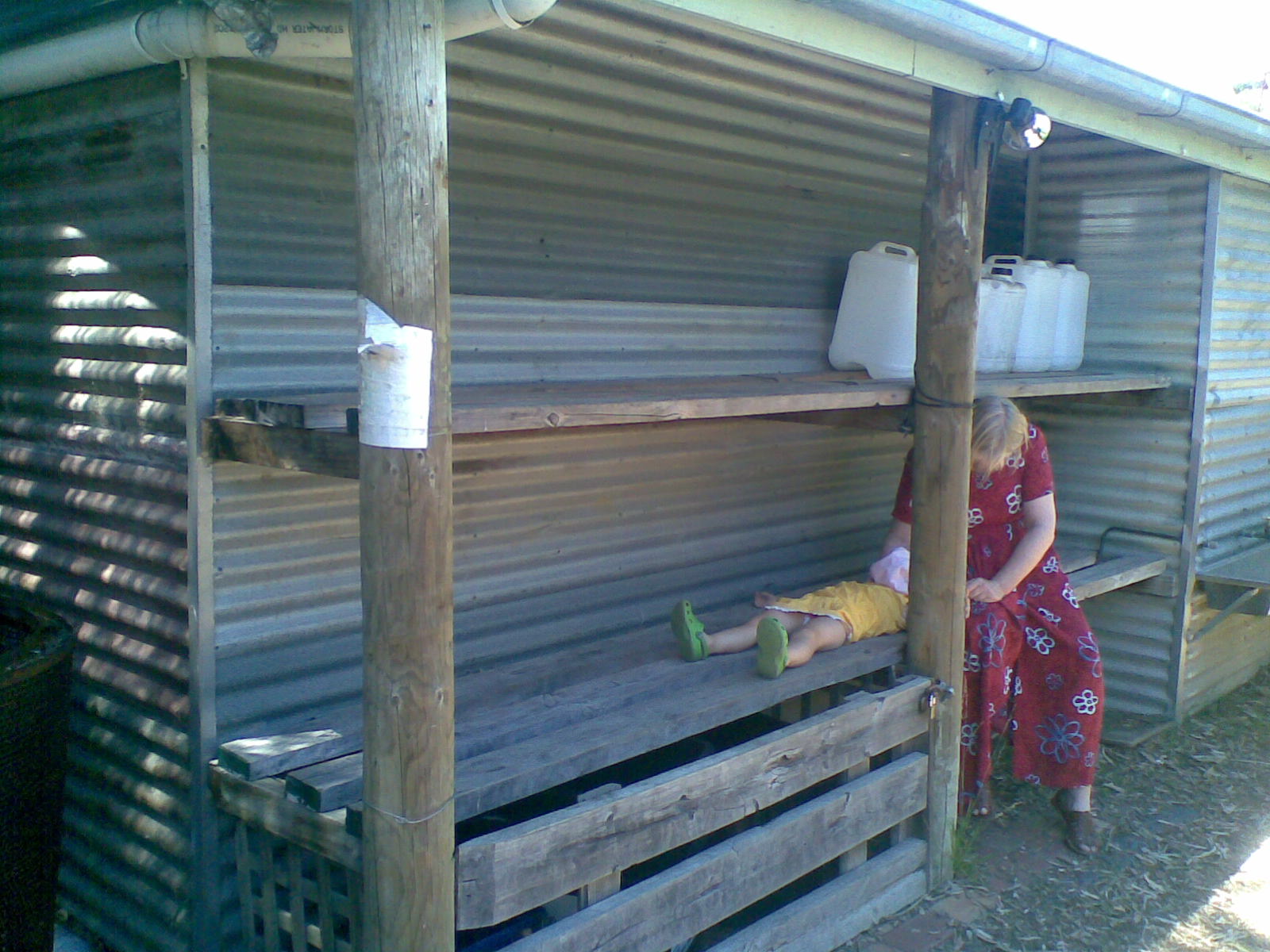
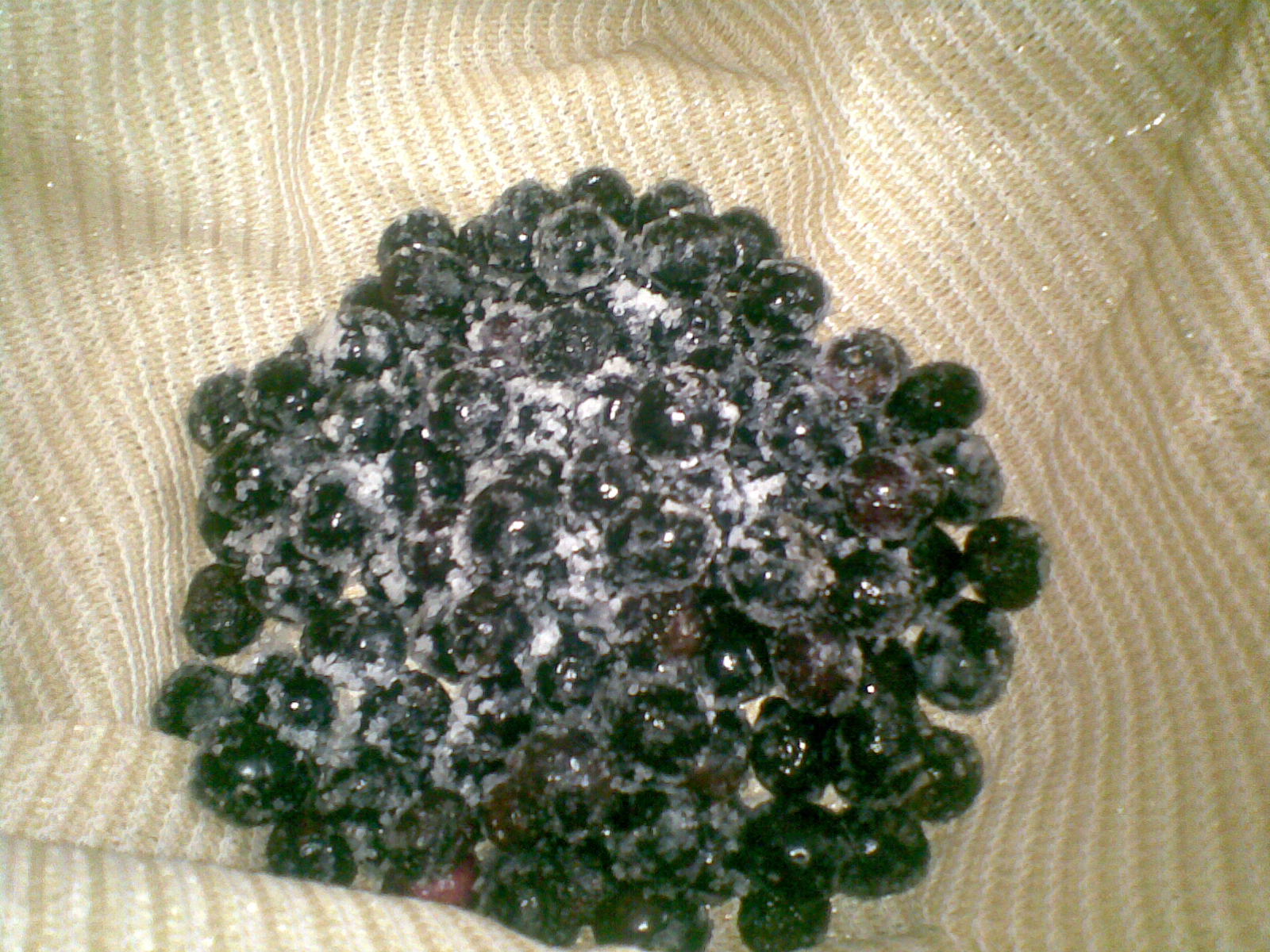
This year – Mimi found an article in Vasili’s Good Gardening for Pressing Olives and this is the method I’m working on (See Good Gardening Magazine p. 75). It is incredibly simple – just cover your Olives in Sea Salt – wrap them in mesh (hessian or shad cloth) place over a rack for drainage and put a weight on top to encourage pressing. Leave for 2 weeks – opening up the cloth and checking that all olives are covered in salt ever 2nd days or so. How easy is that? Then wash and bottle the olives in olive oil with herbs (optional).

Lucky for me I had Mama Longo drop in last week and look over my work… “Too much salt – too much salt” and also she advised that my shade cloth was too tightly woven 😦 The juice has been draining, so I am going to stick with the shade cloth I bought – but will keep her advice in mind for next year.

The good part about pressing is its quick! Just 2 weeks.

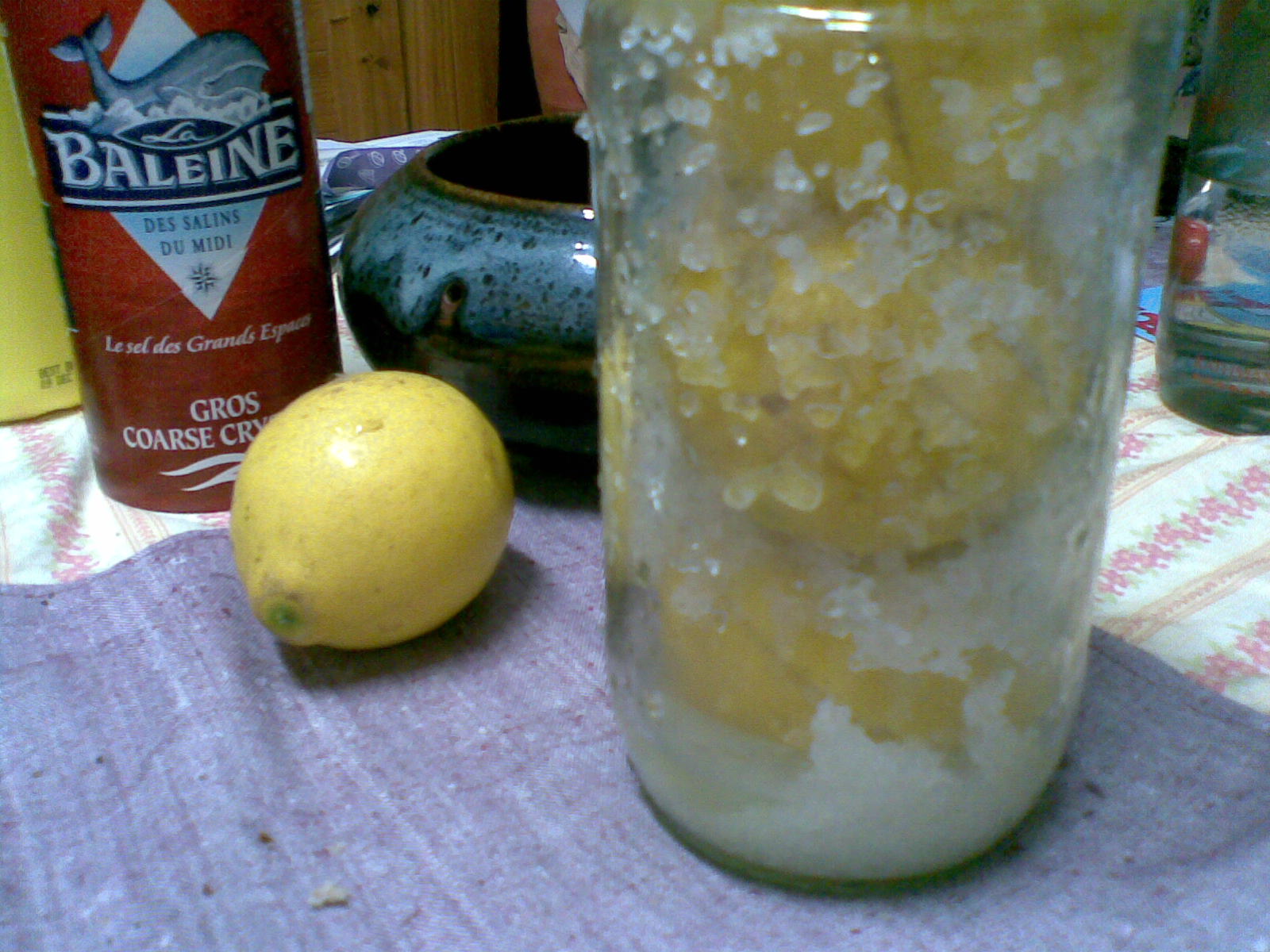
Tis the season to be preserving and speaking with a friend at work – who surprises me each week with another preserving tip – lemons are dead easy to preserve. Here is the photo of my first attempt at preserving lemons. They will last years and are packed with punch for stews, curries even salads. This photo was taken on night 1 – the juices have all now released and you can top up the jar with more lemon juice to cover all the fruit if yours hasn’t filled completely. He also suggests leaving preserving bottle outside – the warmth of the sun helps to speed up the process – although its been soo cold lately I don’t know if its better out or in – but it may be the actual rays of the sun that are working in the process. Will continue to experiment and learn. (For instruction for lemons please see http://www.miyoga.com.au Newsletter #4).

Next? I have some chilli’s that may find themselves bottled up soon.

Inspirational Edible Garden

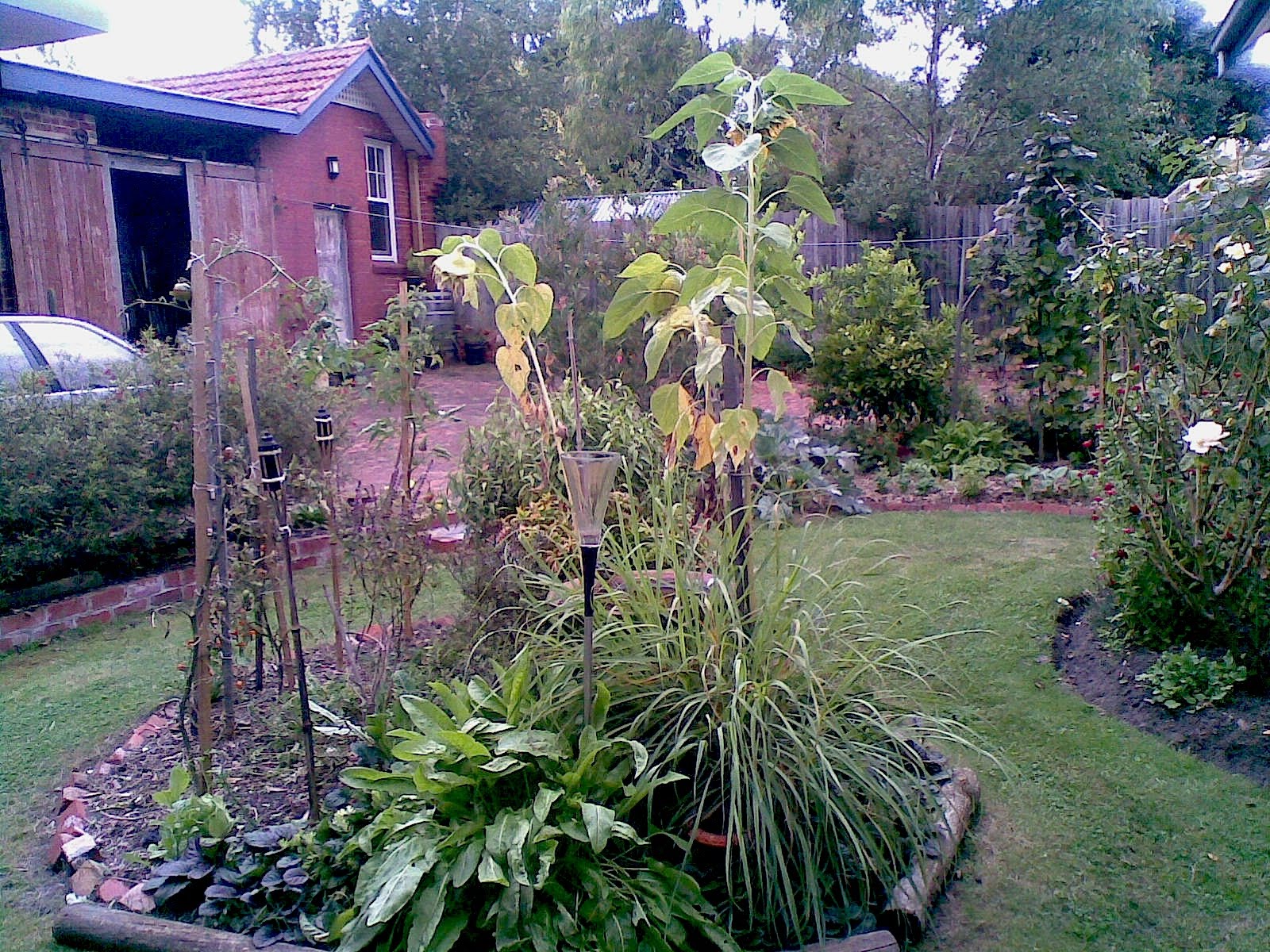
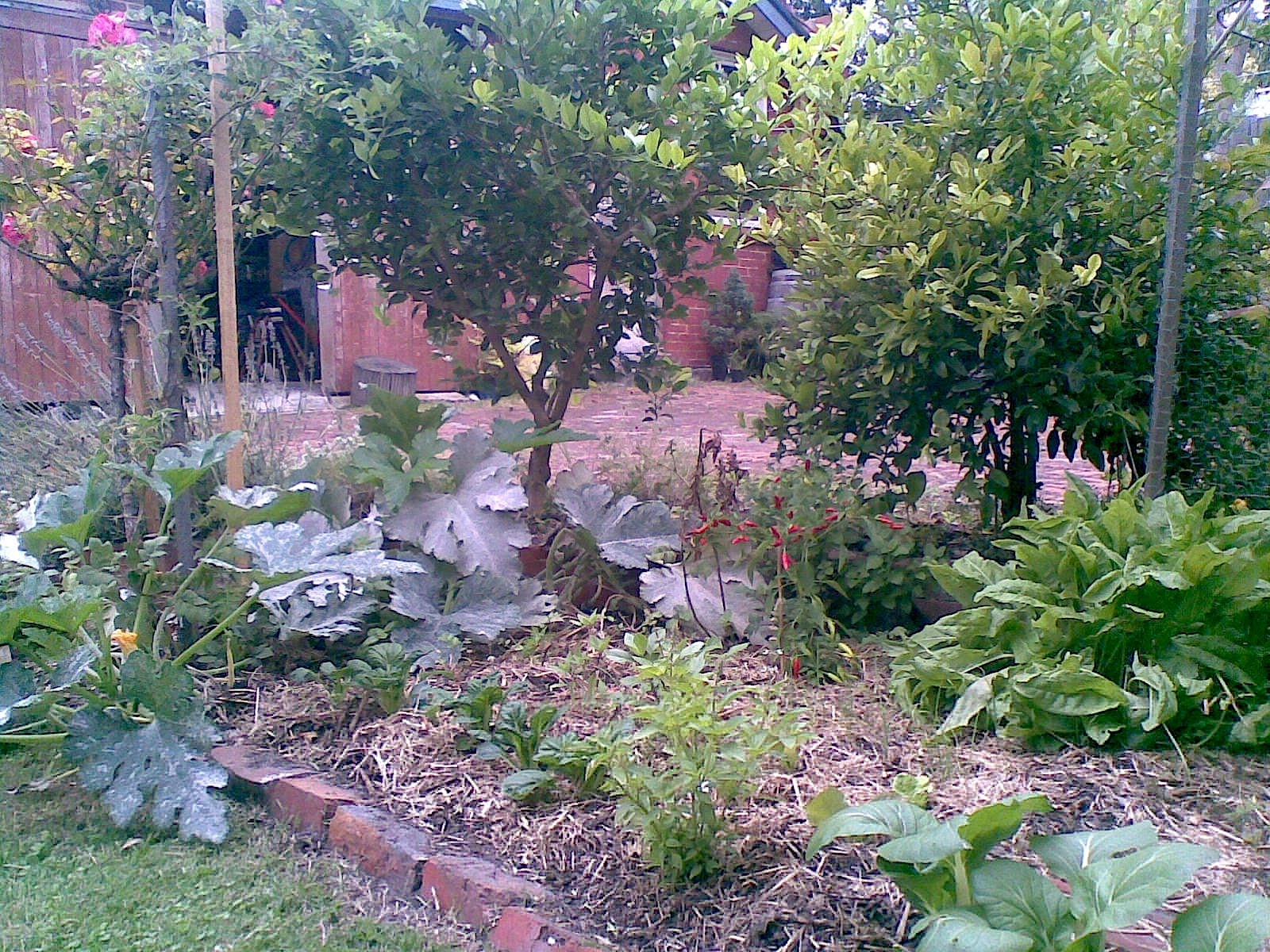
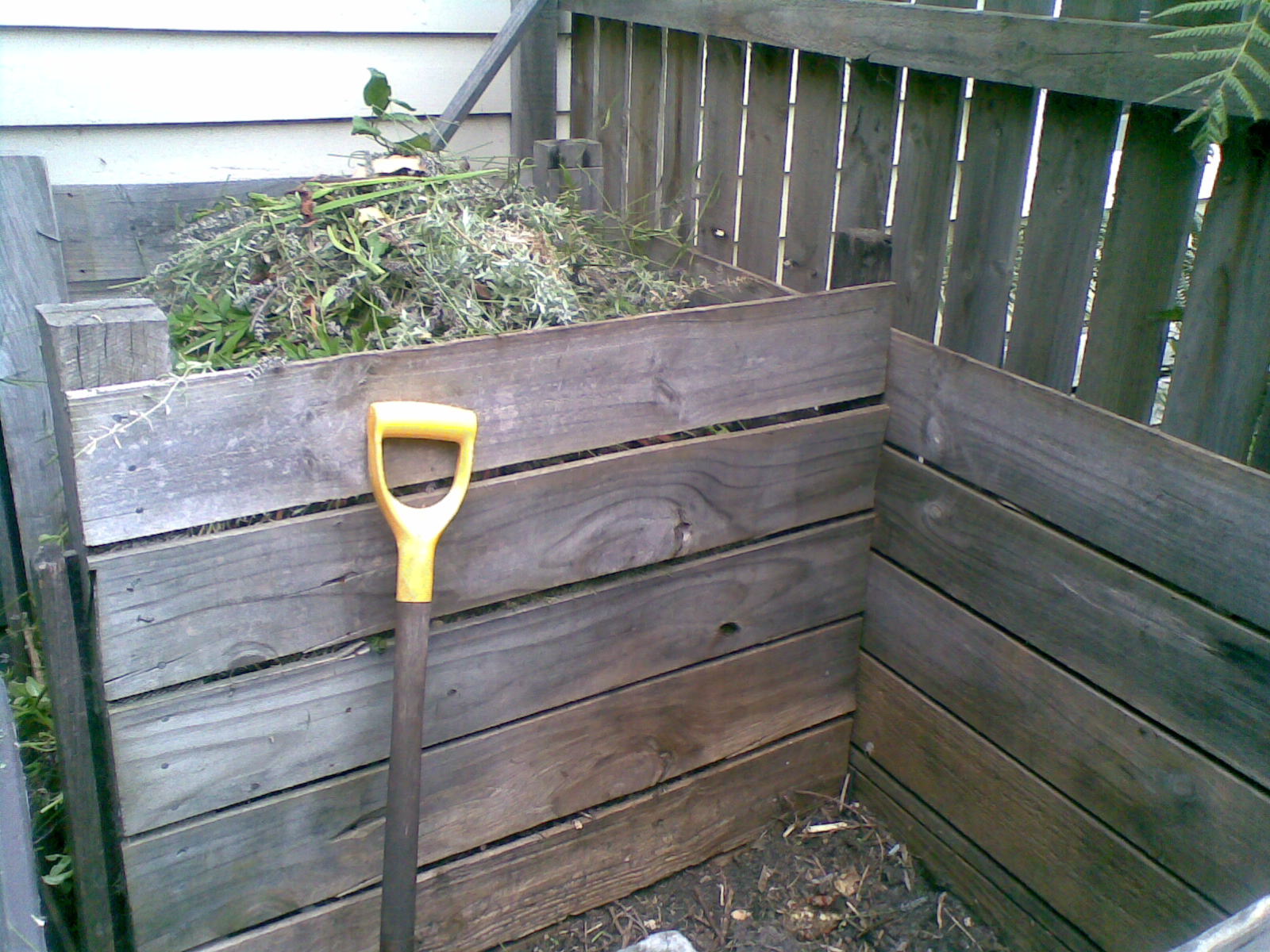
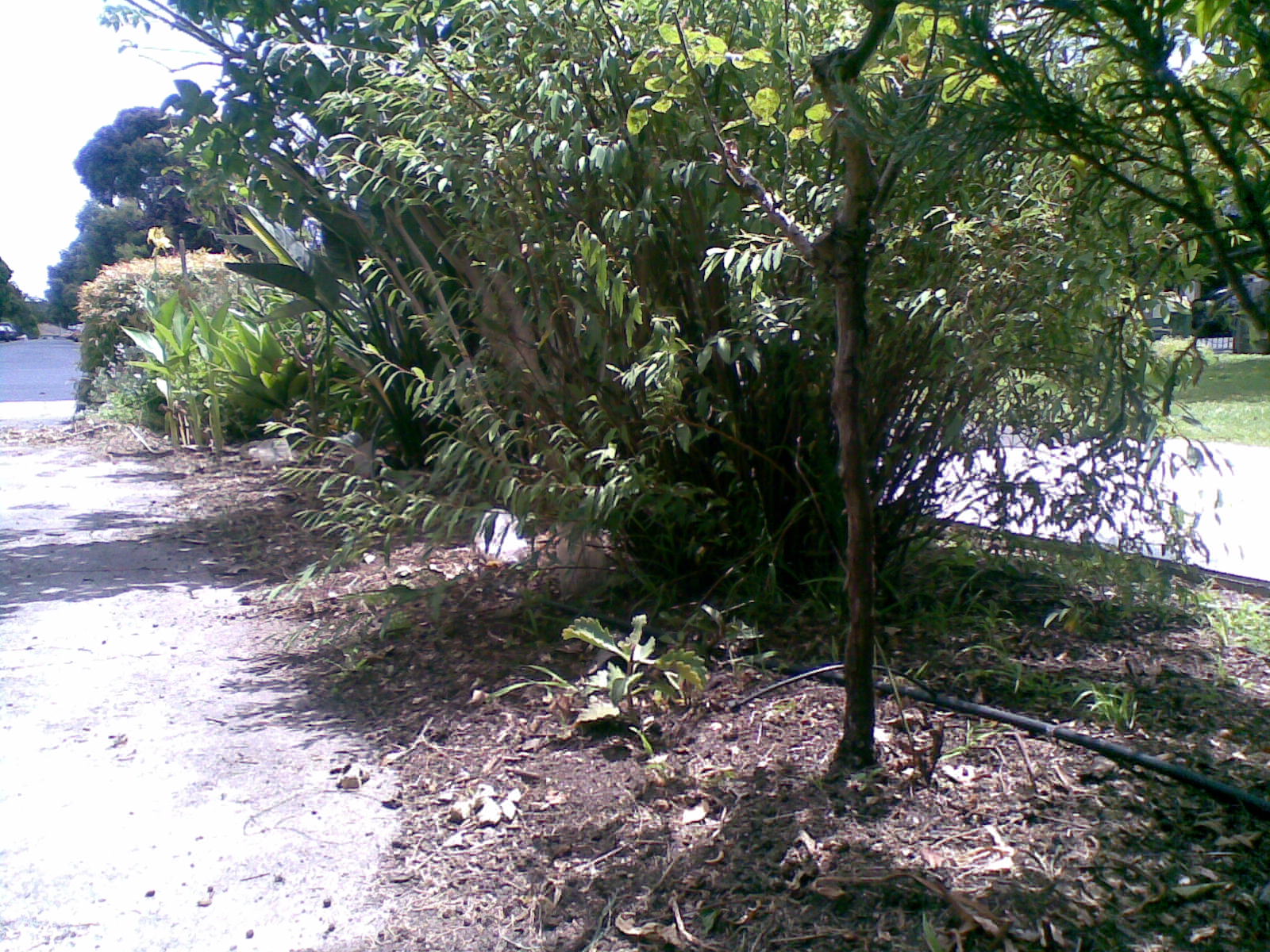
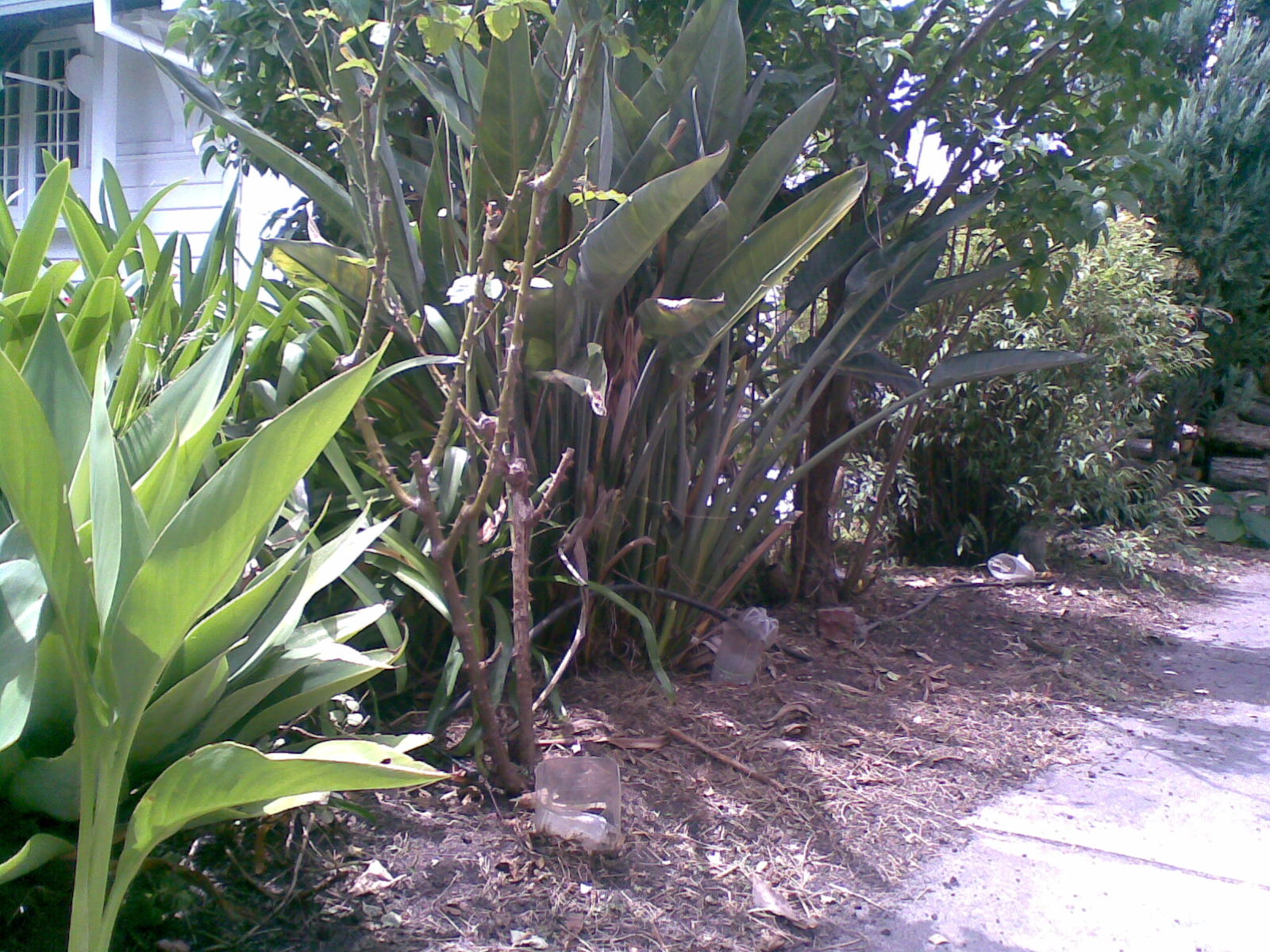
I had the pleasure of working on a wonderful example of interplanting edibles with non edibles on this largely native garden. It reminded me that veggie gardens don’t have to stand alone – but can enhance the trees / shrubs already in place. I think this is the feel that the Spiral Bed really needs. The pathway in the front native garden demonstrates how you can make the most out of the space you have. By dividing it in two by a narrow path you can walk within the garden and appreciate from within – rather than simply looking from a frontal perspective. The compost bins are also a feature which I would like to replicate with a huge pile wood down the side that needs a use. This property which was once a Dairy is an absolute pocket of country living in Melbourne. Again it reminds me that you don’t need the hobby farm – just start now where ever you are!!

Mama Longos Garden

For several years we have received beans at the Yoga Centre.

Just writing this evokes images of Giants and Bean Stalks!!

Well the origin of our Beans is just as magical as the tale goes … Mama Longo!

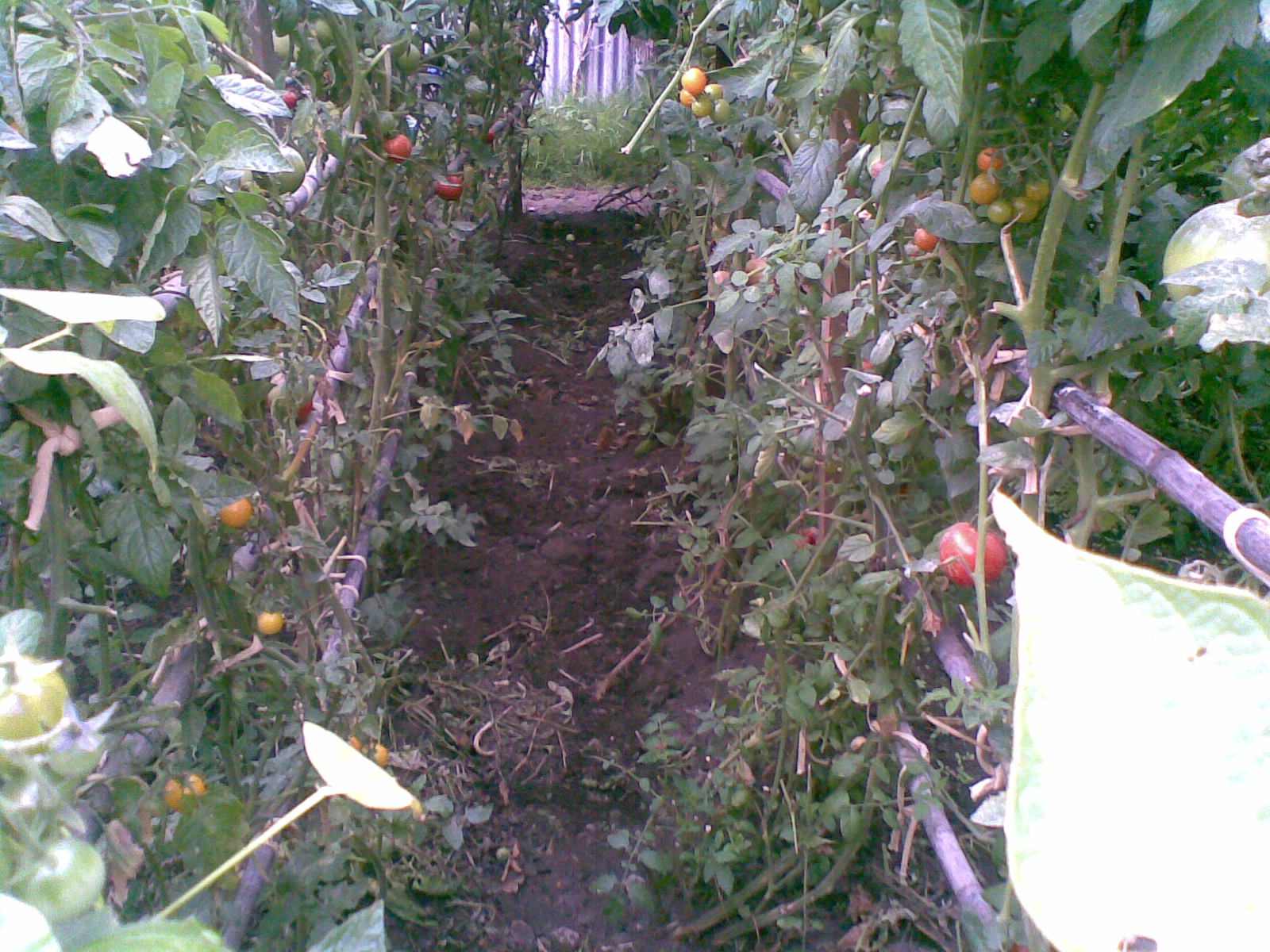
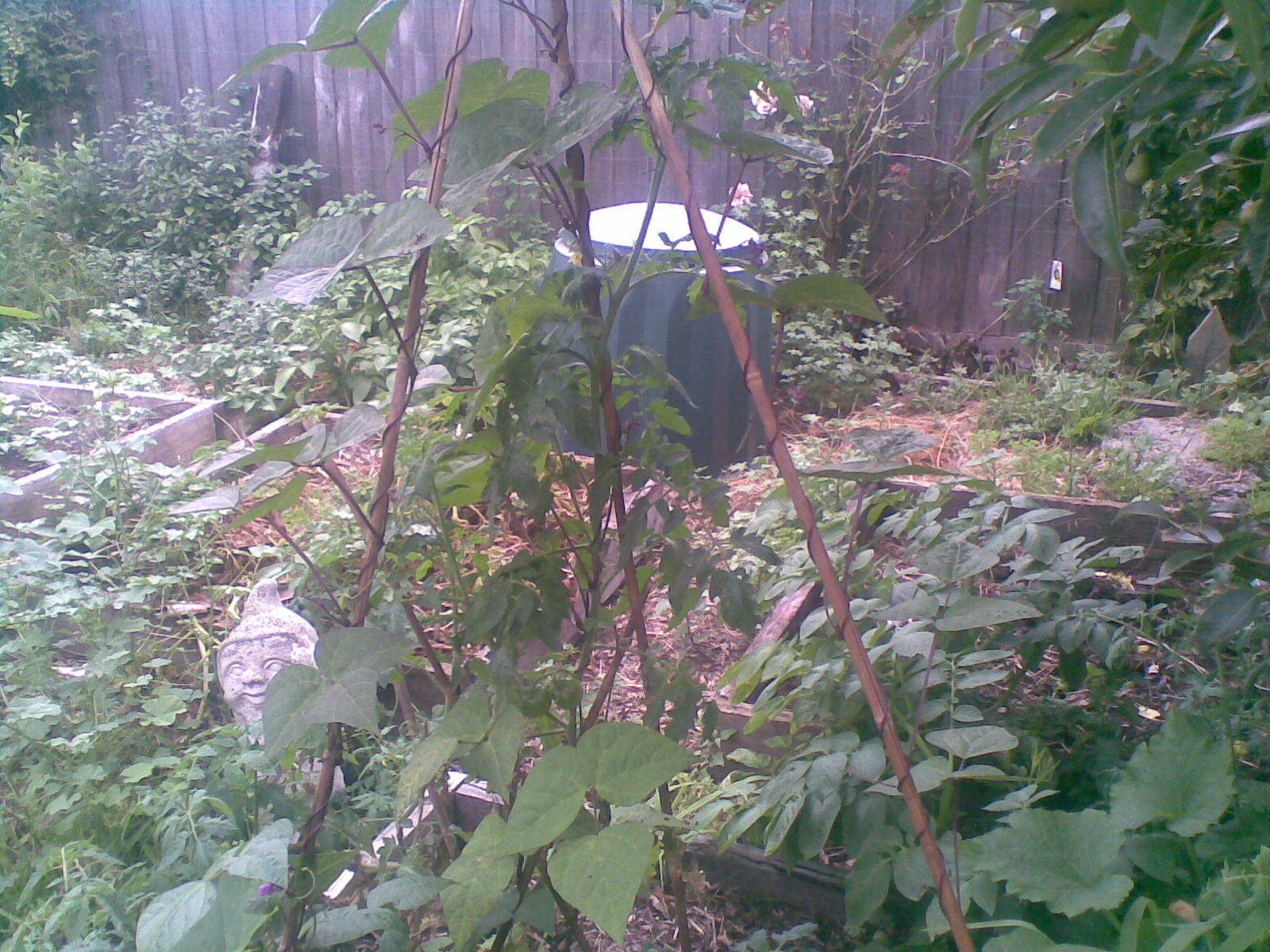
Joe’s mum has grown these beans for many years and this weekend I was very lucky to visit her home and see the bounty of beans and tomatoes among many other goodies in her garden.

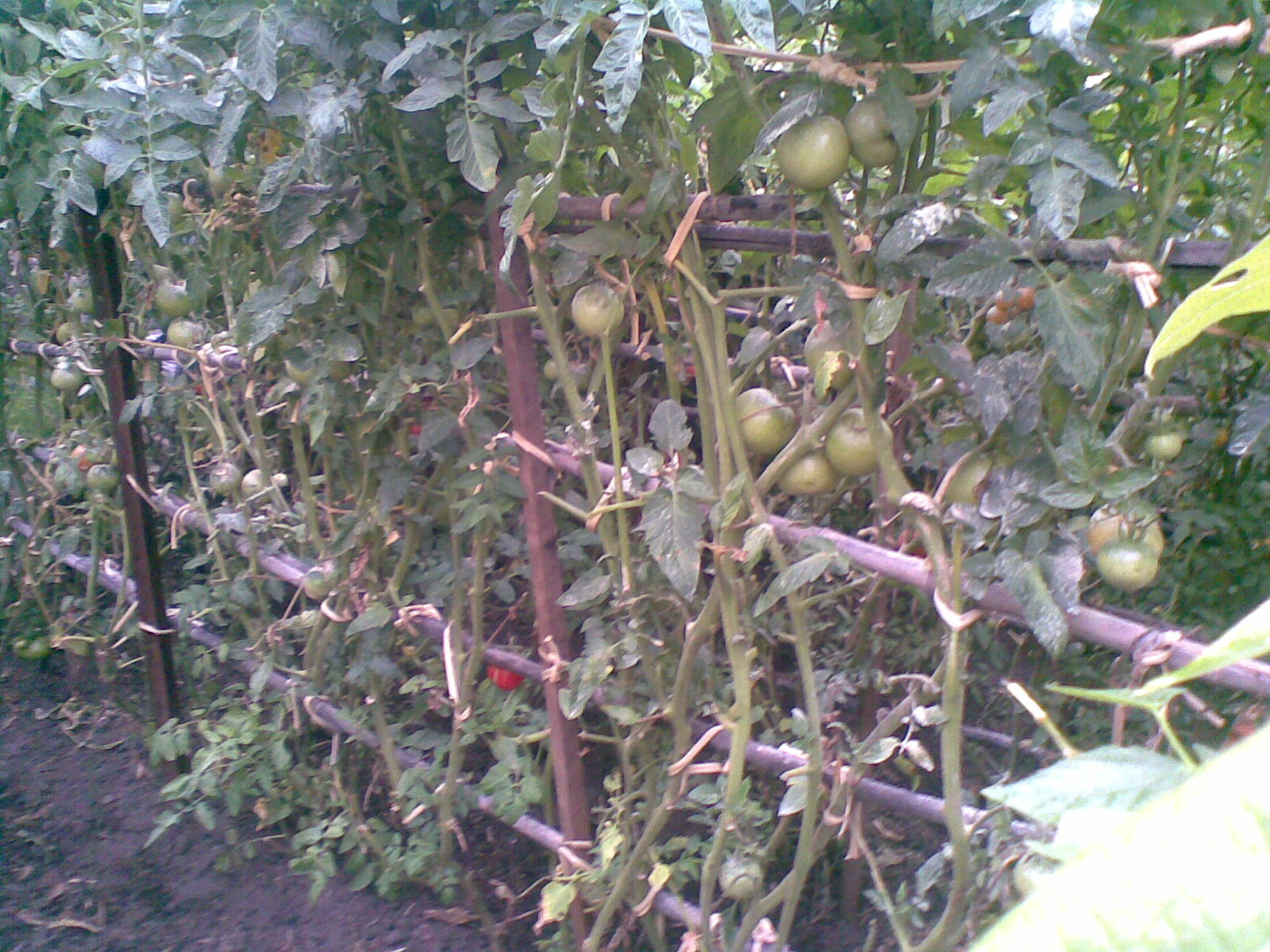
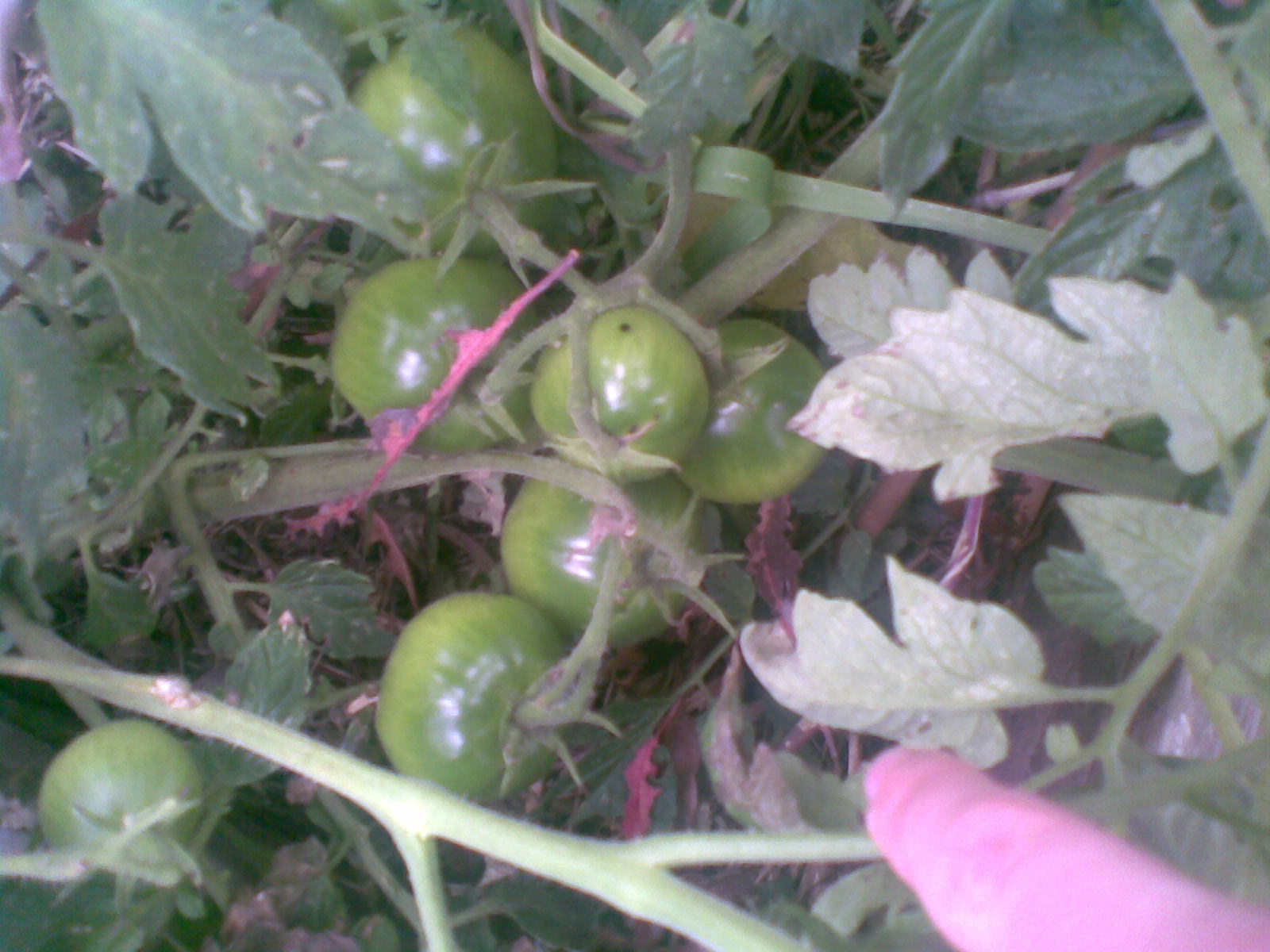
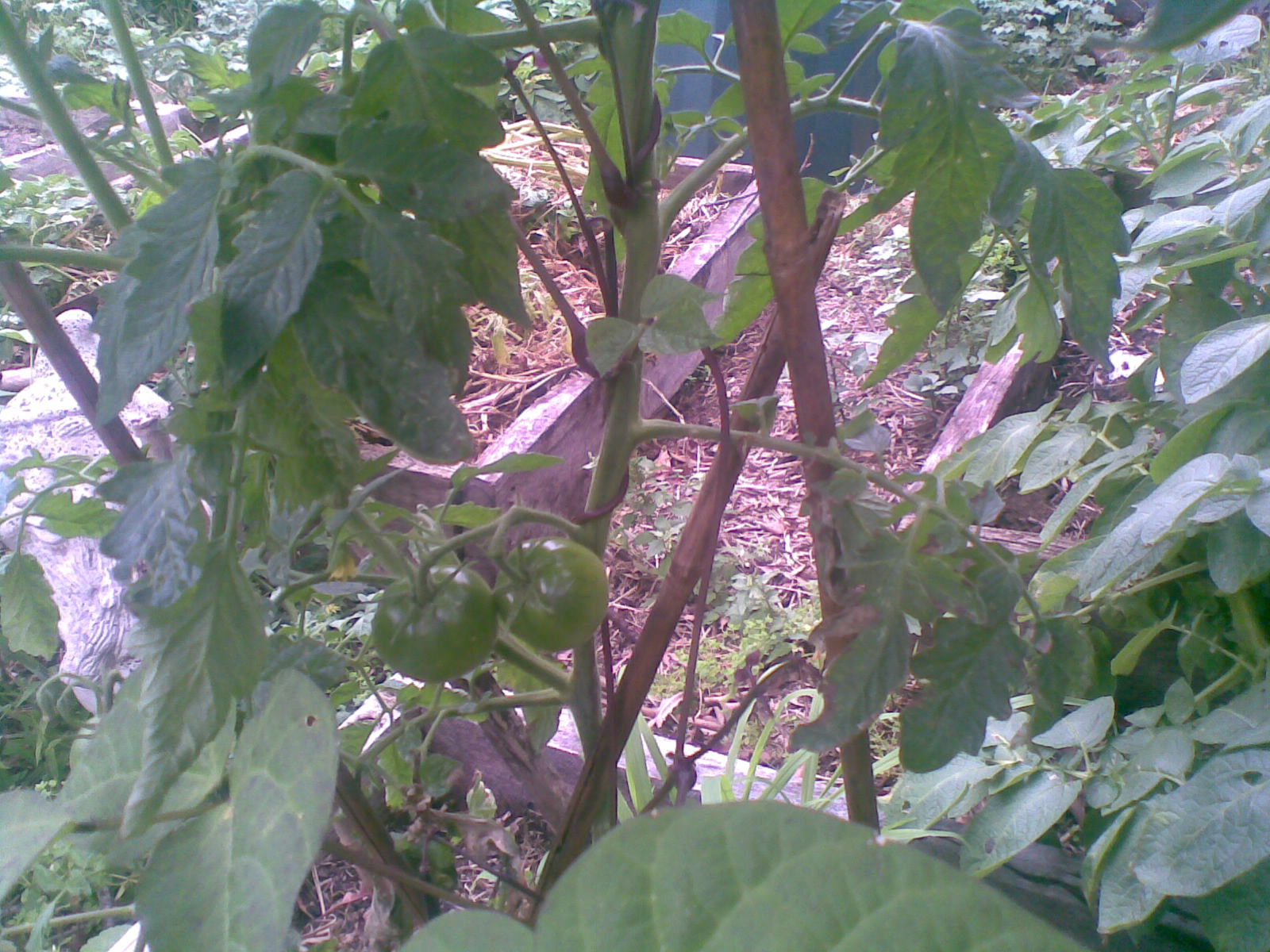
What struck me first was the structure of the tomatoe patch. Unlike my tomatoes which have sprawled from one end of the front garden the the next … Mama Longo has ditched several rows of tomatoes of various varieties along a very practical trellace. This means that watering is well served by the ditch.

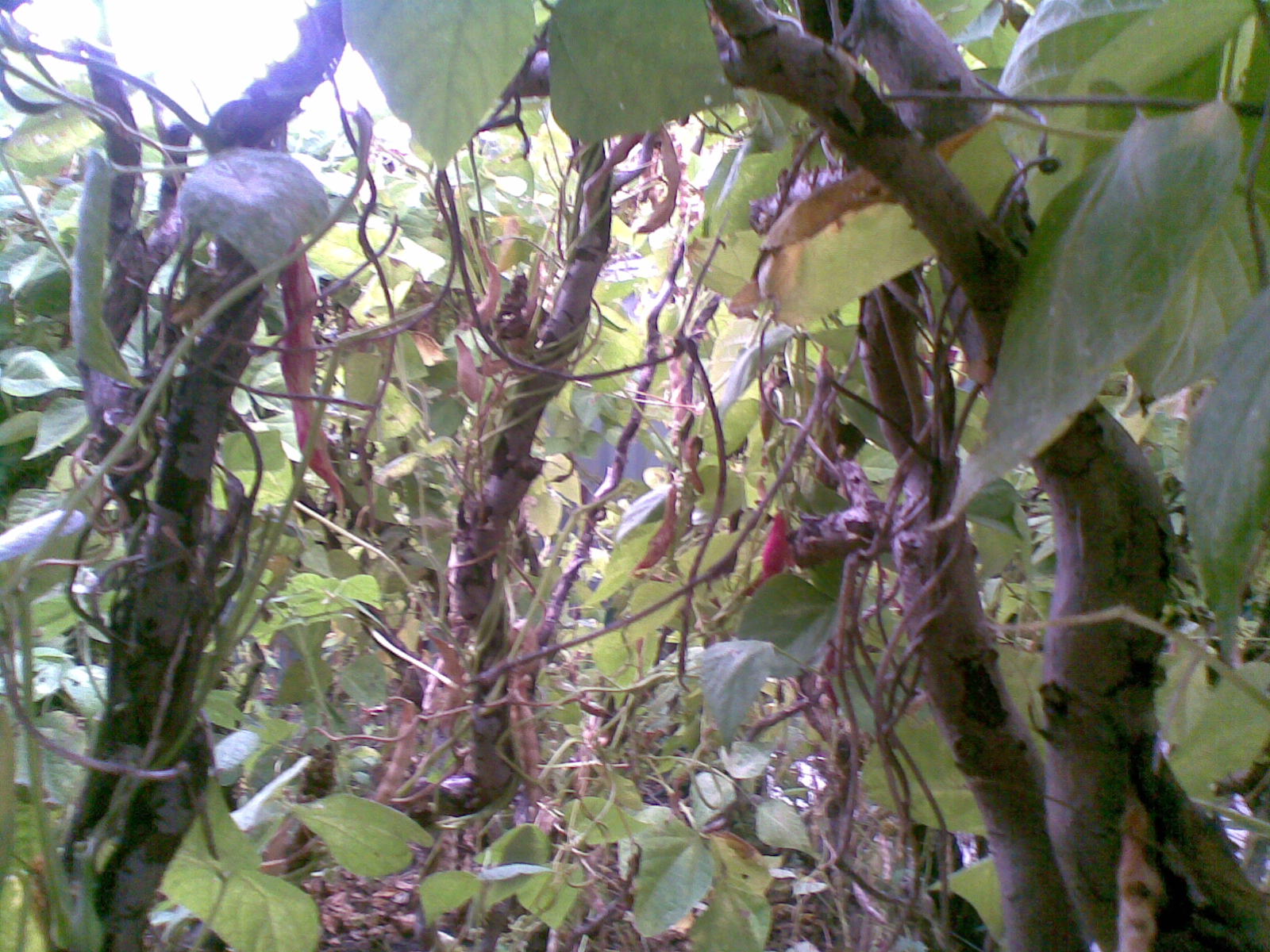
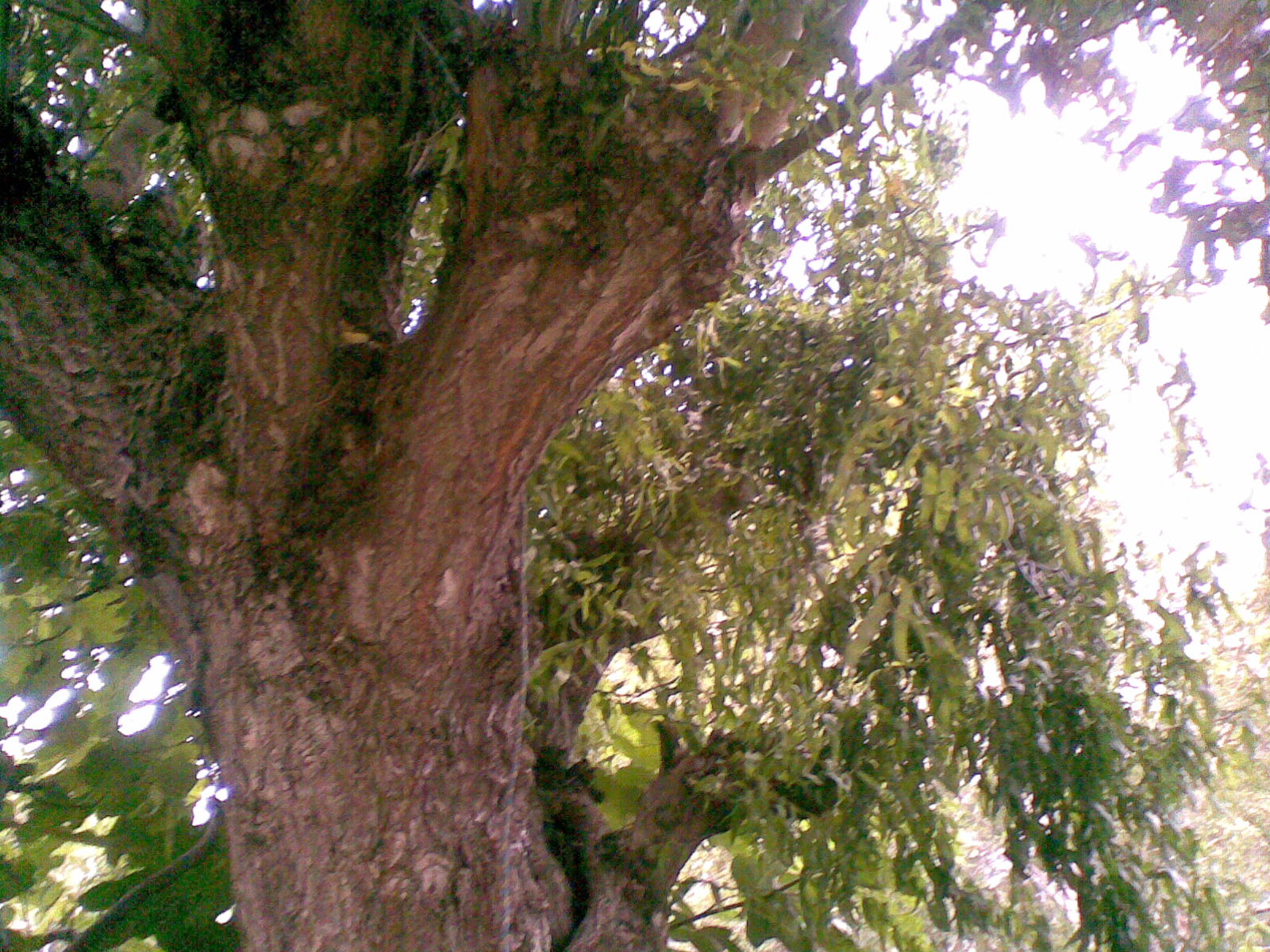
However my favourite aspect of the garden was the use of twisted Willow branches to provide a structure for the climbing beans. The branches were Cut from the Longo’s very own Willow (jelous … you bet I was!).

Thank you Mama Longo for the beans and also the inspiration. This is a true Oasis in the North of Melbourne.

Borage And Bees

Borage
Borago officinalis
Fam: Boraginaceae

Well as Summer draws to an end – the fruiting season may be over – but the Autumn Harvest is just beginning!!!

First crop of the season … Borage Seedlings. We had two Borage Plants which have sprung a family of seedlings in the Buffalo grass – so before I give the lawn a hair cut on the weekend I am planning to pot these little ones up.

The blue flowers of Borage is a great plant to attract Bees into your garden.

I was recently listening to Radio National and heard about the Government’s decision to turn a blind eye to the Asia Honey Bee invasion in the wake of the summer of natural disasters. The Asian Honey bee is reported to colonize at extremely fast rates and is an aggressive stinging bee. With our native honey bee already competeing with the European Wasp this is a real dilemma.

Borage also has a number of therputic qualities – it is associated with courage.

‘A Borage brew would eliminate a person’s sadness and make the person glad to be alive'(Pliny) and is also known as the herb of Gladness.

To relieve grief try a Bath Tea Bag of borage and Thyme.

Borage leaves can be added to Salads – giving a cucumber flavour – however as they are rather hairy leaves chop or blanch the leaves first.

The Blue Flowers are also edible

Borage is a companion plant for Tomatoes (prevents Tomatoe Worm) and Strawberries.

So a good Summer veggie bed may look like –
Tomatoes (Periphery)
Christanthenum (Centre)
Strawberries (edge)
Borage (Centre)

A good tip – don’t plant Borage on a path – push them a little further back as they get very scruffy and it is tempting (yes I can admit to this) to pull them out prematurely and they start to sprawl there way across the bed by late summer.

I have recently have to remove a Honey Bee nest – and speaking to a fellow gardener she made the suggestion that next time I can contact a Bee Keeper and see if they would like to claim the colony and take it home – I’m not sure how this would work – but it has happened and if the bees decide to make home in my garden I will look further into it.

http://www.theage.com.au/environment/animals/plight-of-the-honey-bee-sends-shivers-around-globe-20110211-1aqkm.html

Potato Crop

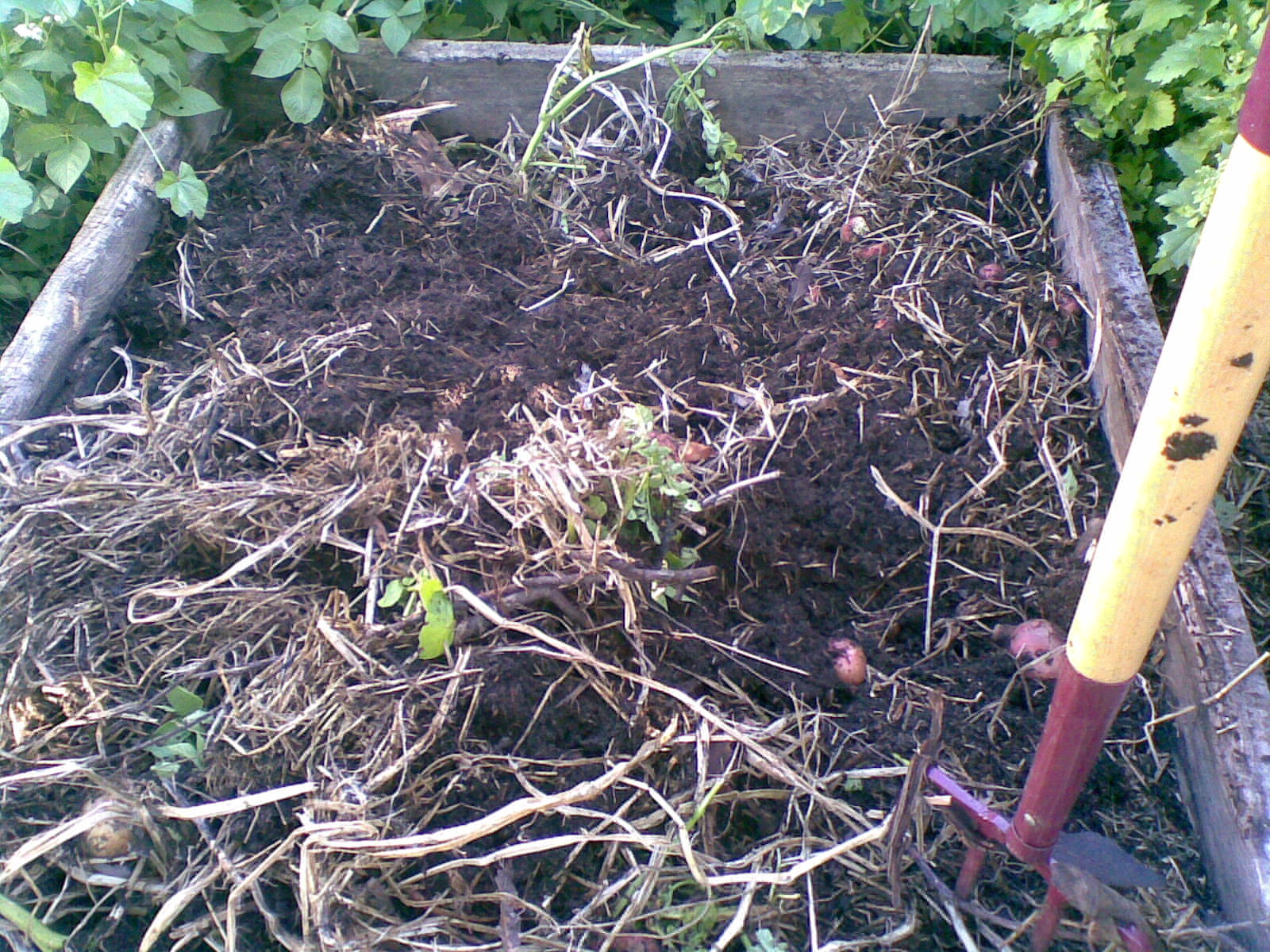
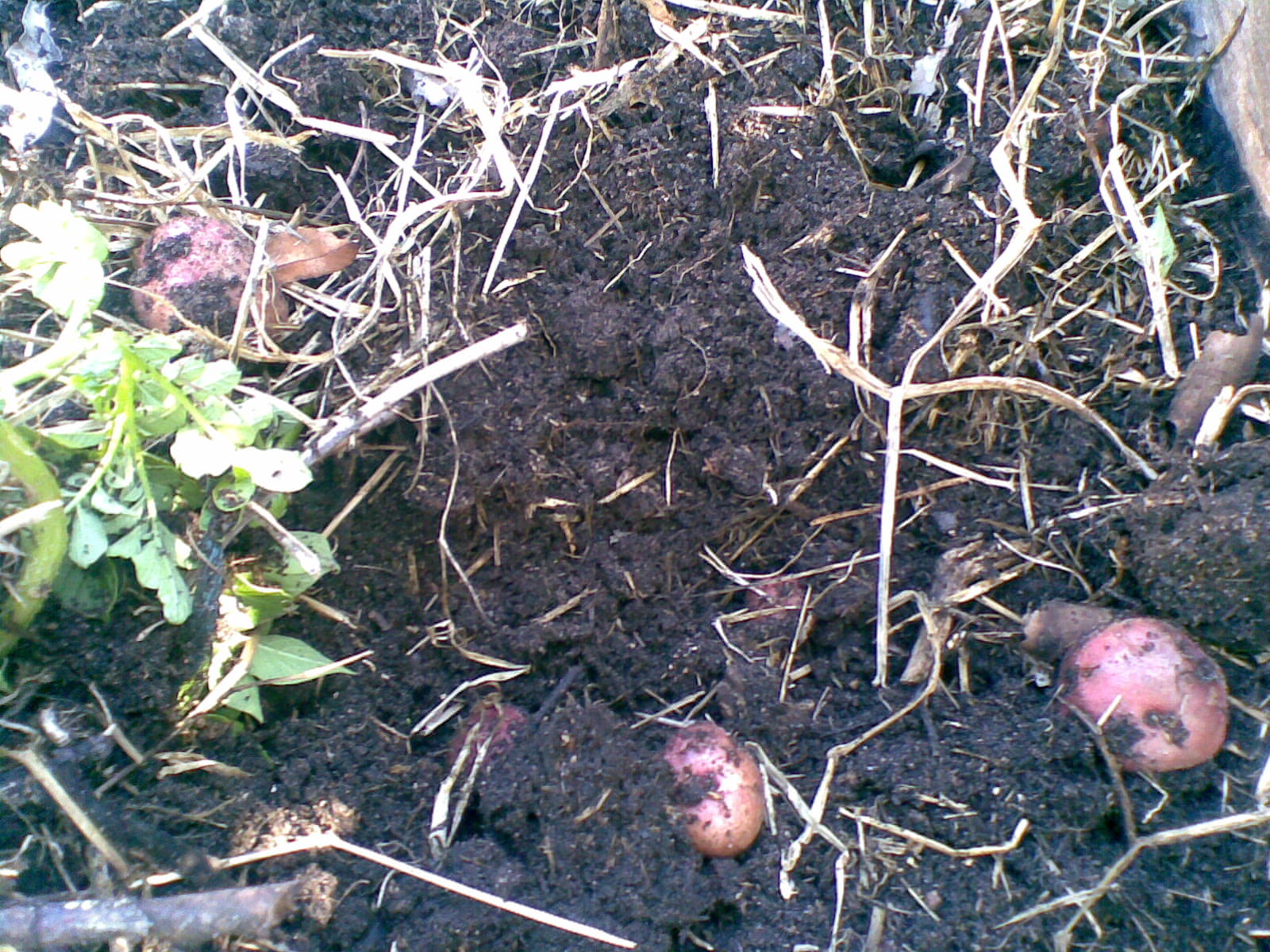
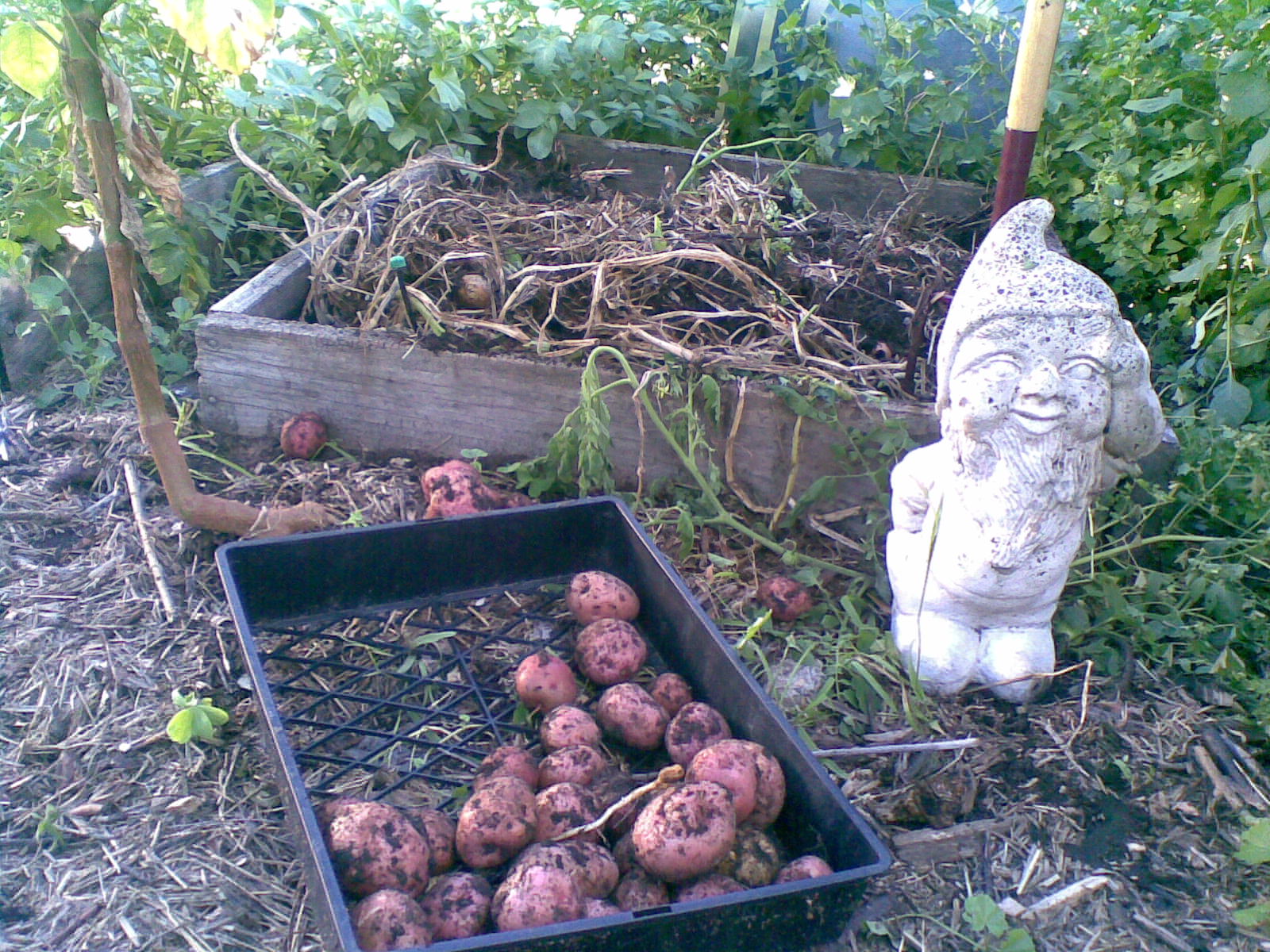
What a crop of Potatoes … this plot was built up with grass clippings / weed waste and then heavily planted with potatoes … the soil is now prime for veg. I have just put a cucumber plant in here – late in the season but will see. Have planted them around various parts of the garden to check what conditions they like best as its my first attempt with cucumbers.

Design Ideas from Ceres

Structure is what makes the large space of Ceres such a success – it was an incredibly hot day to be there – but provided the perfect day to appreciate just how important design is in maintaining a friendly relationship with the elements!

Some design features:

Particularly like the use of rustic with good quality materials.
Found objects are considered and used in with the environment.

Overcoming the Cabbage Butterfly and Companion Planting

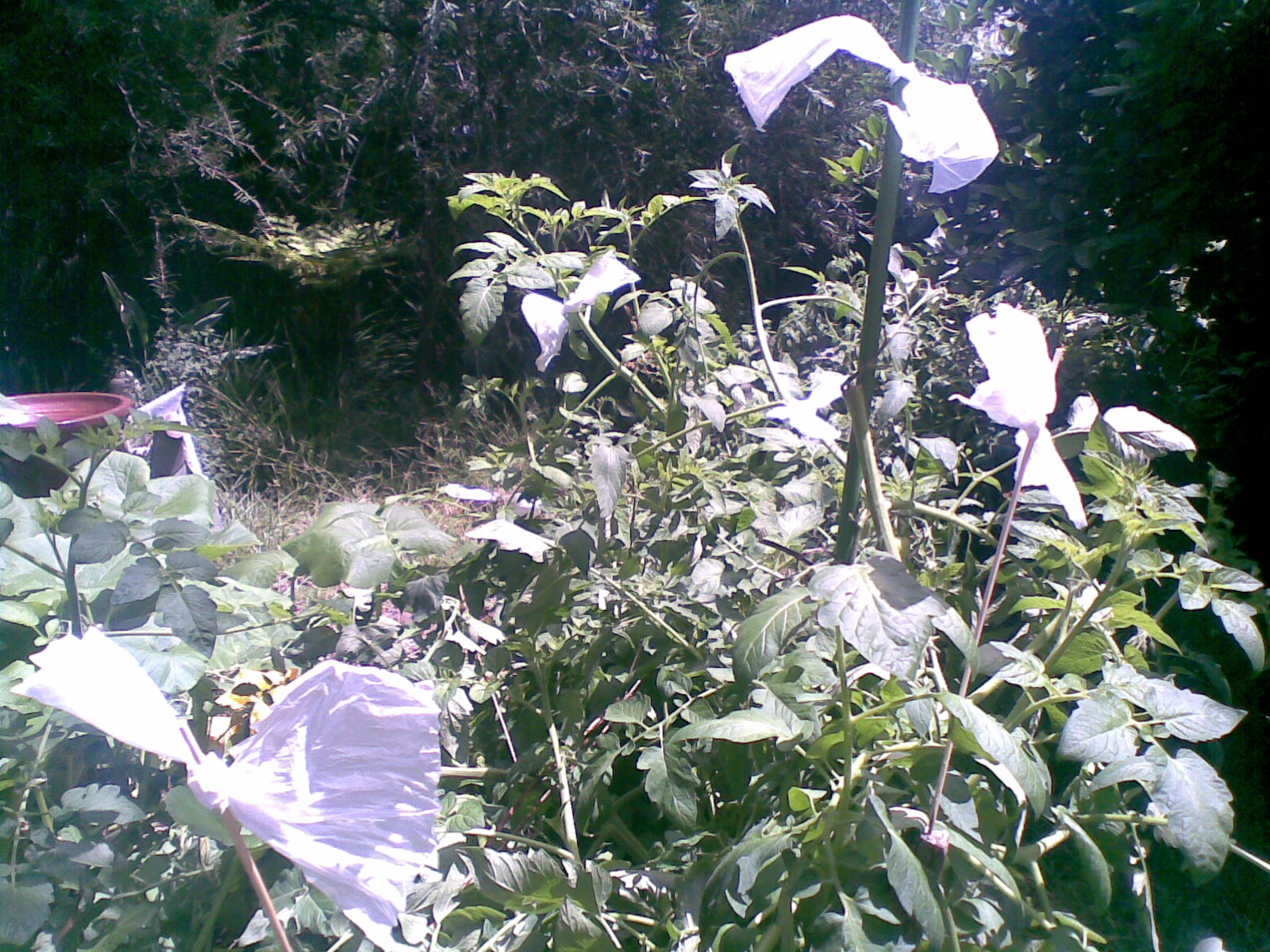
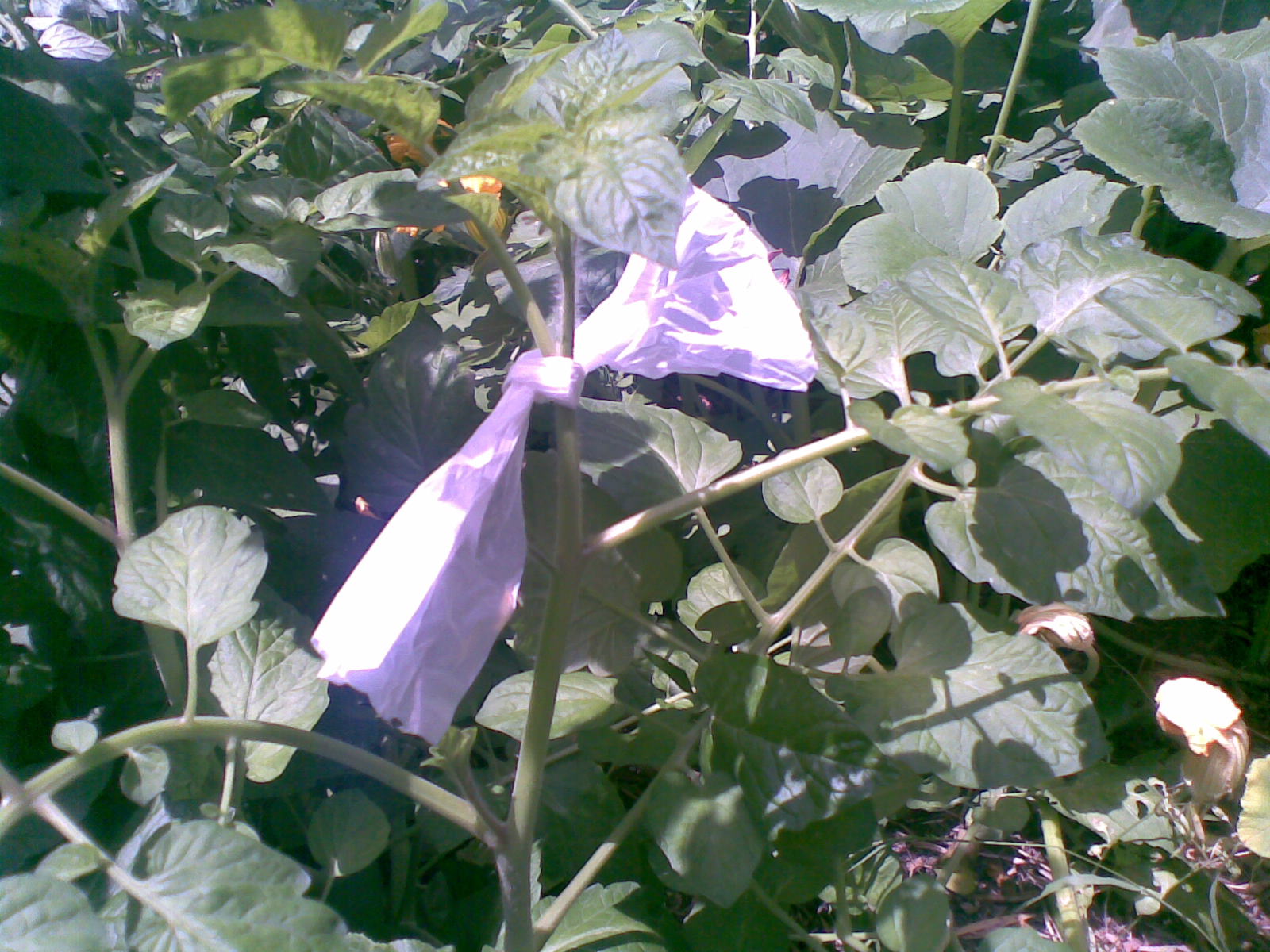
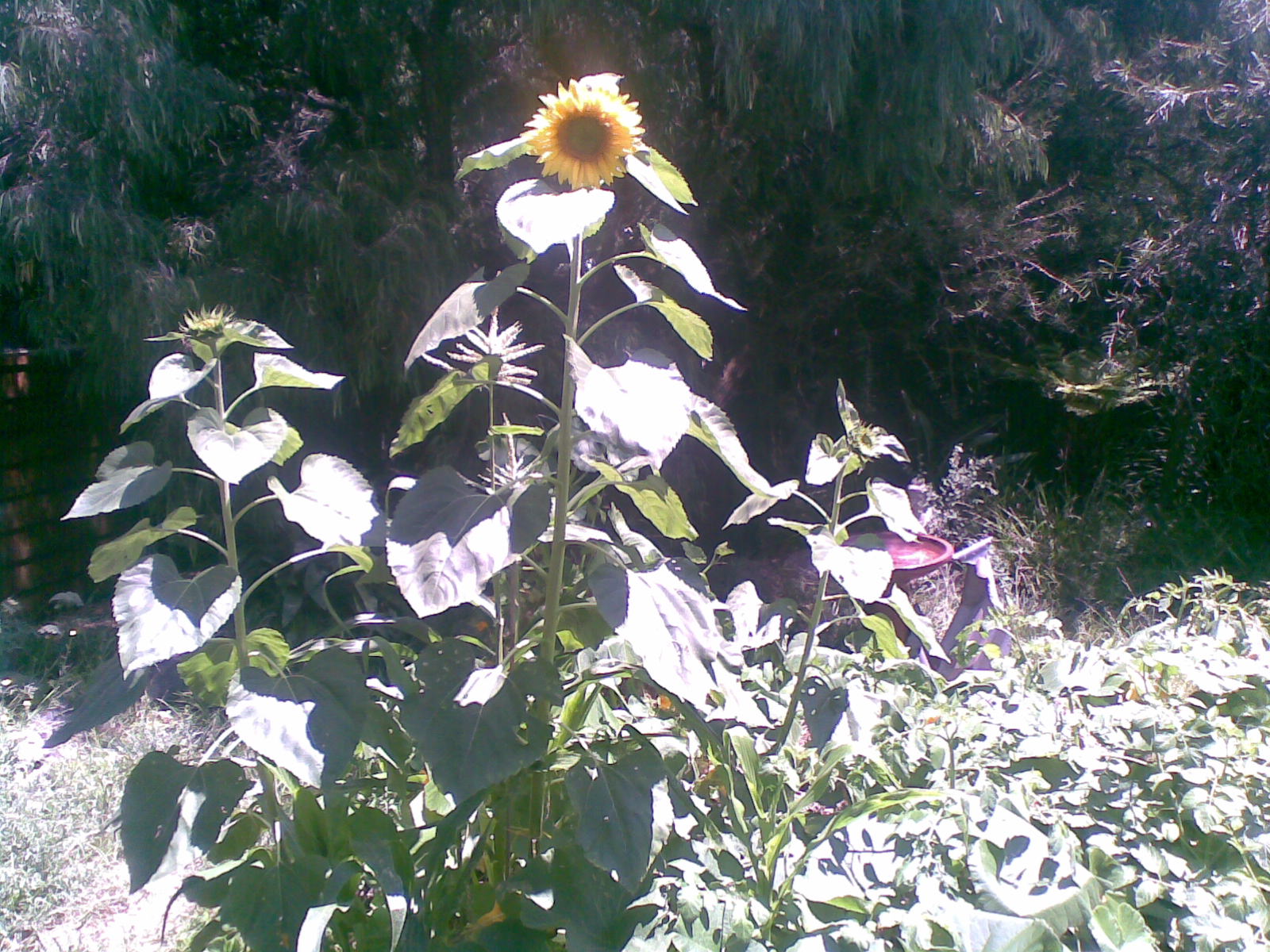
Well I couldn’t stand it any longer and have re-installed the cabbage butterfly traps – They have had a great munch on the Sunflower leaves – so at least those aren’t edible!! I had to completely cut down my native passionfruit vine due to their infestation – that was it war was declared – here are some of my army – armed with skewers and a cleaver disguise (simply cut white plastic bags into small strips and tie as a ribbon around skewers, or if the plants are established on poles – I have even tied some to the actual plant – which I wouldn’t recommend in very humid climates) – its simple – I’m not convinced yet how affective it is – I do believe that companion planting is the solution here – and am working at getting the combinations right. At the moment I have got the Sunflowers next to the Corn with the Pumpkin as an understory. The Blueberry and some lemon grass are getting on very well and are shading under the leaves of the pumpkin.

Summer 2011

Today was the first day in some while I have made it into my own garden!!

What I found is over whelming – produce just as galore as the weeds.

The tomatoes are going off – however – so too are the caterpillars – I have gotten slack with the white butterfly traps and watch as they descent daily over the garden – its a race – who will get to them first – hmmm with the occassional ratty also having his share – or can I blame the possums… it is any wonder I am getting anything at all.

Netting is a serious consideration for next year.

The tiger toms are most impressive – I have decided to pick them early early and let them ripen on the window sill.

I am in need of some more good compost – so did a huge amount of pruning today – which has piled up – it should break down fairly quickly in the heat.

I am taking the Spanish approach of working early morning – before the heat hits.

Diggin da Drive

Well the sun returned! The surge of energy to get in the garden followed.

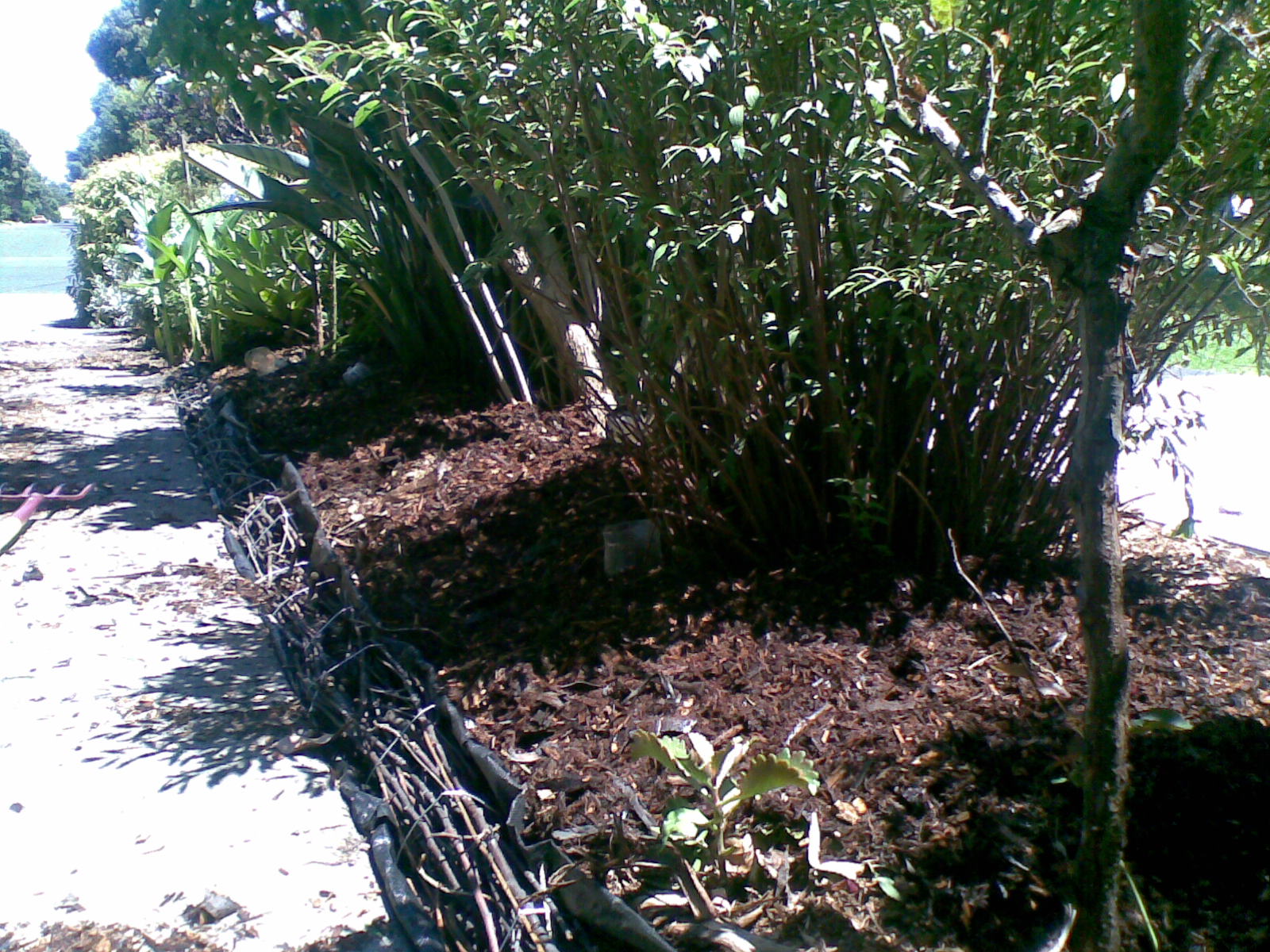
Here are the remaining steps that saw the drive completeted.

1) Finish the ditch
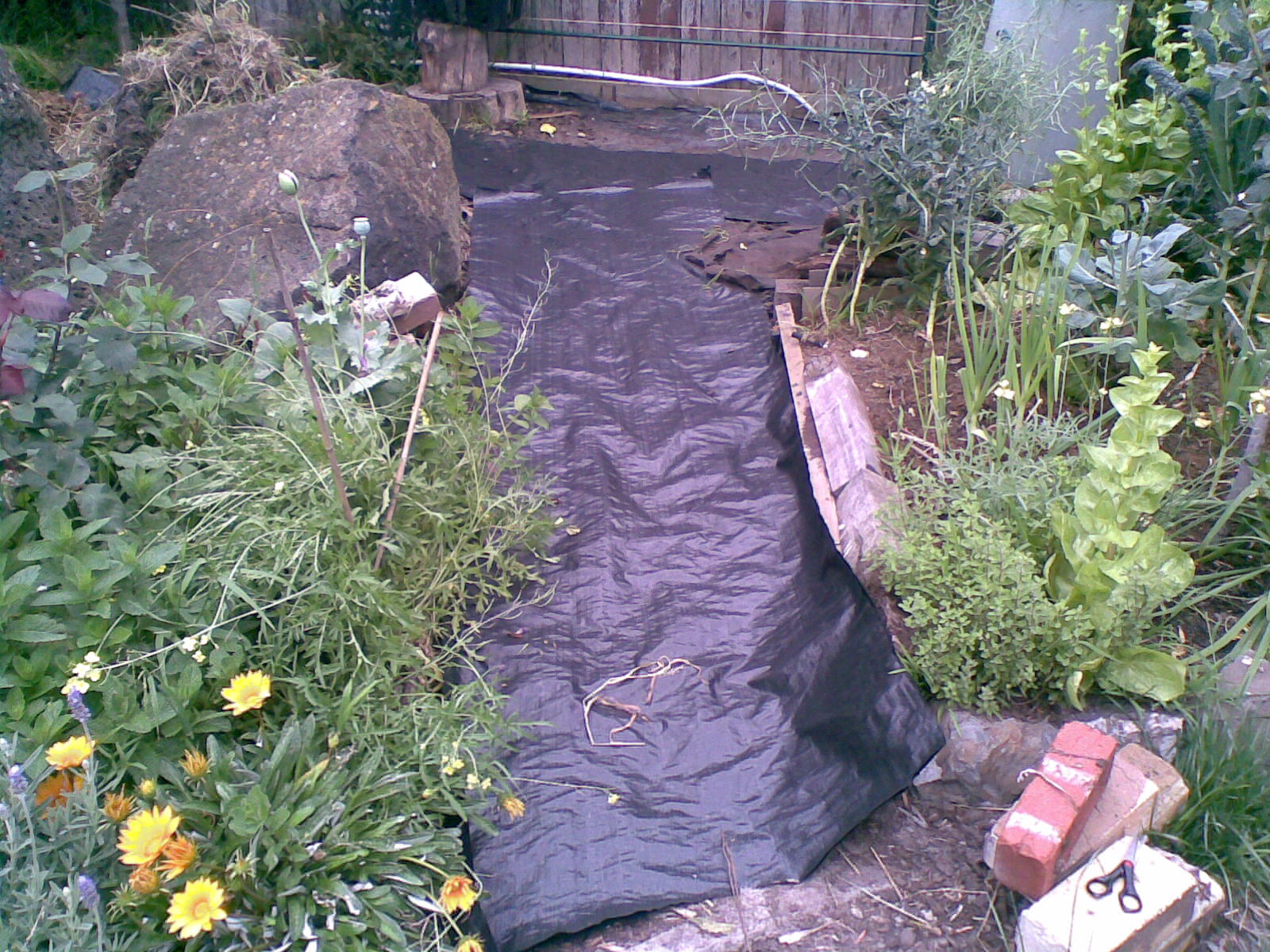
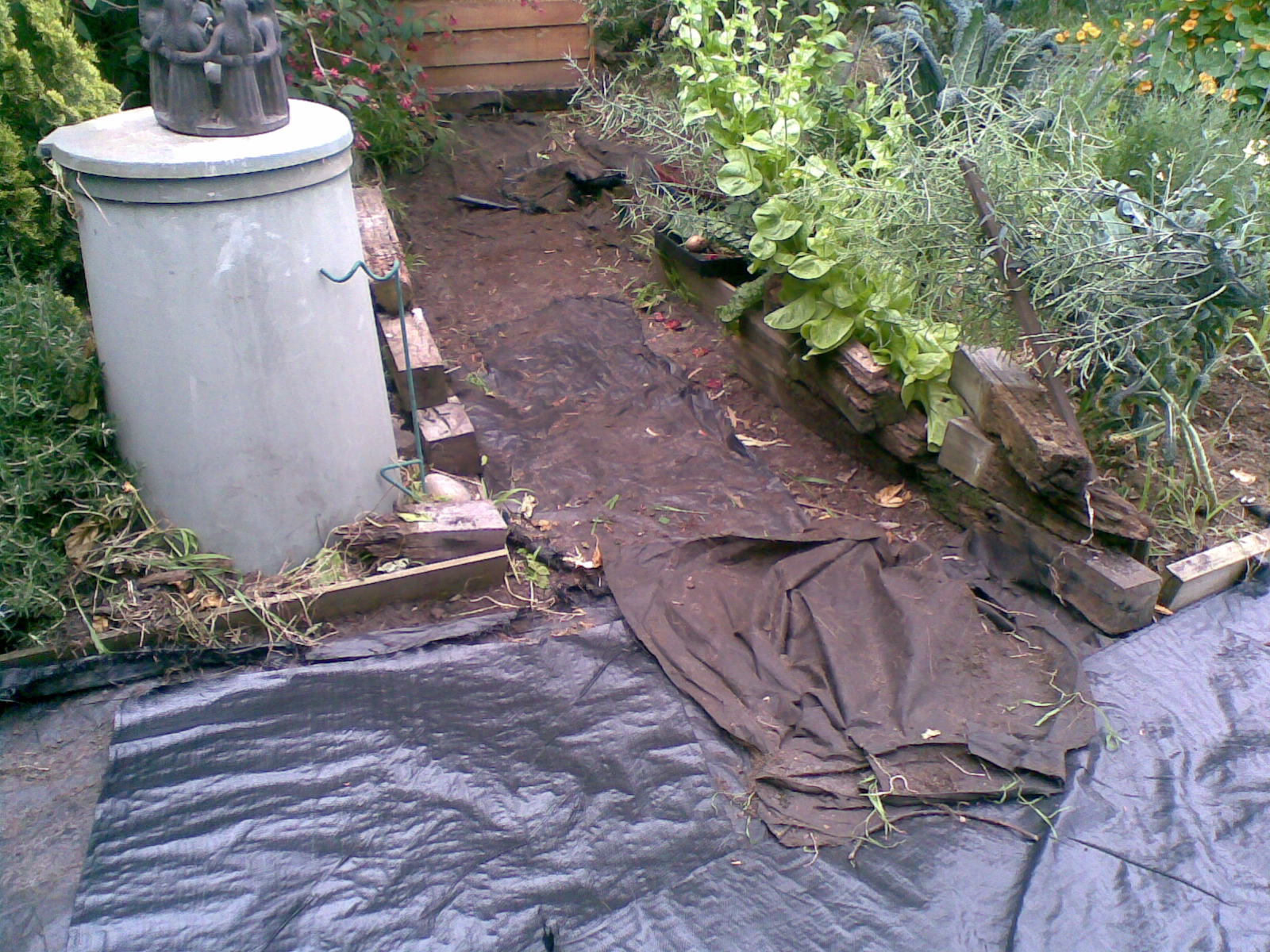
2) Fill with first Newspaper then weed mat – I used the newspaper to anchor the weedmat down either edge of the ditch – in otherwords – the weedmat had something to anchor itself on and fold over and tuck down. It was made a lot easier by using a lot of newspaper (thick) and wet. Keep hosing on a hot day to keep it from shifting.
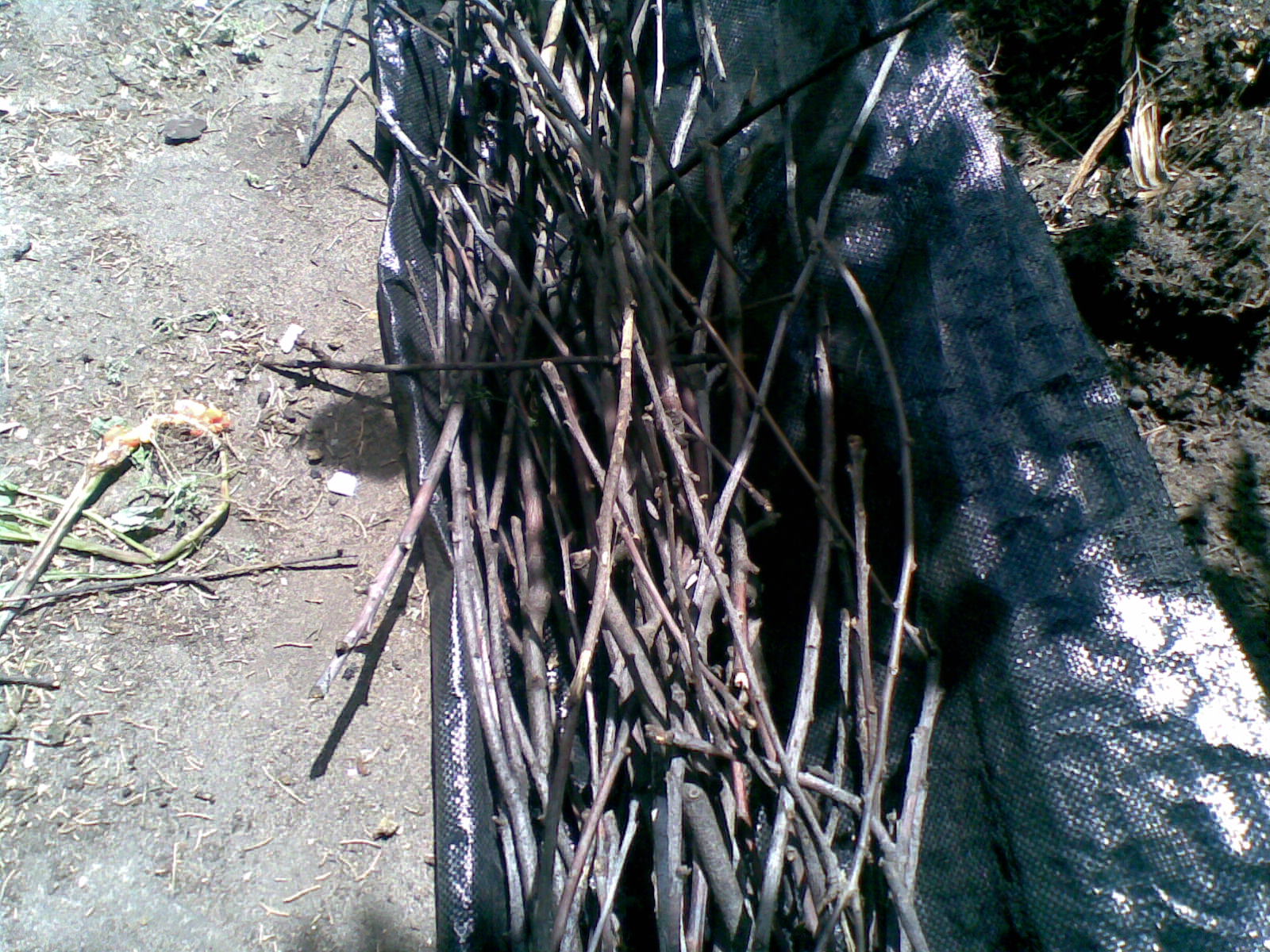
3) More twigs – oh now prep work (grab a cuppa, a chair and sit in the shade) = cut wire coat-hangers into 2 and cut off the rounded head…
These are pushed down over the twigs -which I am going to add to as I collect more cuttings – as I think they are just a wee bit too shallow at the moment – and likely to sink further over time.
3) Even out the remaining soil and add dynamic lifter / dolomite lime to the bed
4) I covered the bed then with more wet newspaper to keep the weeds at bay … a tip of dear Peter Cundall – use a fork to aerate the newspaper – now make sure to lift your irrigation hose (if you have one) first – to avoid punctures!
5) Mulch, Mulch, Mulch

It was the most perfect conditions to complete the job as all of the rain was nicely trapped beneath the mulch. I am thrilled with the results – and most importantly it means that the front will be weed free – at least for long enough to get mowing and weeding the back garden – and so another cycle begins yet again!

RAIN – I remember you !

It has been 10 years since Melbourne has seen it like this…

Not sooo gently rains today

fuzzy peaches and plums are on the ground – but they are not floating away! funny how everything comes into sharp perspective at the moment.

Fruit and floods

The garden is thriving with produce and completely content with the gentle rain.

I took it in this afternoon and considered how blessed – to be safe. To have food, on the table and growing in the garden.

My thoughts and prayers go to the people, the pets, the livestock and the wildlife of Northern Australia.

We have prayed and prayed for the rains. Now we pray for safety from the floods.

May balance be found within and without and may we savour what we have.

Be Safe. Be Well. And ever humbled by mother nature.

Dilemma of the Drive

The drive way has been on my mind for a while – then as I was walking past the huge pile of mulch each day – it occurred to me to pull up the ground cover and mulch – giving the plants more form, preventing weeds and keeping moisture in. Also I have a dream of putting edibles along the drive for visitors and students to pick as they wish.

Dilemma #1 If I were to mulch this bed it would most likely continuously fall off the bed and onto the drive way – especially with digging birds

Dilemma #2 If I were to edge the drive it would be prone to damaging tyres of the cars if they were to mount the bed – and also damage the edging.

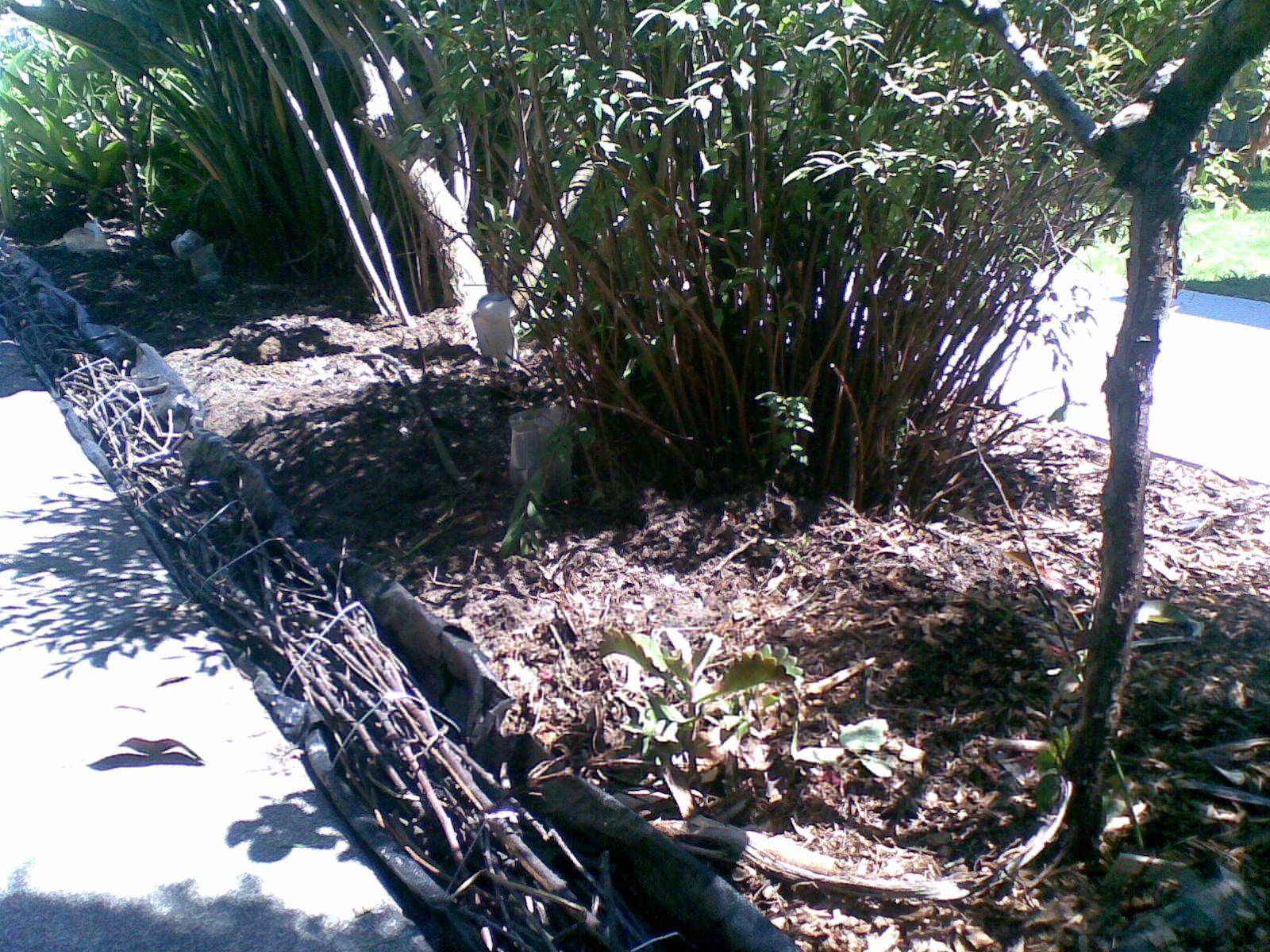
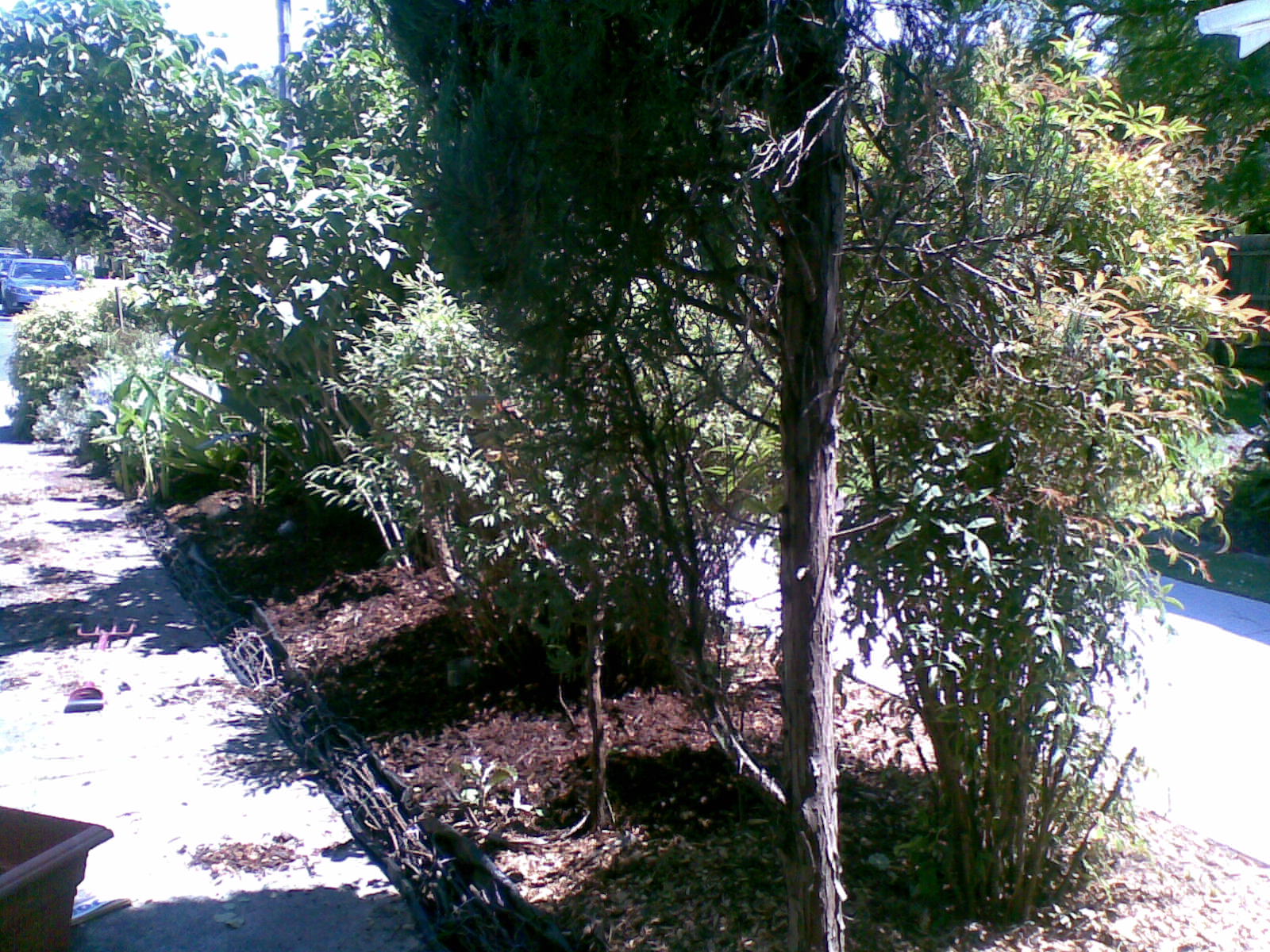
Solution: The nesting method that I used in the Front Key Hole garden, using twigs and old cuttings to create a soft edge.

Dilemma #3: This edging method I have found if prone to weeds and being spread – the twigs don’t behave and stay in one spot!

There were two solutions to this: Firstly I dug a ditch and lined it with thick newspaper followed by weed mat, creating a gutter like ditch. I placed the twigs along the gutter and then – my most genius solution to date… wire coat hangers were cut and bent to hold the edge in place – allowing you to simply lift and re-fill with more twiggs as need be.

This project is just getting started – a progress report to follow

Plum Harvest

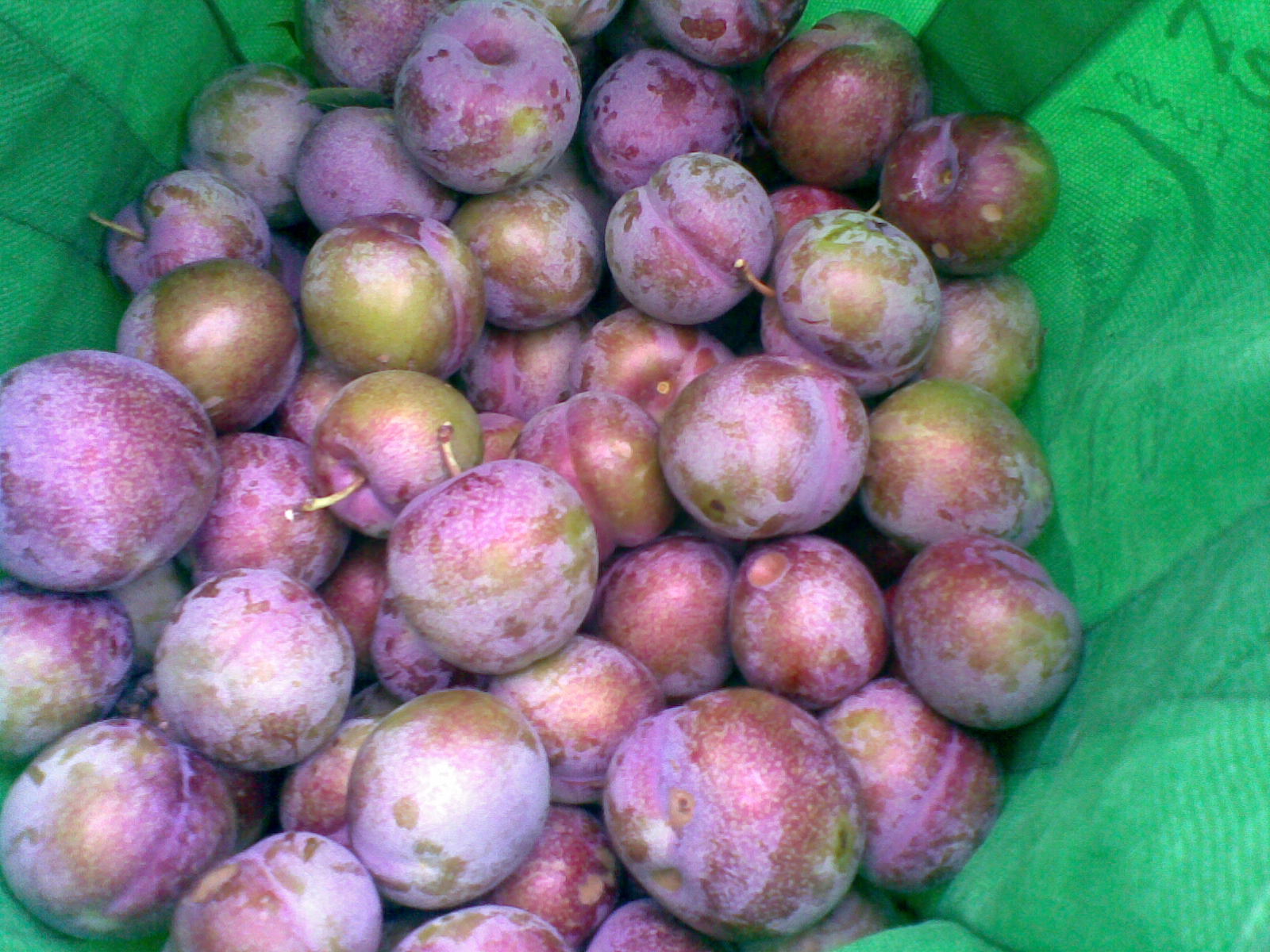
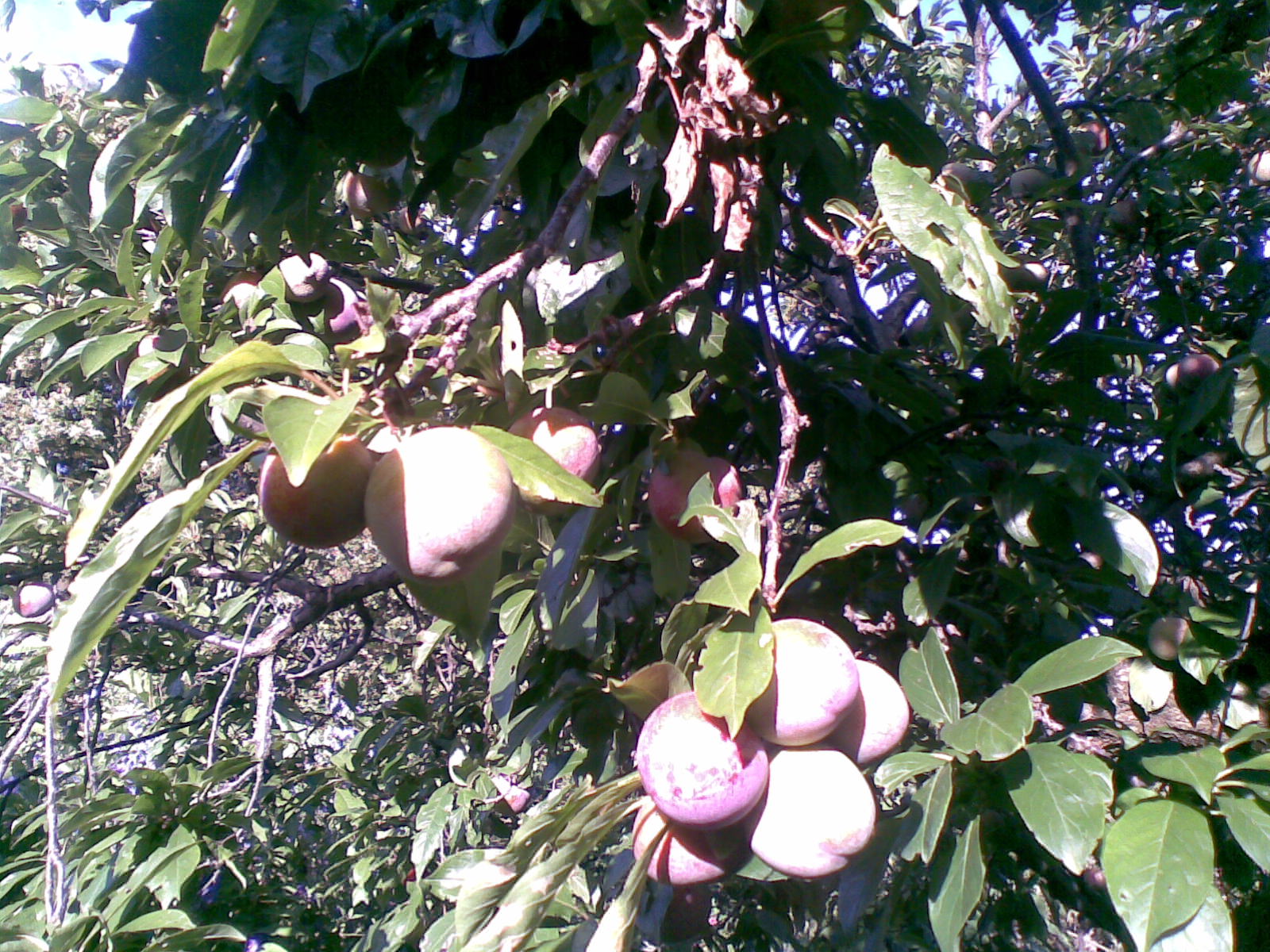
1/2 a green bag – and that was just what was at eye level – there is enough for the possums and the humans to each have their share! Last year I put in a ditch around the drip line and filled it with Agi-Pipe. I haven’t needed to flood the ditch this year with the amount of rain we have had. We really didn’t know if the plum tree would survive. But it has thrived!

Happiness in this New Year

Shouts and Fireworks could be heard all across the city – Happy New Year!

We saw it in with a scorching 40 degree day and the veggies have withstood it beautifully.

The plums seemed to turn colour before my eyes and have been the best of the harvest so far.

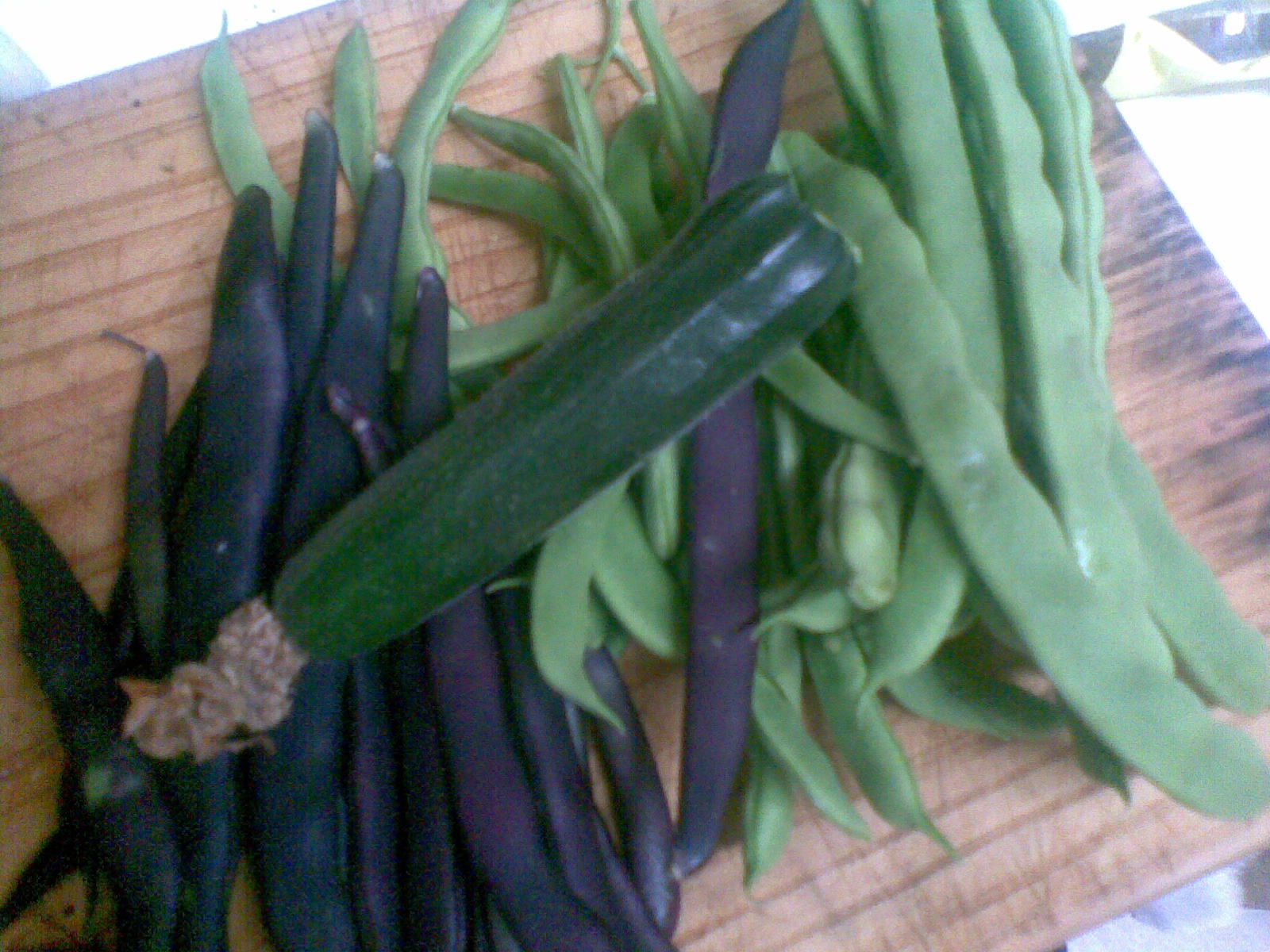
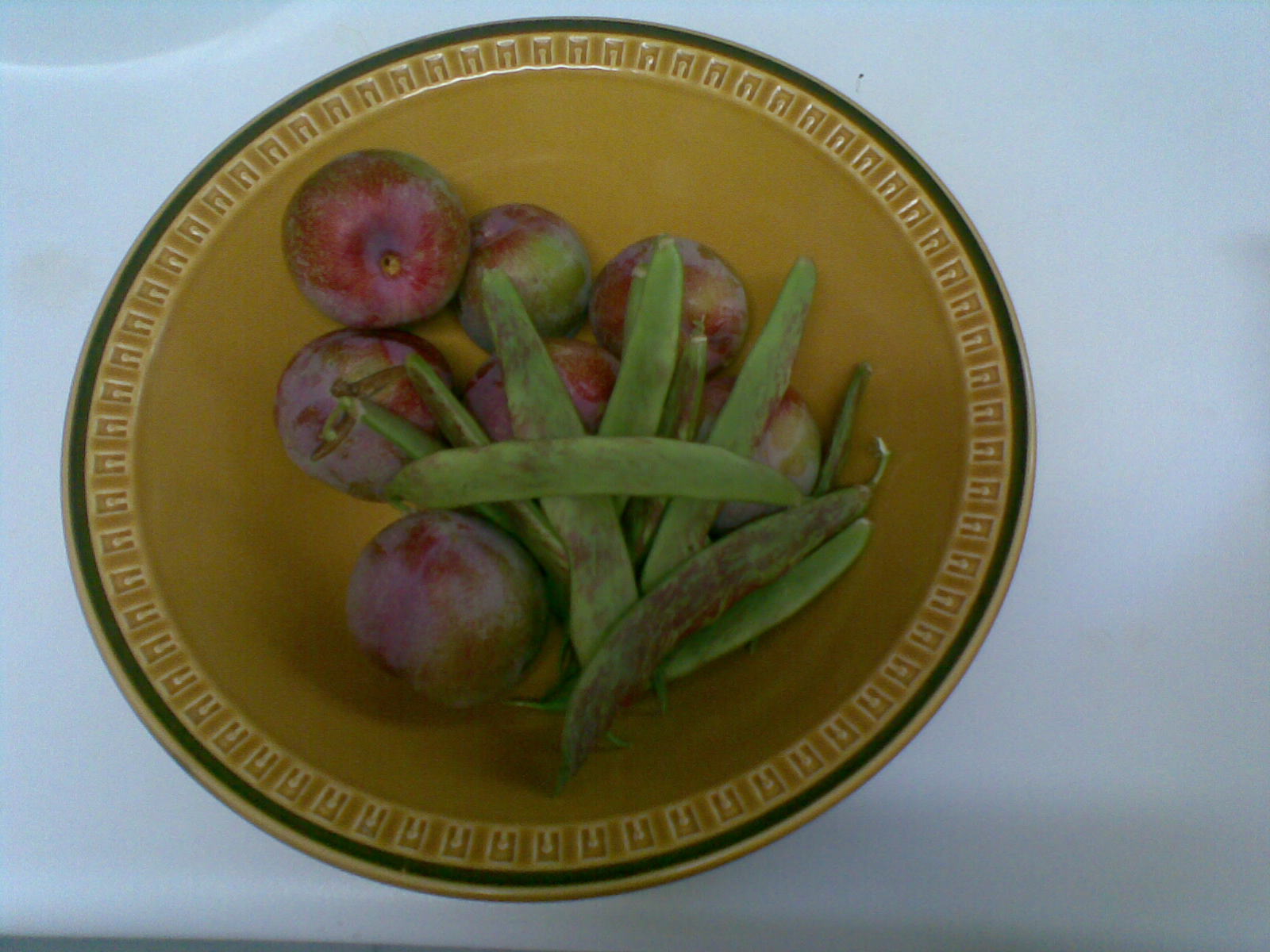
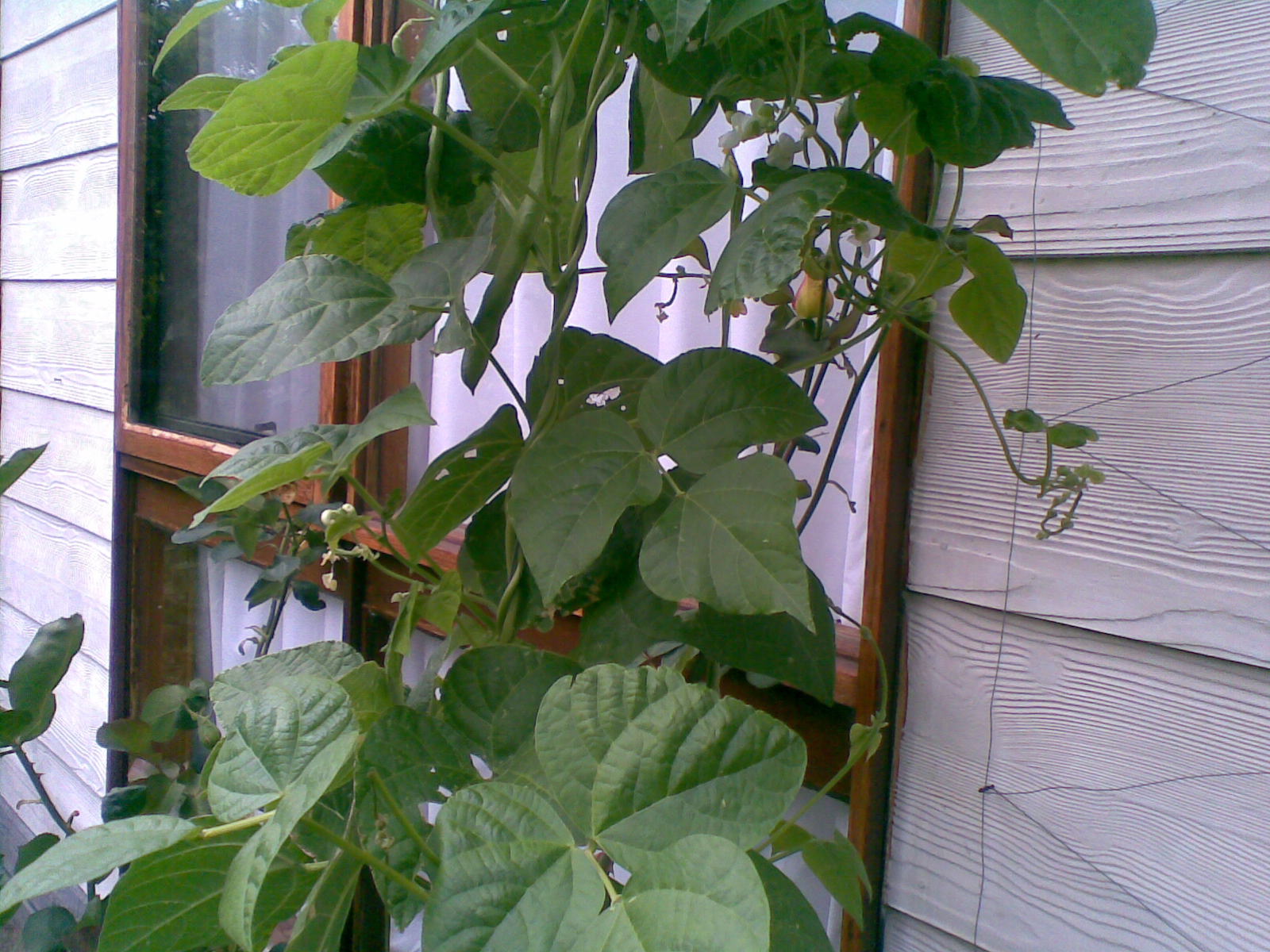
This year’s Christmas feast included some climbing beans which I had lead up wires in front of the yoga studio. The tomatoes were still too green for the garden salad, but are on their way along with zucchini and beats. It has, up until now been too cold for the chilli to take off – but after New Year’s Eve declared that it is finally Summer they are sure to take off.

The most important project this Summer is clearing the drip line of the Almond Tree. It has once again come down with a Bacteria Infection and I need to clean to soil of diseased husks and plan to spray a Bordeaux solution next winter. It was such a healthy crop after all the rain – the blossom had promised and delivered – better luck next year! They do have a tendency to keep on ticking along.

Happy New Year, Happy Digging, Happy Discovering.

Dangerous business

“It’s a dangerous business, going out of your door. You step into the Road, and if you don’t keep your feet, there is no knowing where you might be swept off to.”
J.R.R. Tolkien

… And an even more intrepid soul who steps forth into her garden. One curious look and an afternoon is swallowed up, leaving her bitten and sodden in satisfaction… and forgetting why she went out there in the first place, loosing cups of tea and broken thoughts in the cuttings.

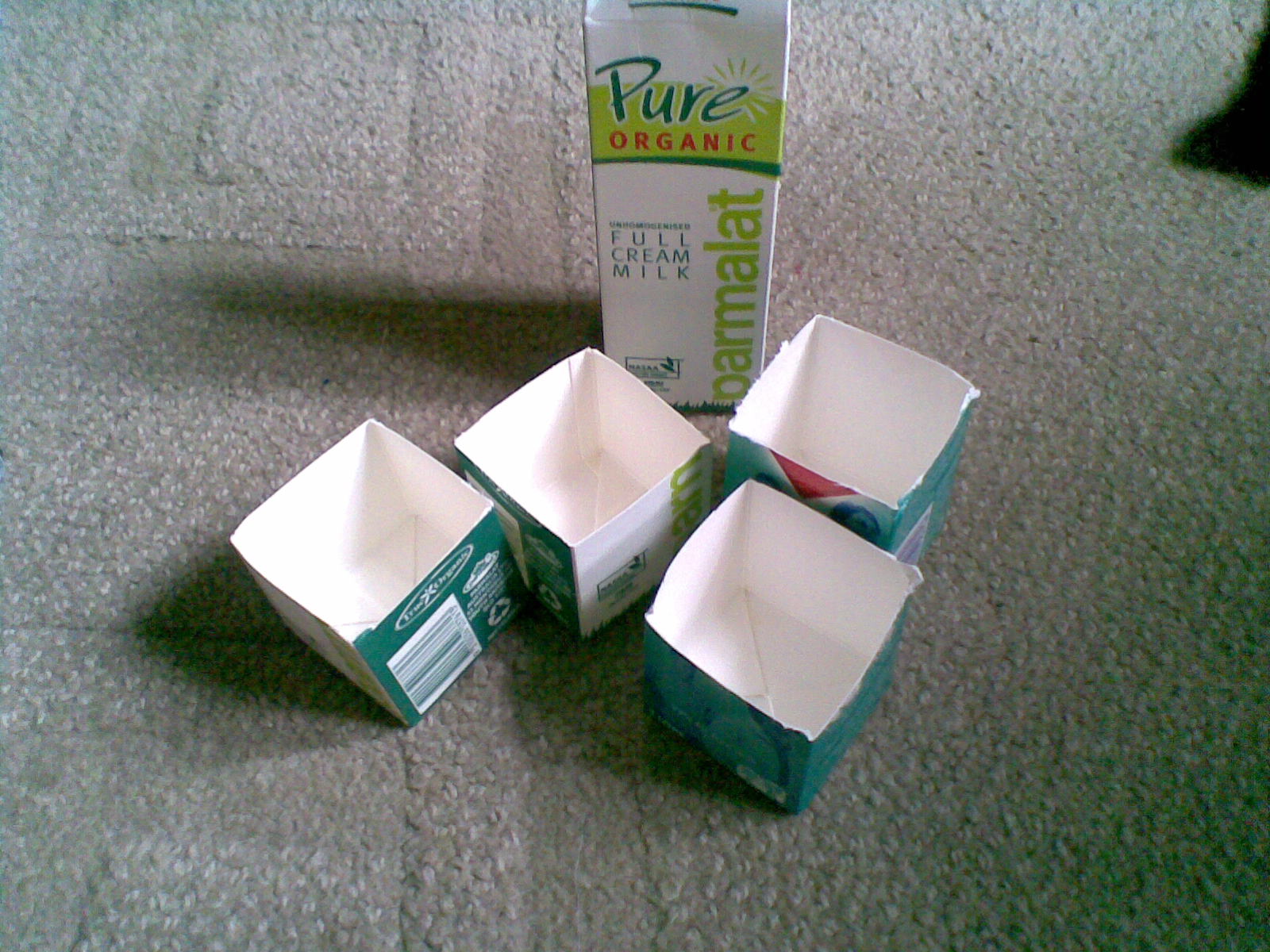
Making seedling pots from Milk Cartons

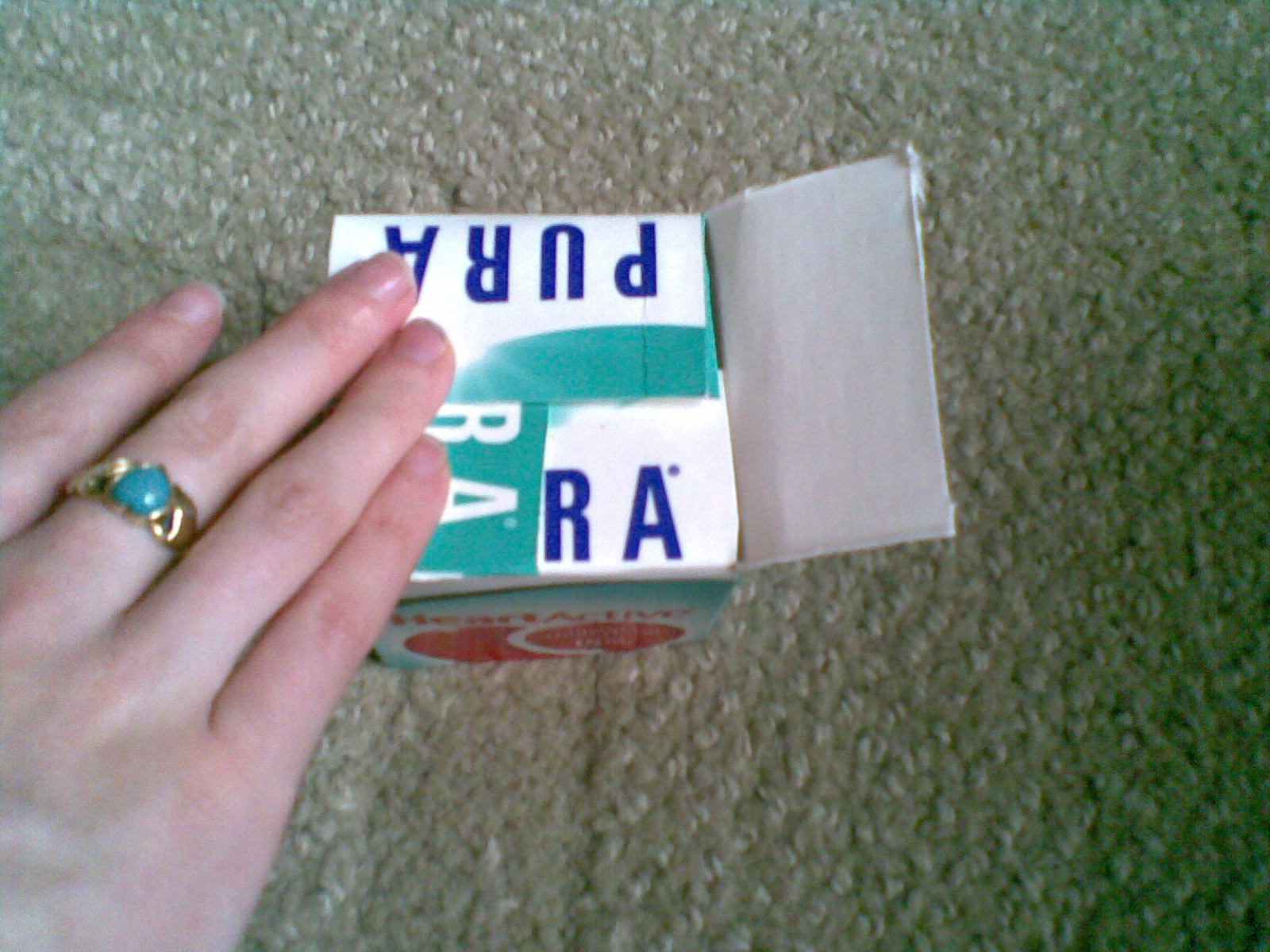
Instruction for making pots for seedlings out of Milk Cartons – see photos below…

The first step is easy and obvious – cut the bottom off and voila – your first pot is made – simply puncture a few holes for drainagel

Next to make the best use of the top half cut off the spout

Slit the sides about half an inch down on each corner

Now fold the flaps out to create a crease line

One flap at a time work around the carton in a circle lowering and fixing the sides into the middle, fixing the last flap underneath the first.

Experiment with how far down you need to make the slits in order to get a perfect little drainage hole in the middle!

And start asking your friends to save their milk cartons!

A great Christmas gift – or as the students at the yoga centre are going to receive them as “pots of potential” – as the basil this year has been very slow to germinate.


Posted by Picasa

Posted by Picasa

Tis the Season to be Mulching

A recent search for mulch lead me to a free service – 5 cubic metres delivered to the door!!! The request was 5th priority – which meant when the mulching company has a surplus of mulch you can have it delivered. The front garden is now complete. I shovelling the old mulch onto the surrounding garden beds (it is a good idea to add dolomite / blood and bone to keep the soil sweet after combining it with old mulch). I replaced the weed mat and although not in the front – in the back I am planning to place newspaper down in addition to weed mat. Have a bucket of water handy to dunk the news paper to avoid it flying off as you lay it is a great help.

It looks and smells great – and it hasn’t stopped raining all weekend so it is now firmly set in place. Cheers to Chen for supervising the operation.

Now for the back…..


Posted by Picasa

Ahimsa and Permaculture

In an interview with Scott London Bill Mollison explains the history and motivation for Permaculture. One pertinent remark he made was :

‘It’s curious that we never apply what we know to how we actually live’.

Why does a plumber spend his life making beautiful bathrooms for his customers and is unable to come home and fix his own? I believe fundamentally this boils down to self worth. Particularly now, where we live in such isolated environments, the notion of doing something for the community at large is quite removed, or is perhaps restricted to working hours. This gives us the opportunity to practice a reversal of sorts – treat your neighbour as you would yourself – now I believe it is time to treat yourself as you treat your neighbour (that is if you have mastered the first act of true respect and love for your neighbour).

It is more than just laziness that keeps us from living out our wisdom. Every instruction manual and every tip is now available on the Web – it doesn’t mean for certain that you will google it and apply it to your life. What does determine action – is your state of mind and it stems from your love of self – not in a conceited manner – but through a deep acceptance, which is the first practice in yoga of Ahimsa or non-harm.

Scott London’s Interview with Bill Mollison

Permaculture and Spirit

Recently I came across the DVD “Reconnecting to Nature though Spiritual Permaculture”. It documents a conference in Hawaii whose guest speaker was Dr Leonid Sharashkin, translator of Anastasia which I had read a couple of years ago. The DVD has been playing on my mind after watching it.
It asks us to re-introduce consciousness into design and suggests that design is nothing more than an expression of the conscious state we are in at any given moment. Gardening for food is advocated as much more than a practical solution – it is a Spiritual practice of healing both our selves and our environment.This is particularly pertinent as the garden for “Permaculture in Suburbia” is within the setting of a Yoga School. This weekend I was working on the Spiral Meditation Garden. I have planted the two new grafted apples from Toora Heritage Pear Farm Grafting Day – given that there has been soo much rain I was drawn to planting and transplanting in the moments when the sun did come out.

The Spiral seems to have a life of its own and I have enjoyed the experience of stepping back and allowing it to take form around me. I was looking today at the Roses which we had transplanted last winter into this site which has now become the Spiral. The move of the roses was made out of necessity – there was not enough rain and we wanted to dedicate the front garden beds to food production as they receive the most water. The roses were given strict instruction – you’ve just got to make good of what you got – they were not watered particularly much but have thrived and now make a gorgeous setting for the meditation spiral walk. What I enjoyed as I looked at them today was the sense of having not planned – but ended up with exactly what I would have wanted!

Grace.

Permaculture – resurrecting a dying art

A great emphasis in Permaculture (apart from the veggie patch and passive energy housing design) is on social change, awareness and education. Recently I asked a friend what she thought about a Permaculture Property Tour she had taken over the weekend. Her answer surprised and delighted me: “I loved it, but I thought it was sad that we had to travel 2 hours and pay to see an example of what used to be in my backyard”.

When did this type of living become a novelty? Growing your own? Community sharing and Family focused? And why do we need a system such as Permaculture to re-establish what was once common practice (at least for some), or do we at all?

My friend grew up in the 50’s. Her father was the gardener and would take her on tours of his plot when she would come home to visit, asking her to count with him the number of current crops (some improved by the applications of DDT!!!).

I on the other hand grew up in the 80s. We had a lemon tree which we would enjoy but that was the extent of home grown. The garden was purely ornamental. Today two galvanised raised veg bed sit in the middle Mum and Dad’s lawn. Dad has converted the brick BBQ to a 3 bed no-dig garden in addition building a 2×2 meter enclosed space which was once lawn for more produce.This was not something that came naturally to my folks. It took a lot of reading on my mum’s part and also visits to “Mr Budgie” our Italian nieghbour around the corner. My grandparents, having grown up in the depression were extremely hard workers, but not vegetable gardeners. They were however, the most phenomenal  recyclers I have ever encountered. Everything, to this day, is considered before being discarded (or given away). I remember when at a certain age it suddenly occured to me that the crystal salt and pepper shakers were not crystal at all – they were vinegar bottles which had been skewered in the tops. This was not only a matter of affordabililty, my Nana simply can’t stand throwing anything out!!

Sitting in my garden on the weekend with a much younger friend – we were brain storming which veggies to plant, she then pointed out a nettle and said to me (she is 8) “Sarah you really should pull that thistle out on the path – but you could make a good tea out of it or use it for ummmmm compost” WOW where did you learn that ?- “At school, we have a Stephanie Alexander Garden!!!!!”.

No doubt, we are stylising what once was common, backyard practice. But figure-heads here in Melbourne such as Stephanie Alexander and David Holmgren are helping to formalise the groundswell of people who want to act rather than sit back in dismay. The formalisation of change through government is not only too slow, but also unreliable with the chop-change government sturcture (it was interseting to even hear the BHP CEO Marius Kloppers suggest that government is decades behind the eight ball in regard to climate change):
Channel 10 News
The Australian

Ultimately (and particularly after the dethroning or Kevin Rudd) it is clear that business runs our government. The upside is that the consumers (you and me) ultimately dictate business.

Professor Stuart Hill’s study advocates that change is in the hands of the individual:

Although we have still only scratched the surface in applying these (renewable energy) two potentially valuable approaches, their limitations are such that without more fundamental changes in values and the design of systems, they can only delay the eventual reaching of critical thresholds relating to ecological collapse and associated cultural breakdown, including increased violence, war and personal degeneration. I believe, based partly on my familiarity with the history of soil degradation and associated cultural collapse (e.g., Hyams 1952), that such outcomes are inevitable if we continue to mainly focus on status quo maintaining, and problem-solving responses. However, if we take proactive, imaginative, fundamental redesign and transformative approaches to change, and are willing to learn from nature, and ‘otherness’ in general (Bhabha 1994; McClintock 1995), then numerous hopeful opportunities may be recognized and emerge (see also Nina-Marie Lister, Ch.2).
(Professor Stuart B. Hill, REDESIGN AS DEEP INDUSTRIAL ECOLOGY: LESSONS FROM ECOLOGICAL AGRICULTURE AND SOCIAL ECOLOGY).

The emphasis in Permaculture on social change, awareness and education is perhaps what we drive two hours to witness and are willing to pay to be educated about. For now I am happy diggin around in my garden and letting my thoughts drift about how what I am doing with my hands affects the air that I am breathing and more.
Inner Melbourne – Family of Four Vegie Garden Design

An example of interplanting a veggie garden in a landscaped Suburban Garden: Notes to a Client

For Background Reading on Permaculture Principles: The Essence of Permaculture

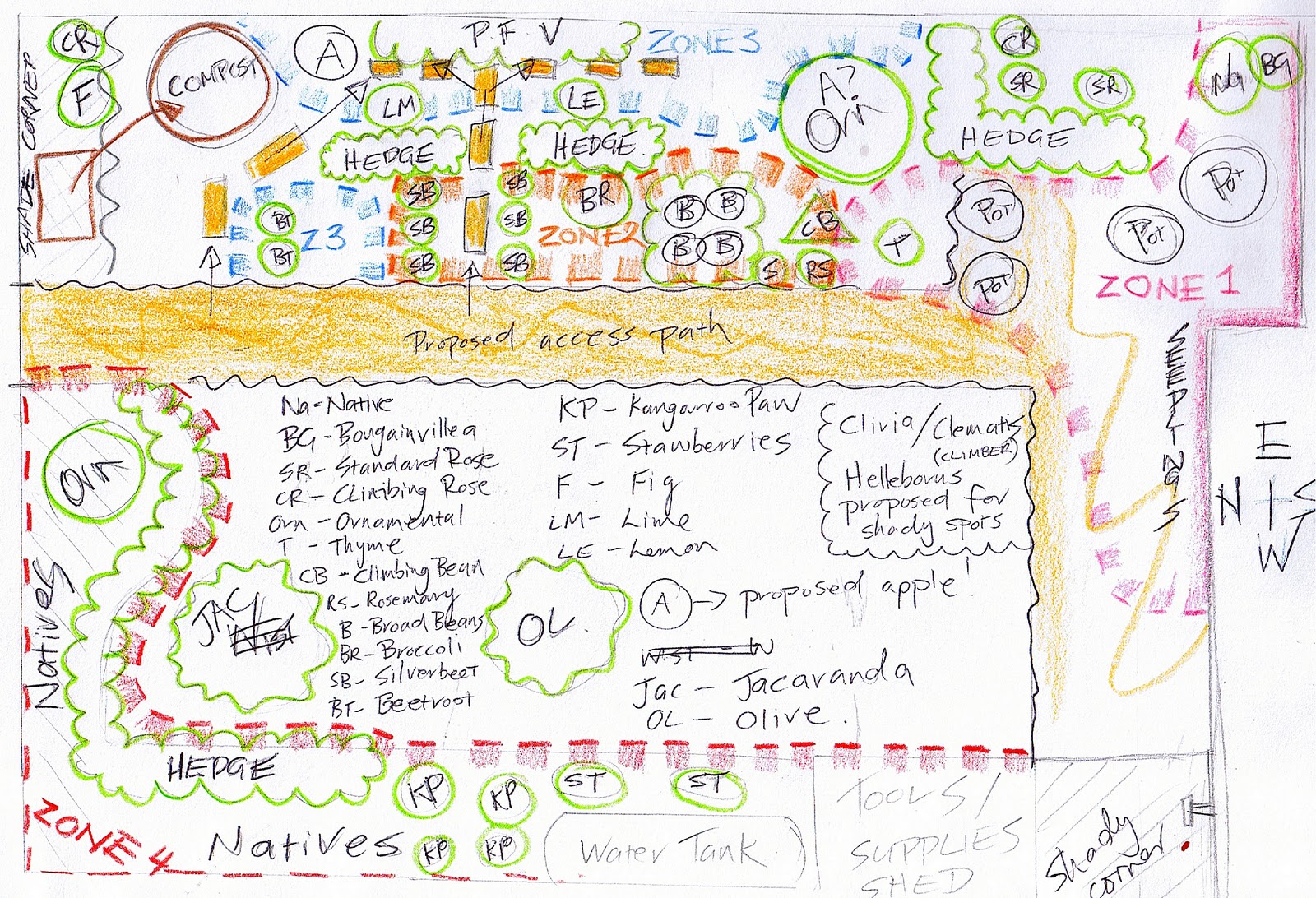
Zone 1: Quick Pick / Kitchen Cupboard

Pots – Lettuce / Coloured Pots of Geranium
Herbs (Rosemary/ Thyme/Parsley)
Seedling Nursery
Chives
Oregano
Marigolds
Marjoram

Zone 2: Annual Veg Crops (quick pick varieties)
Broad Beans
Snow Peas
Climbing Beans
Tomatoes
Basil
Radishes

Zone 3: Slow Growing Annual root veg /perennial  fruit / Veg

Rhubarb/Asparagus
Tomatoes (Zone 2 or 3)
Cucumber
Zuchinni
Eggplant
Silverbeet
Corn (plant several in close proximity for cross pollination)

Beetroot
Parsnip

Potatoes
Garlic
Leeks
Onions
Turnip

Zone 4
Ornamentals/Natives

COMPOST TIPS
Compost Bin – Back Slightly Sunnier Spot
Infront of Fig (where bin was) – is now a space for drying cuttings (before adding to compost)
Remember 1:1 Ratio Wet:Dry
Wet = veg/fruit scraps
Dry = Clippings – no bigger than tips of branches + dry leaves / dry grass clippings / dry hedge trimmings (place clippings beside the bin for a couple of weeks (or days in Summer) to dry before adding to the compost – unless autumn leaves – they can go straight in.
No root balls (too woody) and no big branches
Newspaper (scrunched up) is an alternative when no clippings/leaves are available
Dry has been the missing ingredient (it is like a sandwhich where the dry layer provides aeration for the breakdown of the wet)

SOIL HEALTH

Air in the soil (like in the compost was the missing ingredient)
The way to create aerated soil is to layer compost – with mulch and manure (3-6 alternate layers) ending with a mulch of either whole (not crushed) sheep manure/lucerne or sugar cane mulch. I have dug in the compost to begin with as it was not well broken down (but well enough – you will find some egg shells about which take the longest – but are a good source of calcium). On top of this was placed crushed sheep manure, organic pellet form (slow release) fertiliser, blood and bone, sugar cane mulch followed by whole sheep manure (again slow release).
You can not plant seeds in this ‘no dig’ style soil structure yet.
If you want to plant straight from seed then make a small whole and fill it with seed raising mix (or grainier soil from deeper below once the layers have broken down), otherwise plant seedlings straight through the layers.

An initial planting of legumes would be great for the new areas (Zone 3 – where the tomatoes are planned) you allow them to get almost to full season (just seeding/flowering) or just before and then cut them (with a dutch hoe for example) and dig them into the soil. This can also be done at the end of the season – before planting the next crop.
Never plant tomatoes in the same spot two seasons in a row (a bacteria infection tends to occur)… try crop rotating root veg with leafy veg the following season and continue to alternative in this way each year.

Strong smelling herbs – garlic chives/peppermint varieties are great around veggie crops and also your roses to stop disease and pests.

Comfrey/Yarrow around the fig would be ideal – the tap root of the comfrey brings valuable nutrients up to the surface and both can be added to the compost to aid break – down. Stinging nettle – if you can stand it is also great for this.

Nasturtium / Peppermint Pelargonium are non-inavisve ground cover ( and great weed control) as are strawberries.

Hedging can be achieved with edibles such as blue berries (mulch well and water often) if you want an alternative to the box hedge.

I would consider planting another passionfruit vine to support the one already in – and buy an organic beef liver from the butcher and dig it in – just below the root ball. Passionfruit need plenty of nutrients and this is an old and tested method (again only if it sits OK with you!)

I would think about cutting the lawn (1/2 meter circumference) around the Wisteria and Olive to allow watering and feeding of the soil above the root zone. You could also consider planting some edibles around the drip line such as Artichokes. Artichokes would also look very uniform (and are Perennial) for the front under the weeping ornamental where the pumpkins are planned.

In the shady corners
Clivia/Clematis/hellebores would all work as well.

I hope this Summer provides a crop BONANZA!

Here is a great website to help with knowing what to plant when
Veggie Guide – Gardening Australia

David Holmgren on the Endurance of Suburbia

Suburbia is an agricultural structure in itself and you can start where you are – and not wait to purchase your hobby farm…

Recently looking into the zoning legislation of buying and building on land in Victoria – it shocked me to find out that if you want to build on zoned “rural land” (farming zone) you have to purchase 100 acres or more. This was established to prevent hobby farming from sub-dividing Victorian rural landscape and consequently threatening agricultural productivity.
Yet 100 acres is far beyond the requirement for food productivity for one family. A rather frustrating position … and another reason to find solutions in Suburbia.

For more discussion on this

Zoning in Victoria

An Independent Analysis of the new residential zones for Victoria

And some other helpful links (which are relevant to Vic, Australia only)
Real Estate Institute of Vic

Municipal Association of Vic

Custom Home Building

and for some inspiration and practical solutions:

Buleen art & Garden

Before and After


Well its time for the after shots (Scroll to the original post “Walking the Land” for the before shot)

The warmer weather has gotten the back Permaculture plan into action!
Walking the backyard last week – I was absolutely thrilled to realised that all the elements I had envisioned – have come into manifestation. These include

1) 4 veggie Beds
2) A Spiral Garden
3) A miniature orchard
4) An aquatic garden in the form of a dug in bath tub

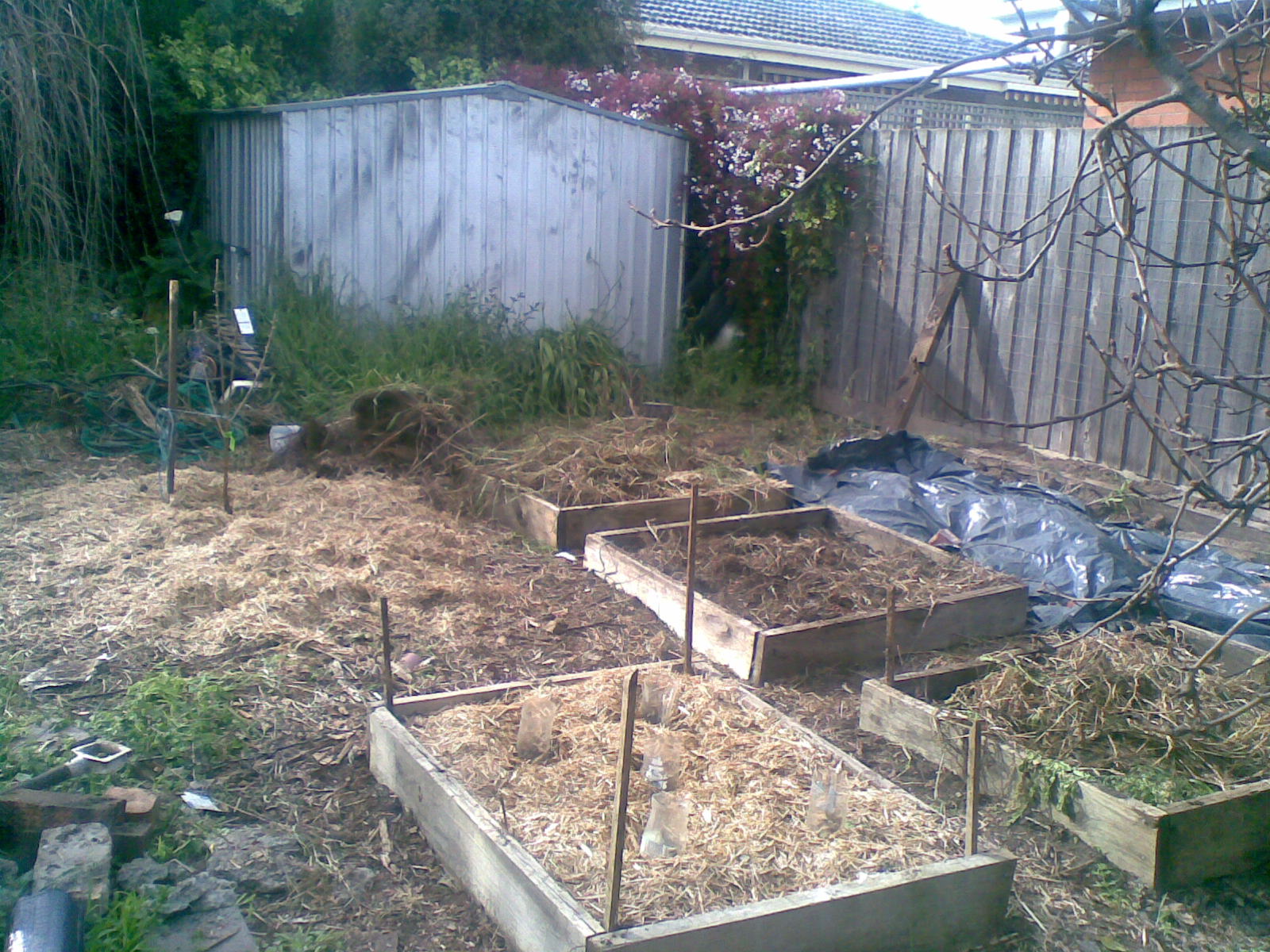
I have also created a 5th veggie bed along the fence which is being used for carrots and raising seeds such as beetroot at the moment. I have planted in my 4 varieties of tomatoes (a little earlier than recommended – but still it has been so darn hot that I haven’t regretted it). I used plastic bottles – top and tailed to provide a mini hot house and to stop the black bird and brown birds from stratching the seedlings out during their dig for worms. I have also planted a chilli from seed my cousin gave me. In fact everything this year has been from seed so far – which is something I have never been organised enough to do!
I have been thrilled by the pile of weeds which I covered over with black plastic sheeting – it became gorgeous soil over winter. I have dug a large trench and filled it with the Winter/Spring weeds – of which there was a bounty after the rains. I also found some garbage bags which Mimi has used to heat up weeds from under the Pear – these were prime compost – at it was about 1 year old and still very moist. In the back corner (of the Yoga room end) I have put weed mat down and allocated this area for chopped wood.

The two grafted apples I have decided to plant in the spiral garden and these will accompany a new purchase – Pink Lady which is nearby the 4 veggie beds. I am trying improving the soil of the veggie beds with potatoes and legumes. I have also planted legumes beside the bath tub where I have created a small bed – which in my whimsy I imagine housing a family of frogs! It may never eventuate – but a home for them I will still make.

The very back is my next challenge – under the olive and down the side – the last frontier.