Art and the Environment

You’ve done it again Patrick Jones:
Art and The Environment – a frank audit

In this months copy of Trouble Jones asks “Are we really accountable for our own pollution, or just for the guilt associated with it?”. Jones’ examines this question in relation to Lucas Ihlein’s environmental audit of In the Balance: Art for a Changing World (Museum of Contemporary Art, Sydney) environmental audit

This really came home to me – when The Arts Centre hosted the Russian Ballet who performed Swan Lake on Ice. Everything – travelled the globe for this tour and the ice cooling refridgerators were going 24/7 to keep the temporary ice rink in place. It was a sell out – a success, but the cost to the environment was the last thing on the presenters agenda.

An audit of my day would look frighteningly similar to the young lady profiled in the article; several work-places and daily on the go food consumption. Finding the solution to living in a city is not a matter of quick fixes – but constant inquiry. I don’t believe in displacing people out of their environment in order to save it. Jones suggests; “It means…highlighting our methods and proccesses, our ability to speculate and to question” – without a critical mind, because simply my tendency is to rebel further, but with genuine interest in practical solutions.

Go to Organisational Change for some great links which explore these topics and more.

Also published this week – one Victorian man’s decision to be buried in an up-right, eco-friendly grave Herald Sun October 5 which to me, is a long awaited demonstration of our power of choice – particularly at this criitcal point.

Ashwood Permaculture Project


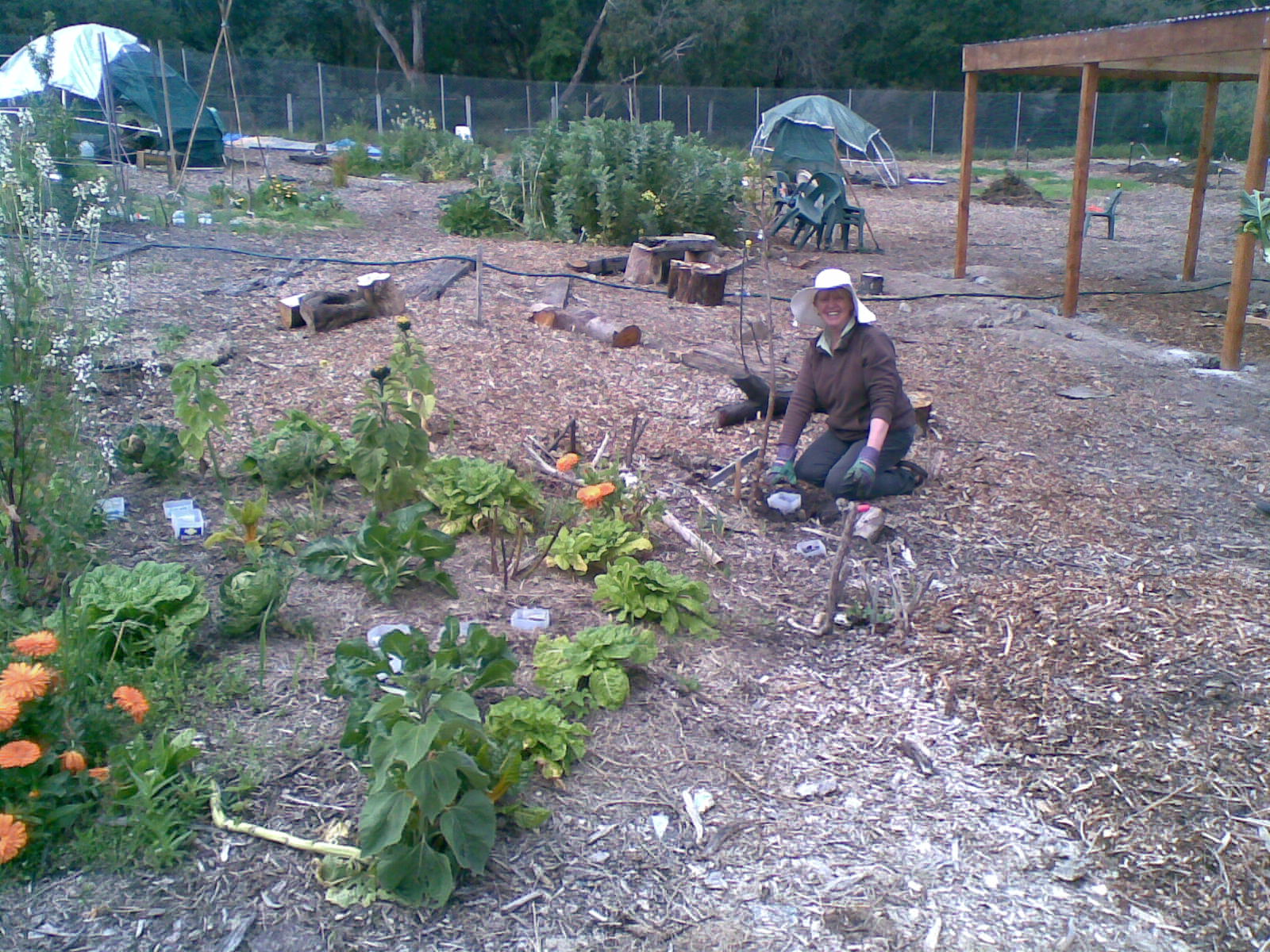
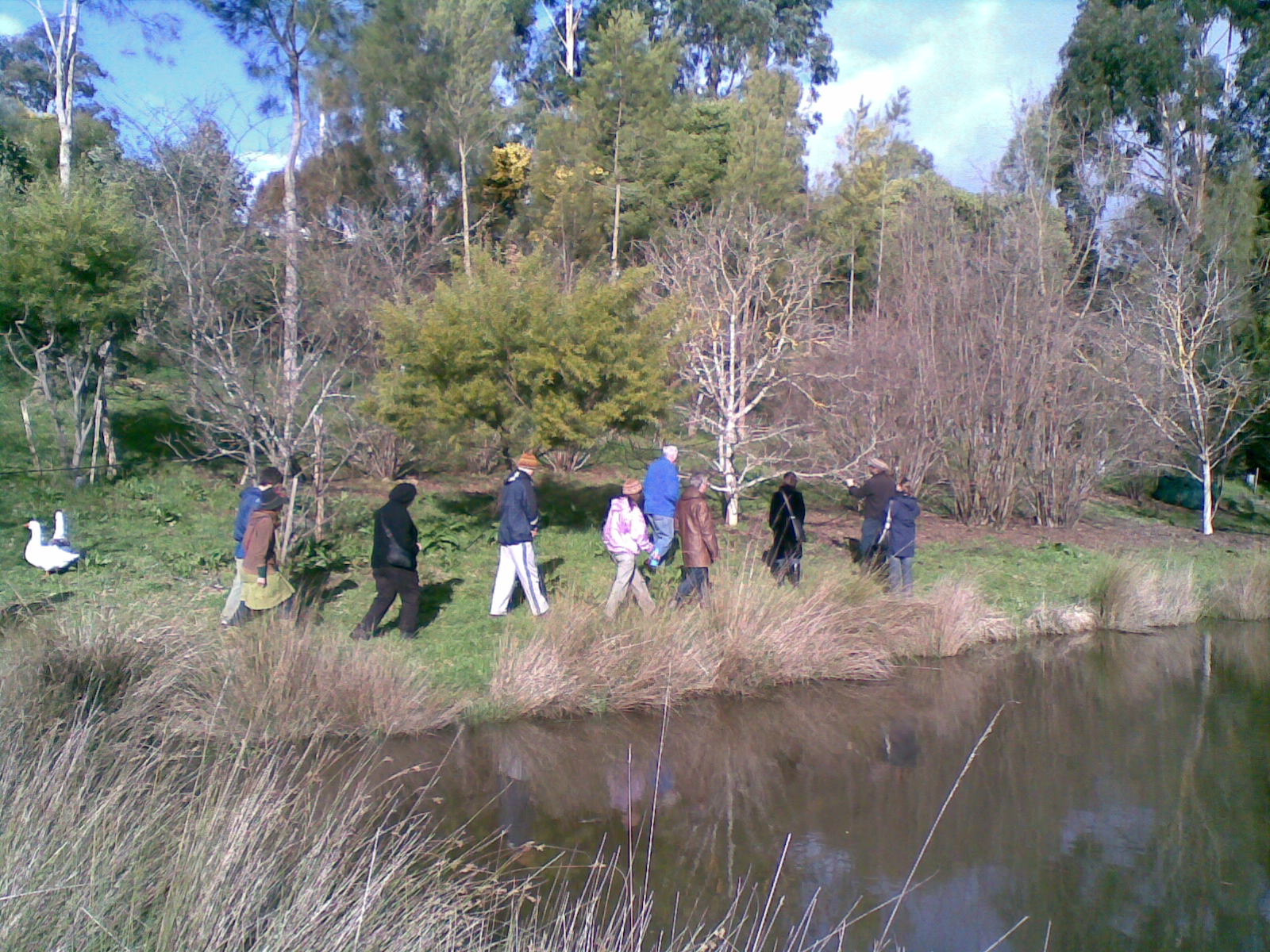
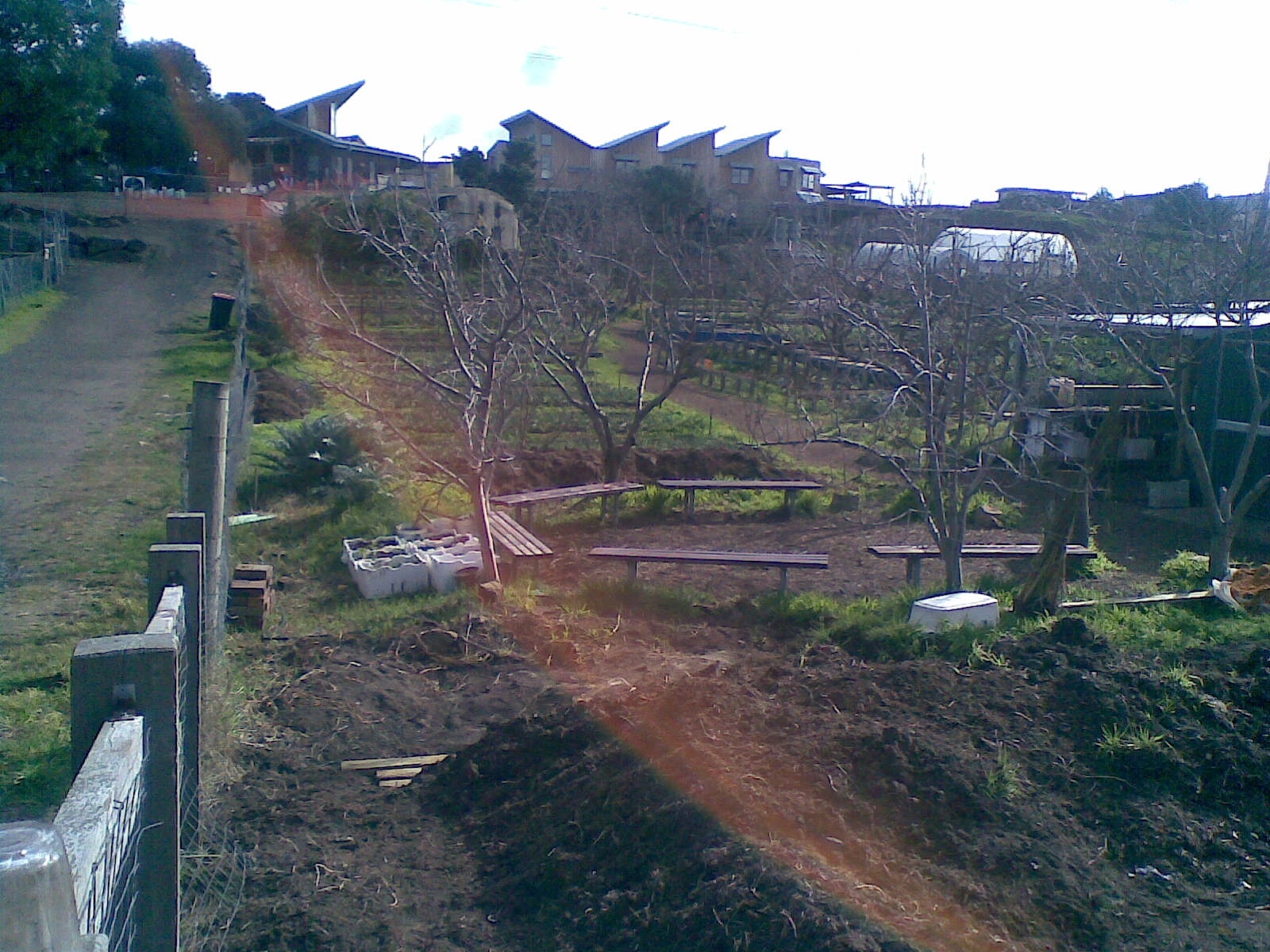
A visit on the weekend to the Ashwood Permaculture Project Garden highlighted once again the many variations of what a Permaculture garden is.

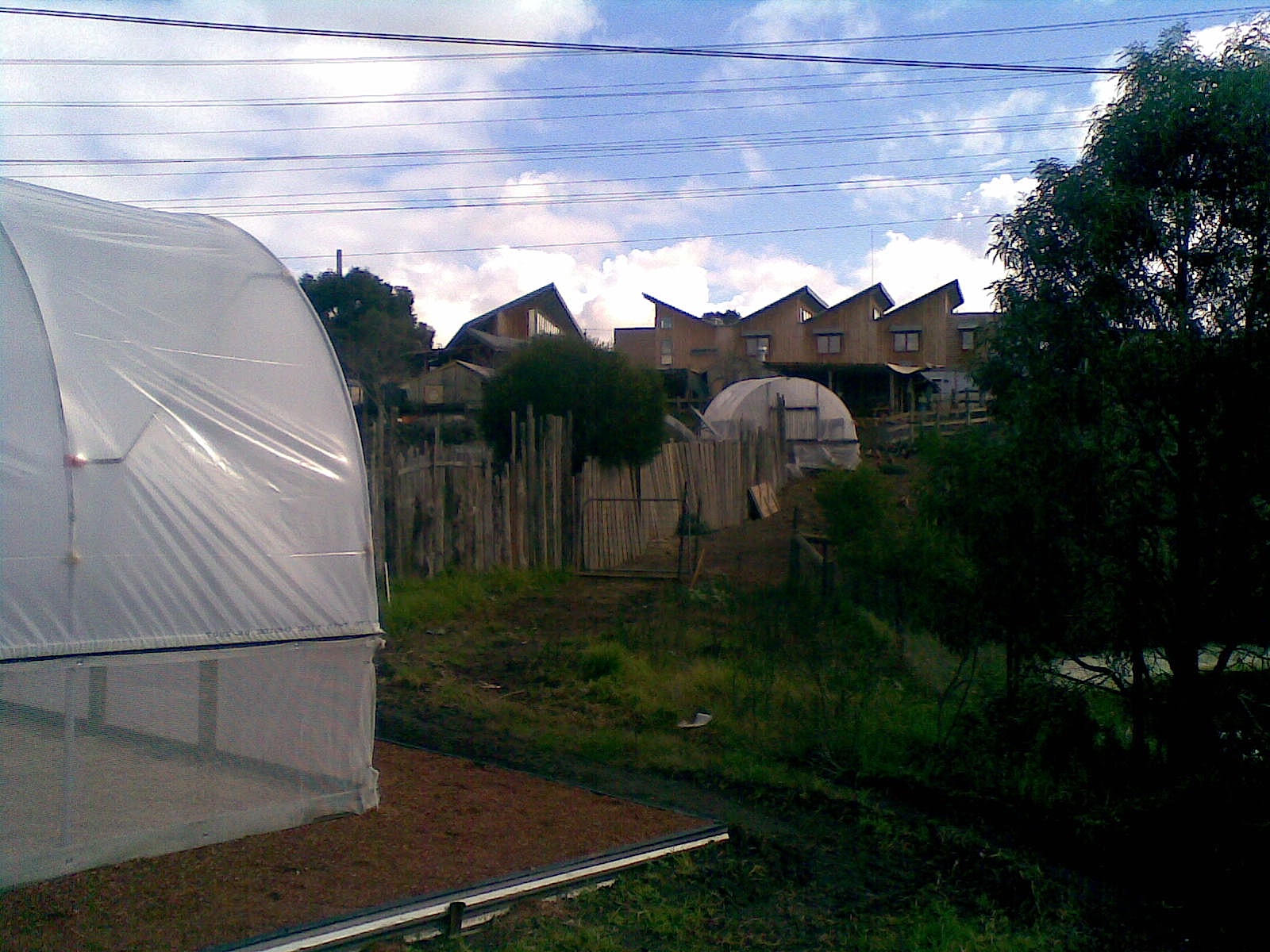
With an emphasis on education and community – this property has evolved from an empty block to a food bowl and outdoor class room for the high school and local volunteers.

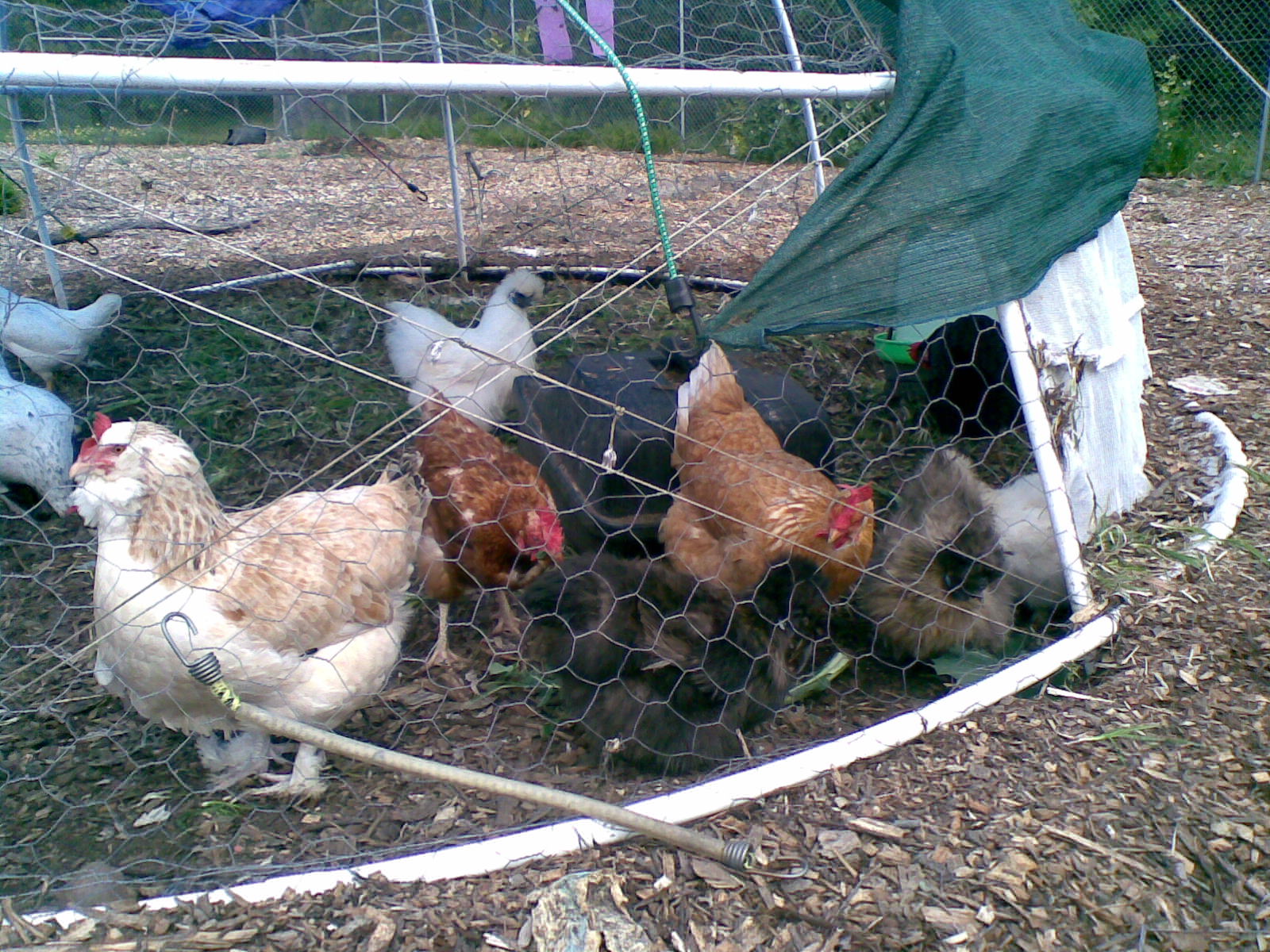
Because it is a vision for a community – the design is fluid. A series of mandalas have been established and the choock are rotated around this living mandala. A series of swales has been established, as it is quite a sloped block, in the form of dug in bath tubs.

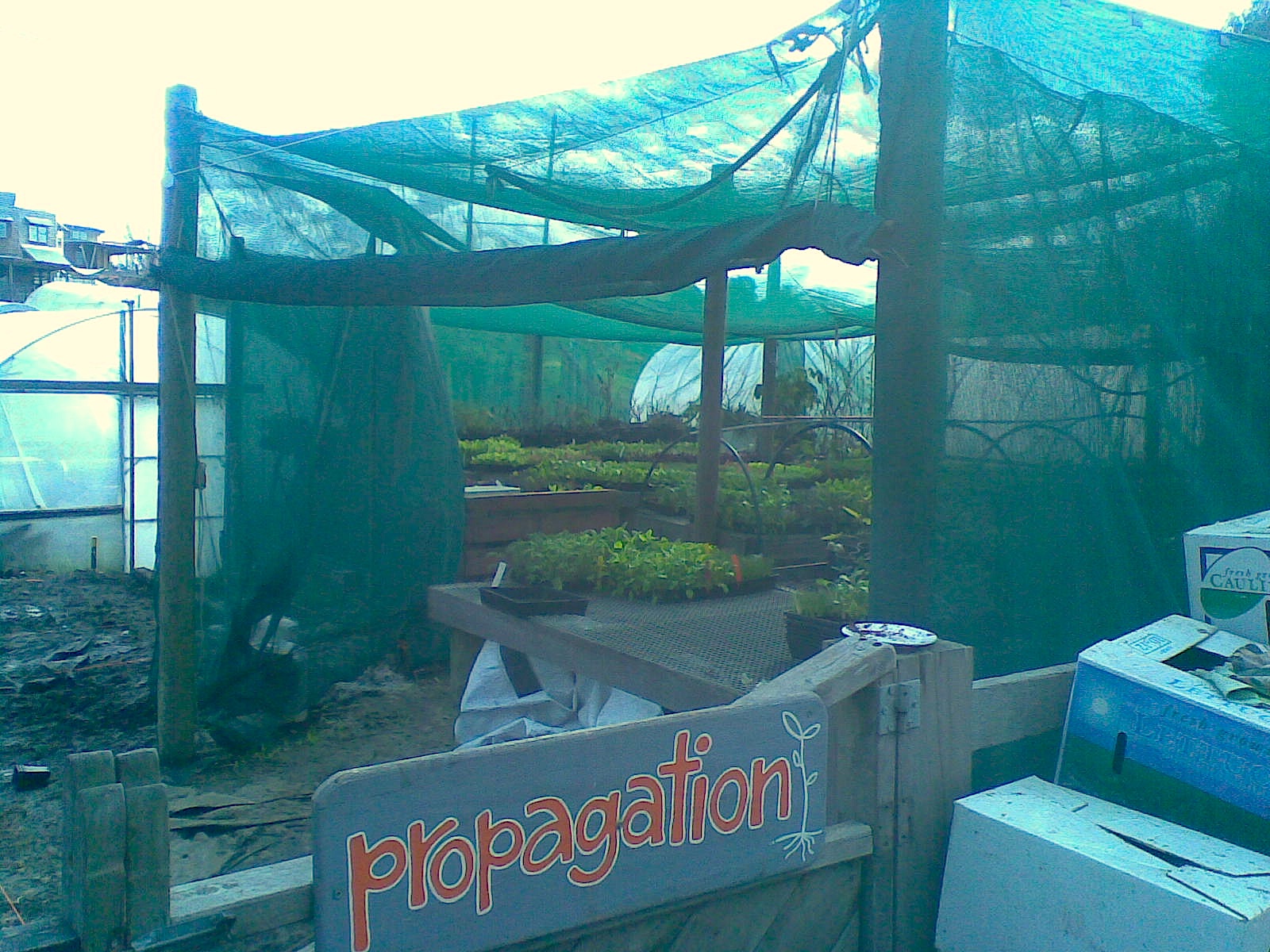
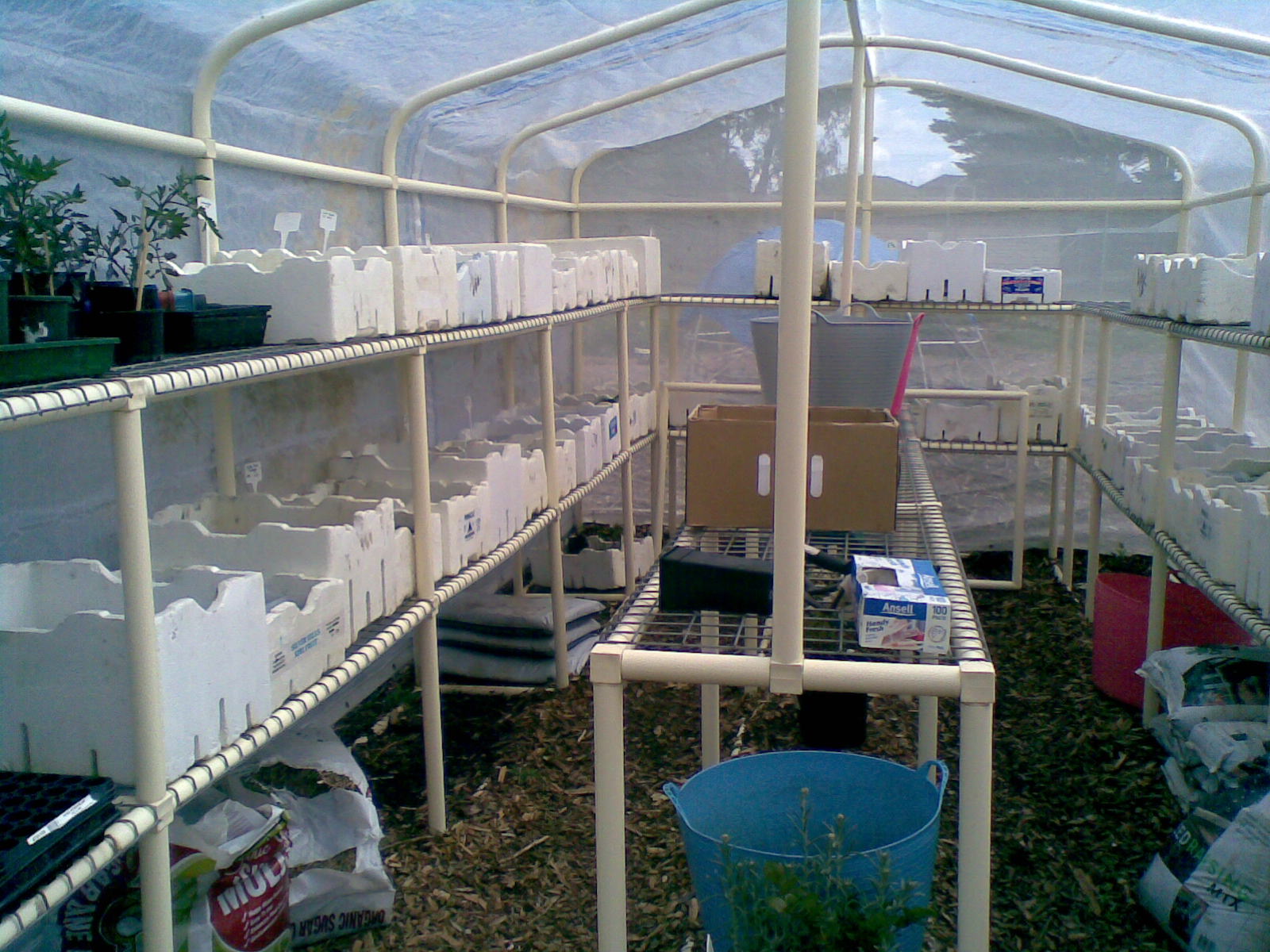
I found the hot house the most impressive aspect. With a very well organised array of seedlings – herbs and edibles – which we chose from to plant out one of the circles on the block.

It was completely different to the two rural permaculture properties I have seen and showed me again how the principles can be taken on and interpreted by an individual to suit their vision.

The Nature of ‘Native’

The use of non-native, alongside native plants for a Permaculture design for working with the elements of water and fire: The Blogger’s Opinion

The use of fire (other than that started by lightening) developed not naturally, but was recognized by Indigenous Australians to assist in both hunting and promoting species that were essential to their diets (for example tubars)(1). This had significant ecological consequences that we are living with today and that have made back burning an integral element to responsible environmental management.

For the sake of this discussion I am examining an urban fringe property for modern day human inhabitants.

Permaculture is a system for human inhabited regions, urban, semi-urban and rural. The connection between Human/Nature is key to understanding why ‘exoitcs’ are selected and integrated into the design.

Permaculture was established in Tasmania in the shadow of the 1970’s bushfires and provided, a then radical, means to plant for both your needs (of food, fodder, timber, shelter) and for your protection (against fire, wind, flood). On a personal note – I know that the apple orchid which divided the national forest from a friend’s property in the Tarra Bulga National Forrest saved not only his life but the home that he had built and was determined to protect on Black Saturday. The radiation thrown off by the Blue Gums, which both line the street and ridge directly opposite his property, fried the Apple Orchid (which stoically has re-sprouted in places) and gave just that moments grace to continue spot fire management.

Exotics – is an interesting word. As a ‘white fella’ I am an ‘exotic’ to this land. Widen the scope… as only recent inhabitant of the planet ‘indigenous’ Australians could be considered exotic to the Australian Landscape. Their introduction of fire to the environment altered which species were suppressed and which were promoted for them to thrive and survive.

Within the context of the Victorian Forrest, the Blue Gum is a relatively young addition to the system – which has flourished in bush fire conditions, out numbering the more historic native Pines and Myrtles. Where do we draw the line between what belongs (regardless of its intrinsic value) and what is ‘exotic’, foreign and therefore displaced?

Nomenclature terms (native/non-native, exotic/natural) used for the naming of things and categorization are useful in creating clarity and understanding, and offer a chance to define a subject for the sake of argument. (I more than anyone love to stroll the Bot Gardens and see how creatively and beautifully they have divided and categorized the plant collection). However this classification of belonging vs displaced is entirely redundant, and in fact detrimental to forming deeper connection, understanding and discovering (now) critical advantages for everyday use of plant species.

Now more than ever – with population off the scale and our primary energy source (cheap oil) rapidly diminishing – we have to be savy if we want future generations to have half a chance at survival. This means avoiding “throwing the baby out with bath water”. Imagine a world where the plastics manufactured from cheap oil were valued as a precious resource. Compared with the gluttony we now are faced with. If we had acted with the foresight of treasuring oil rather than exploiting it, we would not be now facing the Peak Oil crisis which comes just 2 generation after the discovery of this incredible resource.

Back to the context of this discussion; along waterways and creeks Holmgren advocates for the acceleration, rather than reversal of the natural succession already in motion ‘towards a close canopy of deciduous trees that will reduce long term hazard, improve access and amenity and improve water quality … ”:

Past practice of promoting indigenous revegetation on private and public land in urban and urban fringe areas should be modified to prioritise low fire hazard and actively fire retardant species both native and non-native.(2)

This approach takes into account the events of history (colonization) and works to include the consequent changes to the environment within a managed system.

At long last the mainstream is catching on: “Aid is only temporary; lasting solutions are more likely to be found in community based projects that tap into existing economic models and to produce improvement” (Seeds of Hope: A Journey with Hugh Jackman, The Age Green Guide 16/09/10).

Much too late (in my opinion) – we are realising that we have to work with what we’ve got – and what we’ve got right now is a long-held inhabited and altered environment that was later colonized and dramatically changed once again. The linear time frame alone does not rationalize what plants are most appropriate for current day planning within an inhabited setting. The argument that this was here first therefore it must be the ‘natural’ state of things works against, rather than with what is right now in this very reality.

While at Bunnings today I read the label “I’m Aussie, be proud to plant me” – I thought yeah I am proud – but what does being “aussie” mean these days – it means much much more than “native”. And I think any Australian, Indigenous or Non-indigenous would agree we can learn and achieve more by working together and integrating the wisdom available – regardless of its category, label or status, much the same way that planting native next to non-native can offer a safer, healthier and smarter (not to mention more bio-diverse) eco-system. So long as it is done with discernment.

1 Saleh, A., (http://www.abc.net.au/science/news/stories/s1398157.htm)
2 Holmgren, D., ‘Flywire House; A case study in design against bushfire’.
David Holmgren in Daylesford


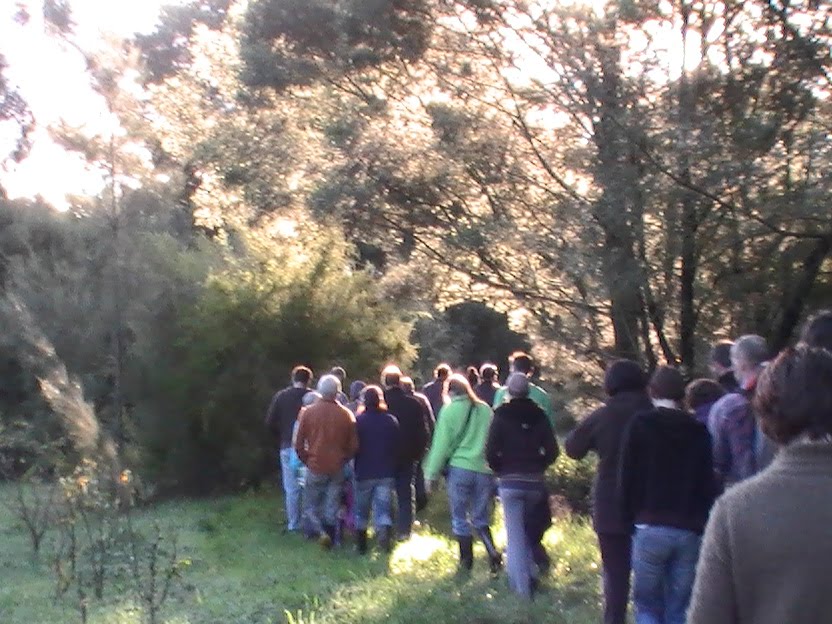
Melliodora Tour – September

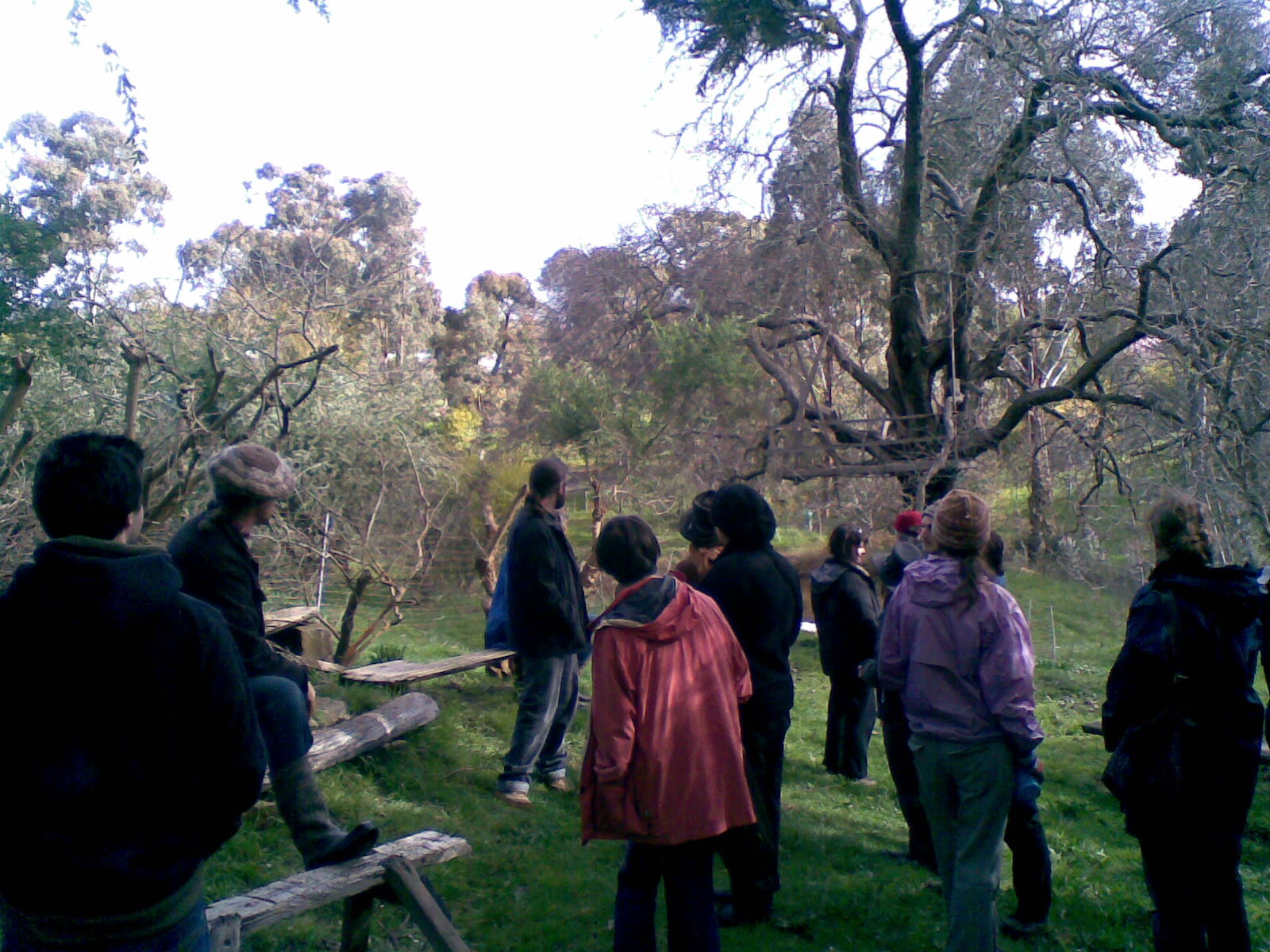
The tour lead by David Holmgren of his property in Daylesford demonstrated to me that Permaculture is a system of care, attention and connection to the place and the people that inhabit it. Unlike other approaches that I have witnessed where the ‘low maintenance’ and ‘minimum care’ approach to a self-sustaining system has been made, David Holmgren demonstrated that the relationship with the property is one born out of a passion and immaculate attention to detail – while at the same time down to earth and practical in every sense.

Emphasis was placed on the importance of soil condition, and David offered various approaches for re-balancing soil structure for optimal mineral balance. At the end of the day – if the soil contains the correct balance of elements for the plant – produce such as pumpkin should keep through to mid Summer. I find this particularly interesting given the finding that are being made into the cause of Alzheimer’s being that of mineral inbalance, whereby the brain is becoming “rusty” from toxins.

David spoke about allowing a design to develop organically. I have experience this myself where – the garden will slowly reveal to me what will work and what will not work. It is not a matter of logic or careful planning (although these or course are recommended) so much as observation over time, trial and error. Again it returns to creating a relationship – spending time with the space and its “quirks”.

Having cultivated some artichokes recently I was thrilled to see that David has used this plant as the under-story for fruit trees. As the artichoke is active in Winter – and is busy working away while the fruit tree above is dormant and free of leaves to allow plenty of sunlight through.

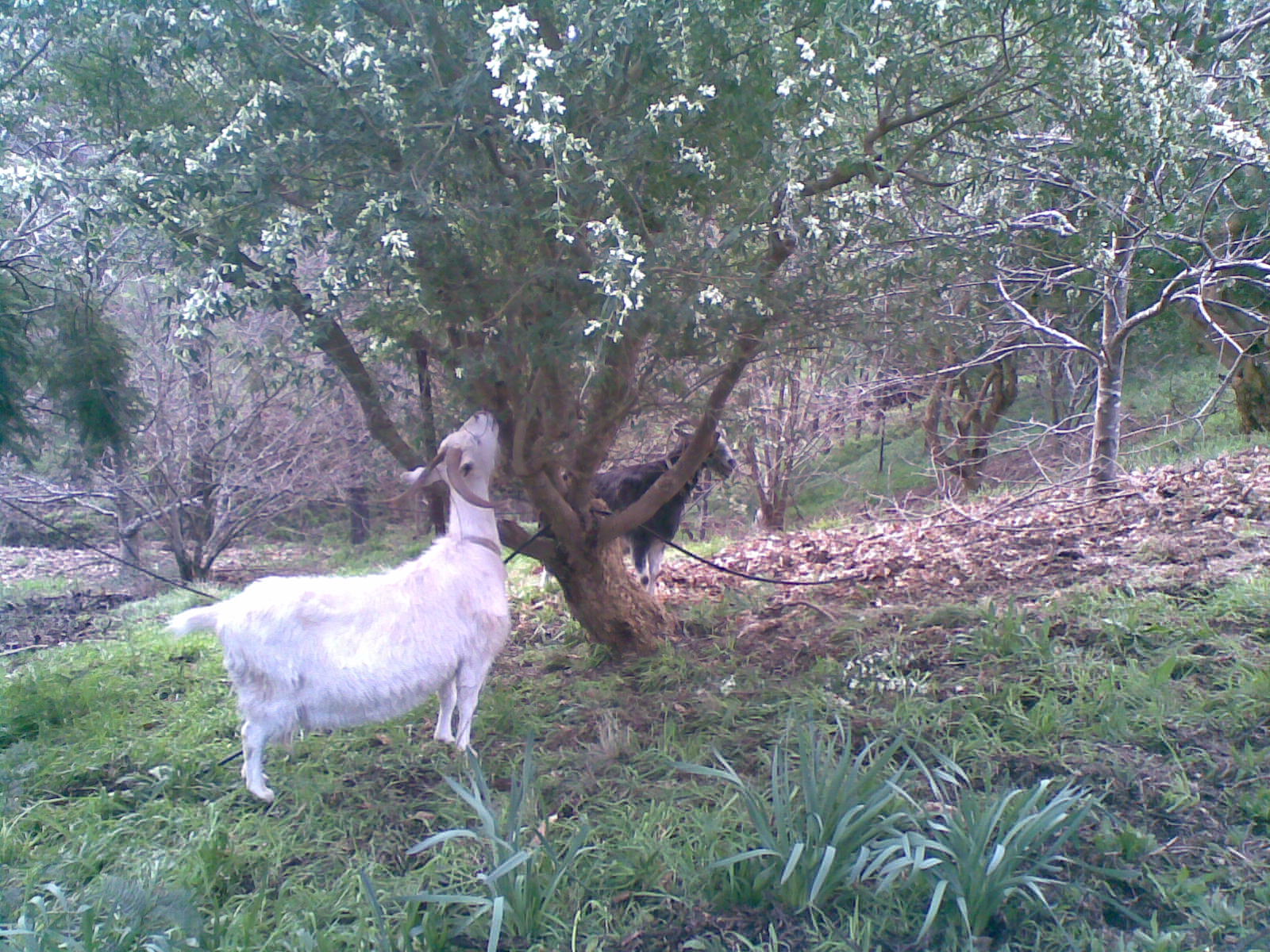
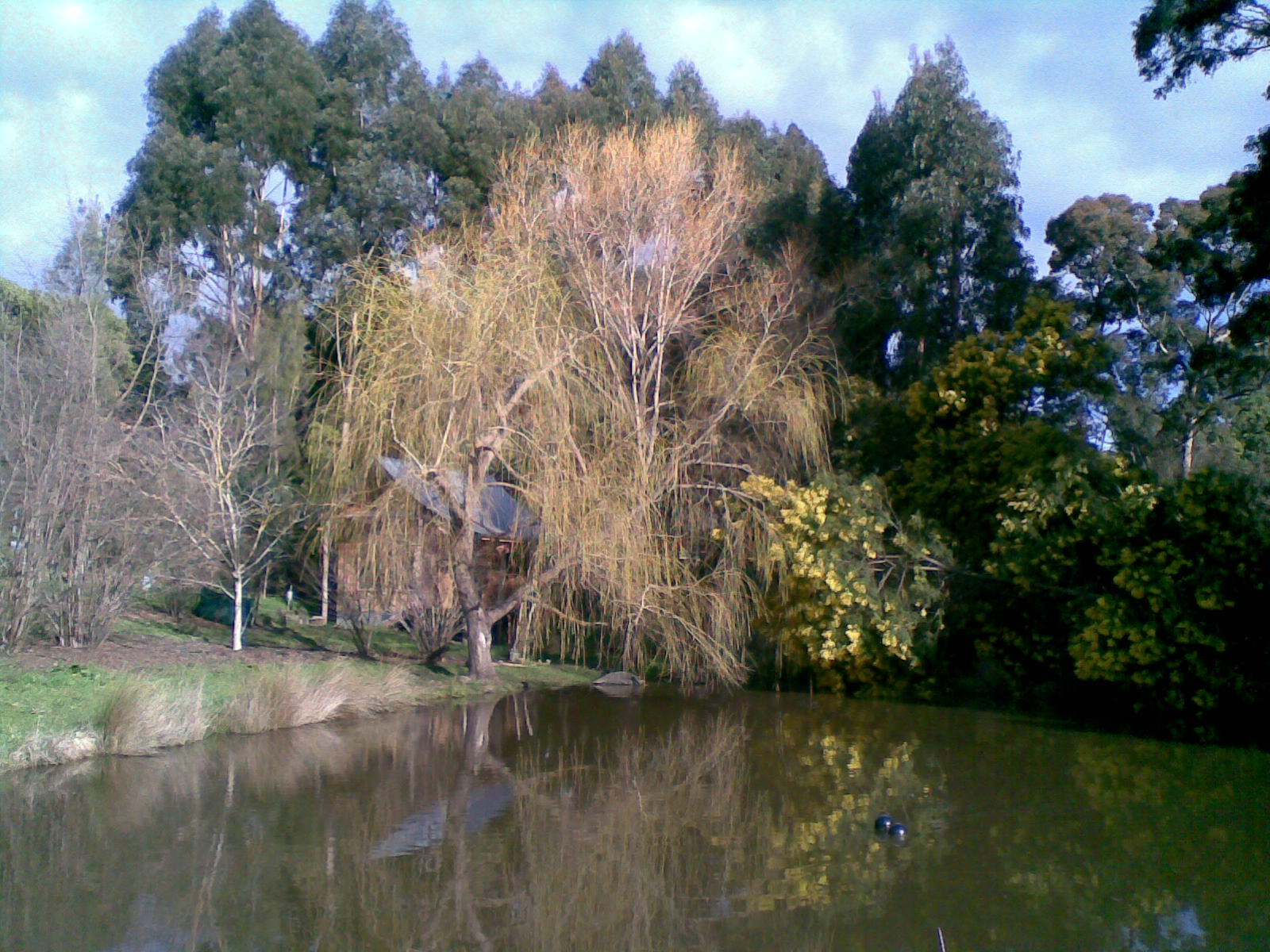
The importance of tree selection for fodder (mostly for the goats who put on a real show) and also to support sun catchment was discussed. No pines or gum trees were planted on the property – but were restricted to the very outer border and are likely to be cut for fire wood. With the exception of the Bunya Bunya pine which is harvested (well it drops huge pine cones) for the pine nuts. Deciduous trees, while not native were selected as “settlement friendly”. Trees recommended included oak, willow, blackwood and black walnut. Perriwinkles along the boundaries were chosen as they are shade tolerant, soil improvers and most important fire retardants. These were planted along the river bank along with the cricket bat willow which had been cut and sent off to make … cricket bats!

The willow, which has been persecuted as a non-native, is used to create a sound rootmat along the river edge and similar to the Mellaluka in the Northern Territory is used for re-building hydrology (catching sediment and improving soil structure).
Closer to home (Zone 2-3) always the preference is towards food and fodder trees. Walnut and Hazelnuts were inter-planted with oak and tall, well-pruned Casuarina. David discussed that you shouldn’t over do bio-mass and it was clear that between the goats and his constant pruning that every tree on the property was contributing, rather than detracting from the system. Also once they reached maturity and if they were taking too much sunlight, space or water they would be cut for their wood. Walnut trees for example pull a lot of nutrients from the system and can grow as fast as gum trees if the mineral balance of the soil is right. The dam at the bottom of the property acted as a sun catcher for the main orchid, reflecting the late afternoon rays up the slope all towards the home. Even the slope was considered in the design – as to where the choockies would dig in order to bring, for example, the oak leafs down of the slope and pile up for creating humus.

It was a lovely design – not overwhelming, but intrincsic with its detail. Most importantly it worked.

Highlight of the property would have to the Pear Tree. I would never have identified it as a Pear – it was huge. Planted some time during the gold rush and nearby the remains of an old homestead. The ley lines of the property meet at a conjuction just infront of the tree and is said to be a wonderful place for healing! Well the entire property resonated with a healing vibration. But this point was certainly a lovely place to stand and take it all in!

Make Rooting Hormone From Willow

Make Rooting Hormone From Willow

With the rains that have arrived this winter – its been a great season for transplanting and propogating. Recently at the Toora Grafting day there was discussion about the various uses of hormone powders vs honey. The issue was – if you were grafting a tree for organic or bio-dynamic purposes the hormone powder would disqualify the tree. Honey is an anti-bacterial agent but does not act as a hormone. Here is an alternative… or course the issue with this one is how to treat the graft. Perhaps dipping it after it has been cut – before tapeing the graft would work. Yet to find myself a Willow – but if you have one handy give the recipe a try this Spring !!

Toora Heritage Pear Farm – Grafting Day

Toora Heritage Pear Farm

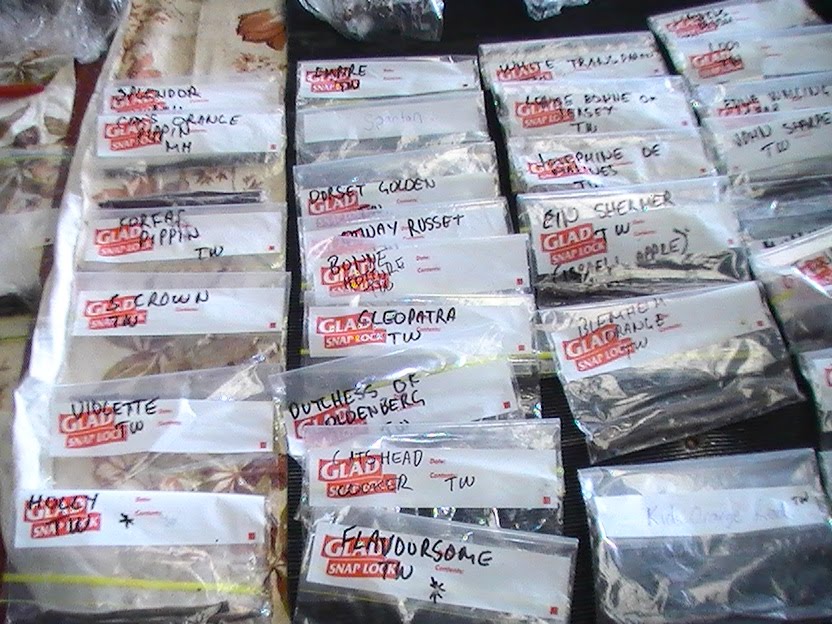
Toora Heritage Pear Farm is a living museum of heritage pear species which are being cared for and propagated by the Friends of the Toora Heritage Pear Farm. This weekend – the Friends hosted a grafting workshop in order to continue the developement and bio-diversity of both heritage pears and apples in the region. Neil inspired the group with a pep talk – taking us through the reasons and techniques for grafting and we were able to choose from about 100 species of heritage pears or apples. Taking root stock suitable to our soil conditions and also the size of the finished plant we desired we were then able to choose out species with the desired characteristics. The choices and combinations was truly overwhelming. First of all – if you are grafting more than one species – they must have the same growth rate, secondly they must also flower at the same time to ensure pollination. Finally after much deliberations I chose the Snow Apple and the Tom Pippin. Later Neil told me this was an “old timers favorite pair”. Well I completely fluked that one – after 2 hours of mucking about trying to find a way through the information that was available. A word of warning – go to such workshop with some knowledge of heritage pears or apples!!!


http://south-gippsland.com/toora-pear-orchard.htm

http://www.woodbridgefruittrees.com.au/

CERES


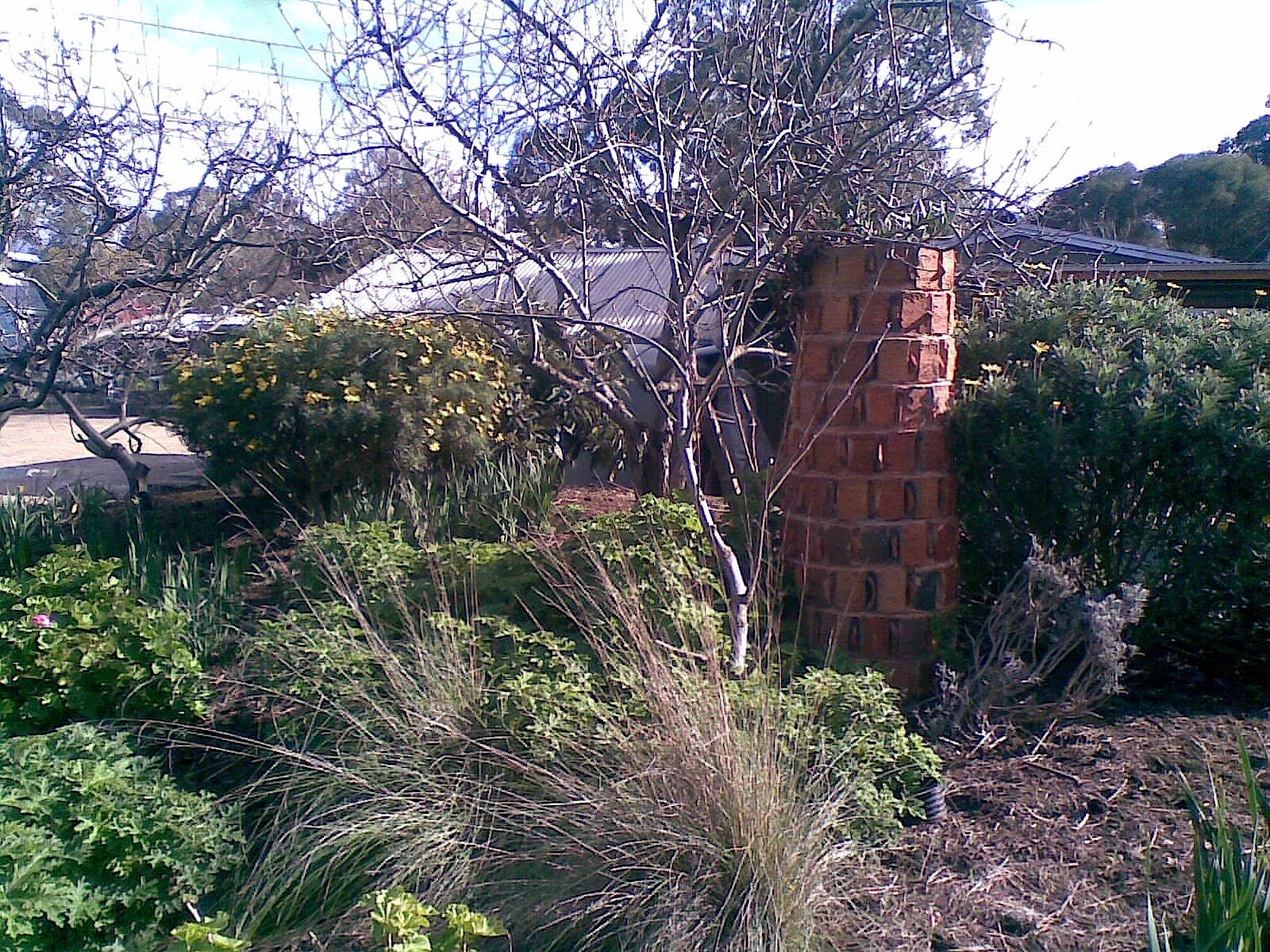
I went to Ceres last Sunday to get some plants and seeds and also to check out thier permaculture design course. Some ideas that I got there included using all of our bricks to build a chimney style pot! I just loved the way it created a little landscape in the raised garden bed. Also the propagating area – the shade cloth could be done simply over any area. They have also constructed a series of green houses (well white houses actually) I saw a similar example of this structure at the Southern Cross Inst. of Permaculture with simply created with steel star pickets with plastic piping placed over the picket and stretch over (creating a rainbow) to the other picket. This makes it very easy to assemble – and dissemble and recyle the material! I think some thing of this kind will be put in the back garden beside the shed.

I have planted some artichoke seeds bought at the Ceres nursery. These are heading into the back yoga studio plot. Plans for the back include splitting the rhubarb and also I have added a Cardomon plant where the fuscia came out due to the heat – it is a real hot spot so lets see. The cardomon plant – as well as its seeds – has great leaves for wrapping fish or scallops for cooking!! It gets to three metres which is a little higher than I was hopeing but surely I can prune the top off if it gets too big. Right now it is in front of the yoga room – in between the windows.

http://www.ceres.org.au/

Front Key Hole Stage 2


Planting has began.
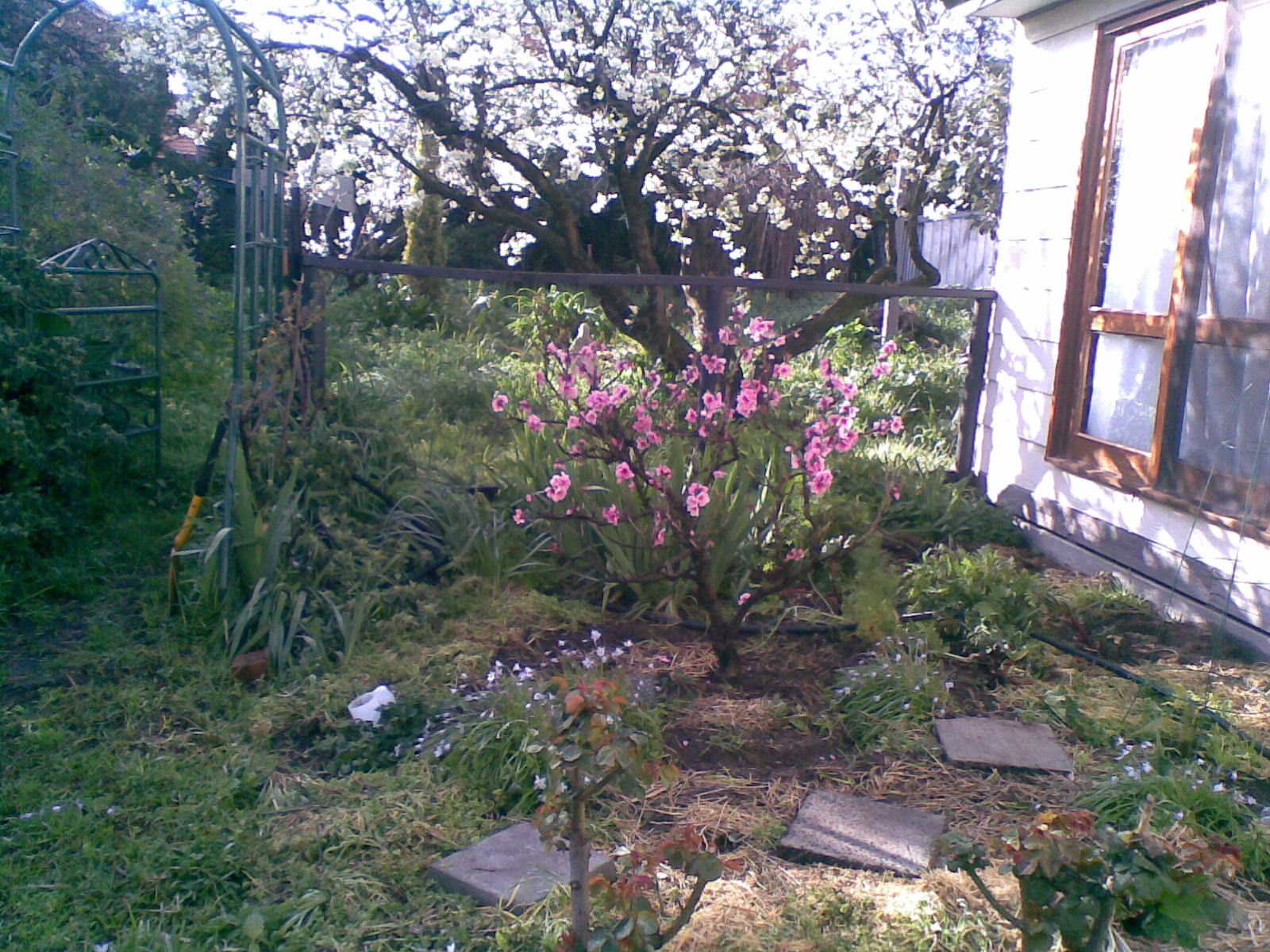
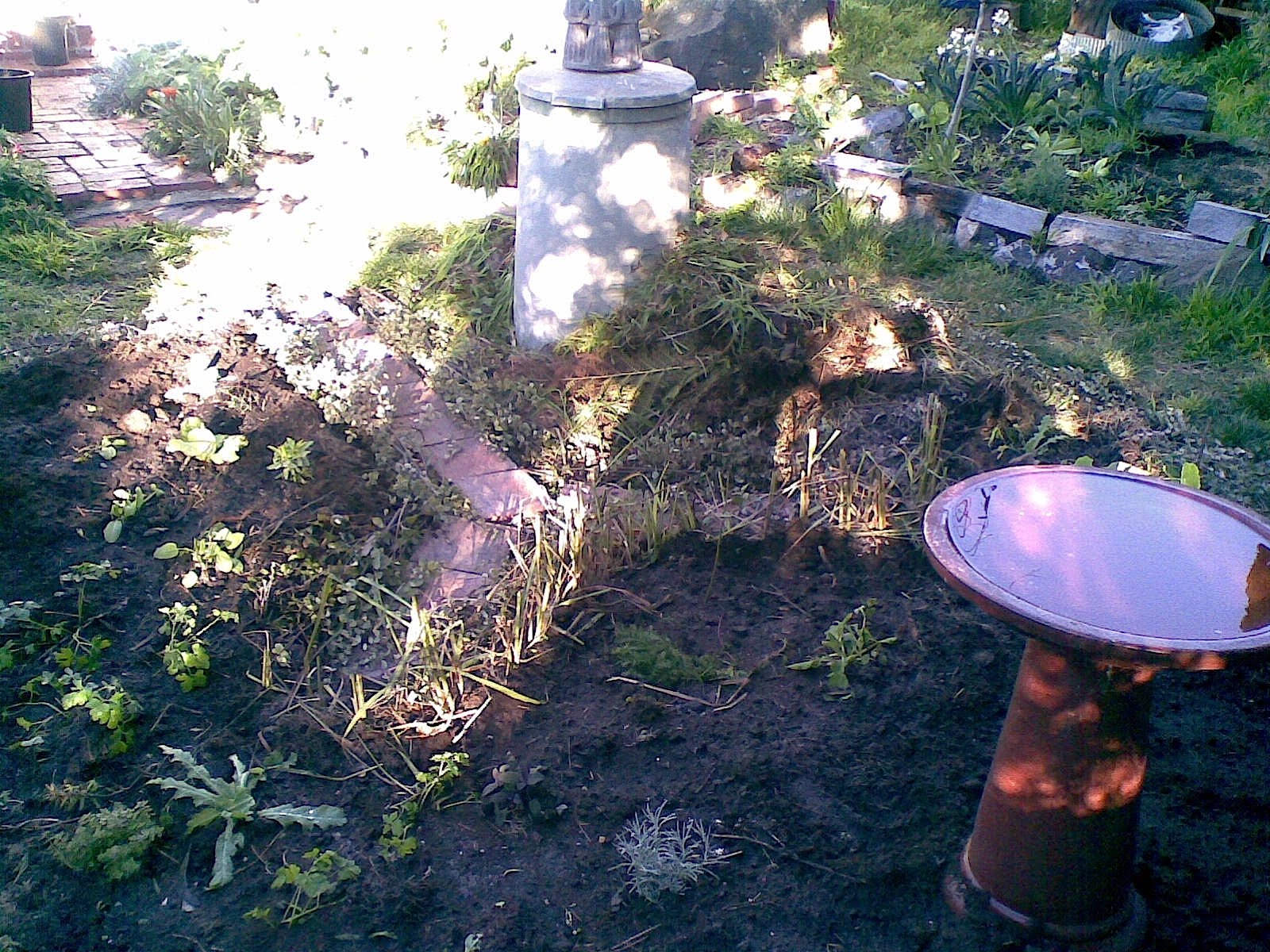
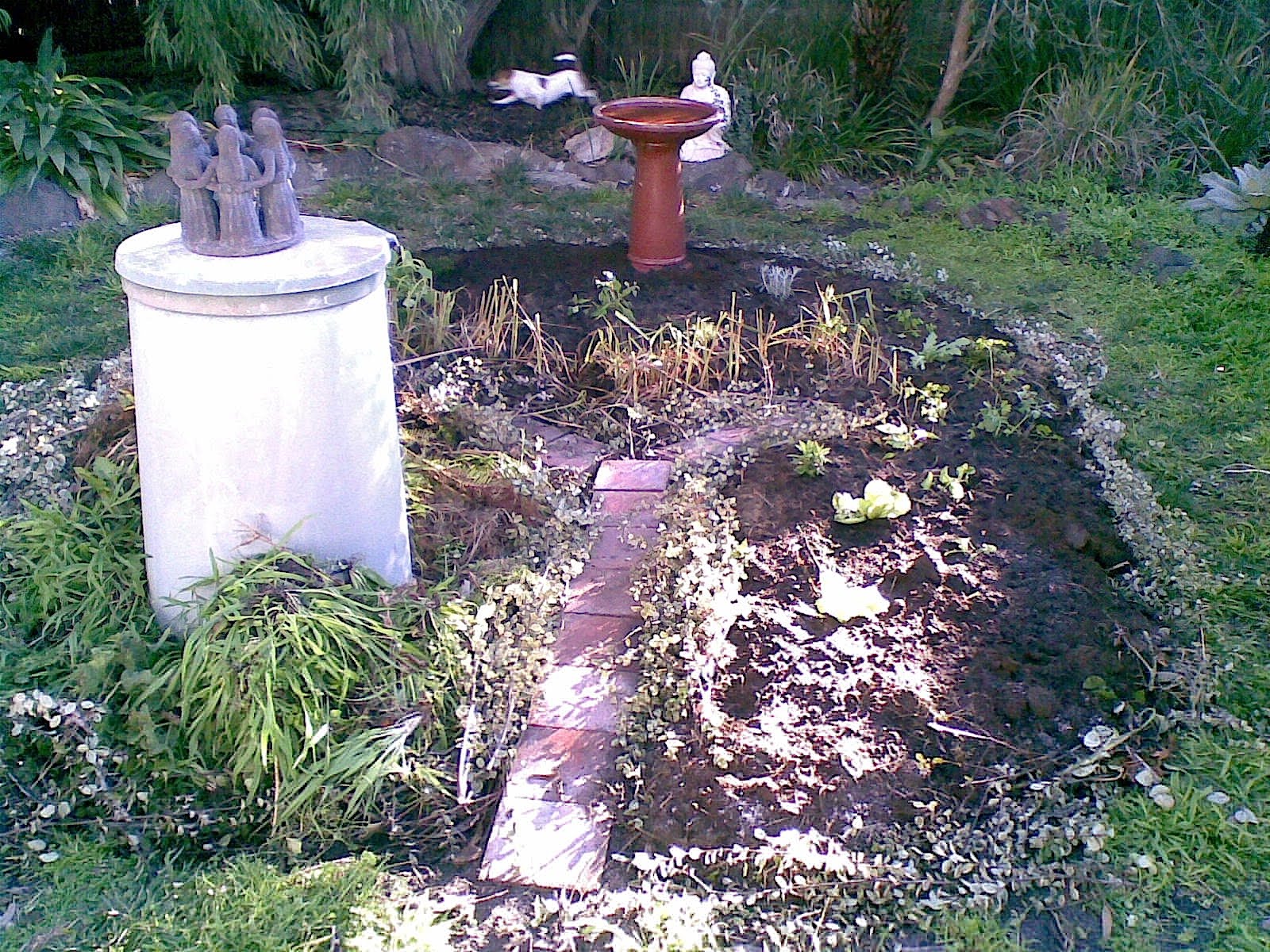
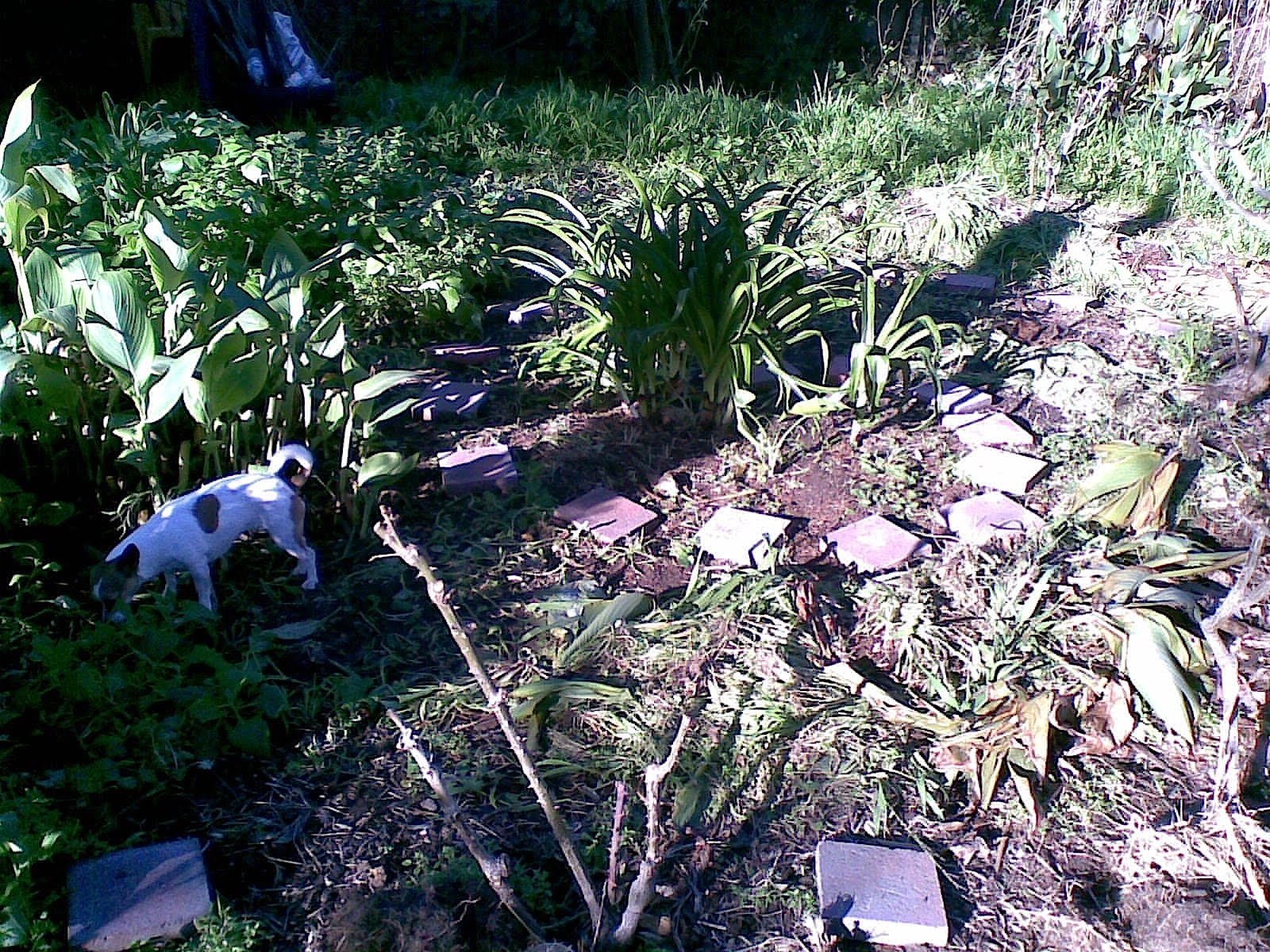
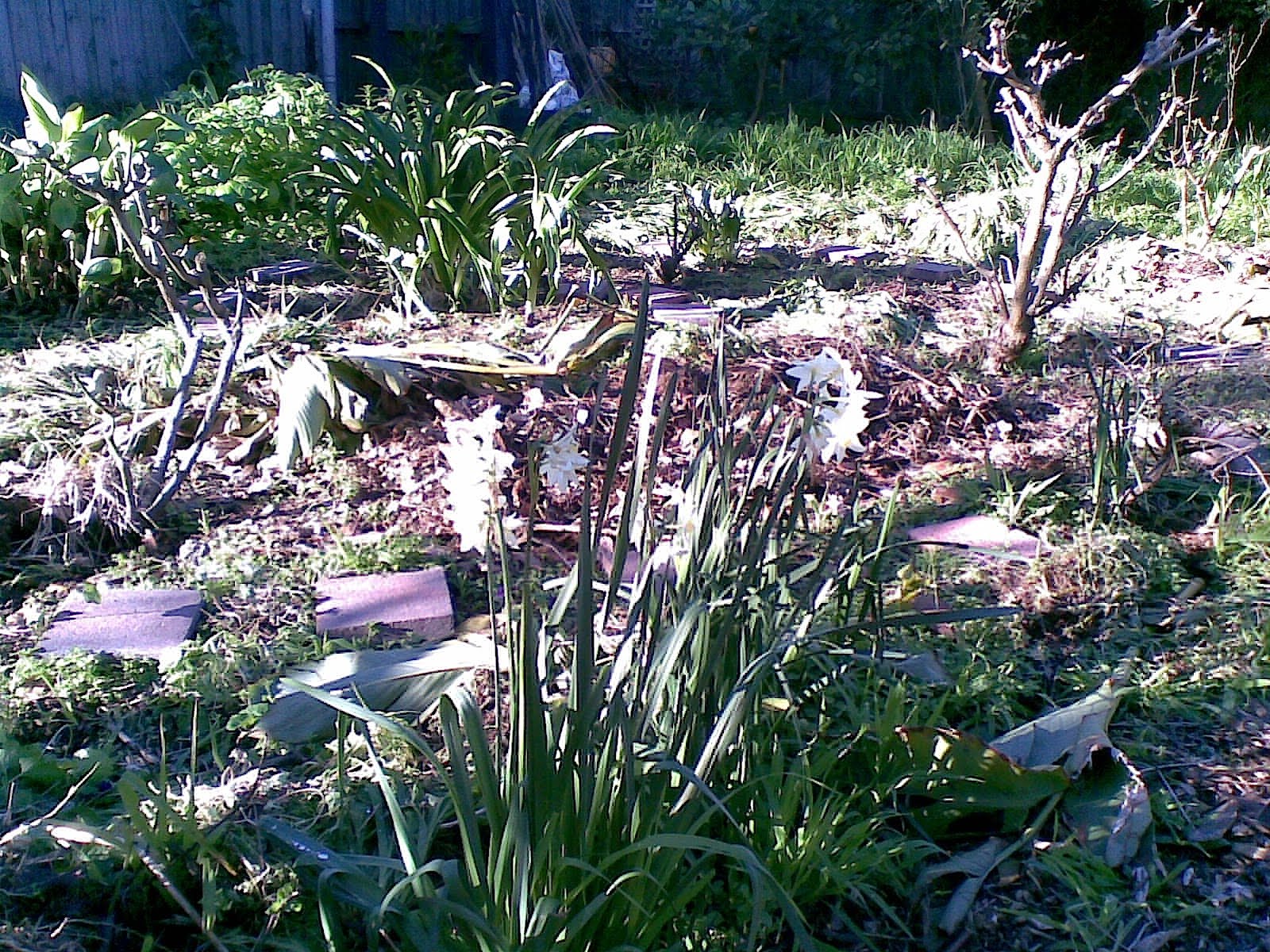
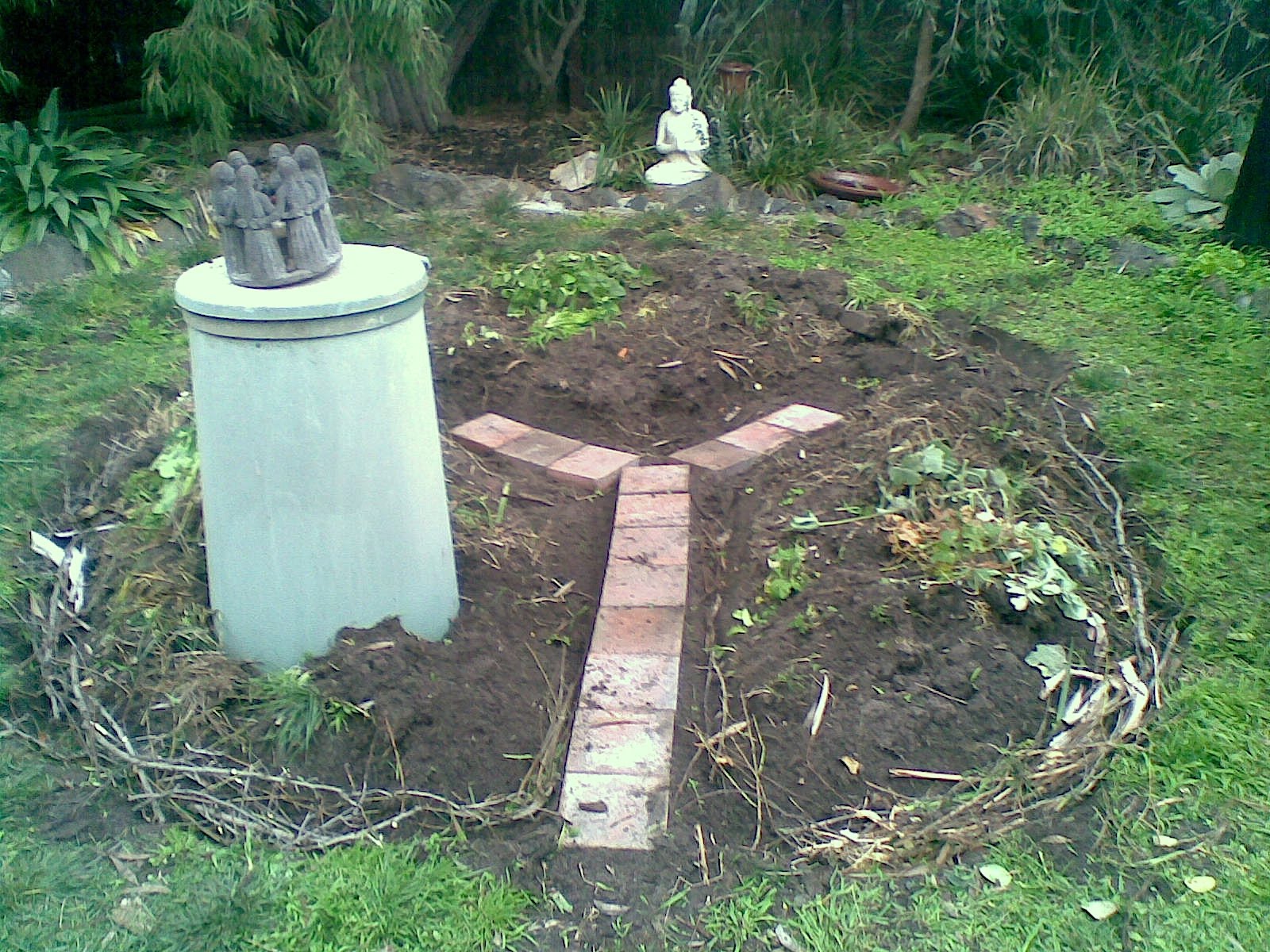
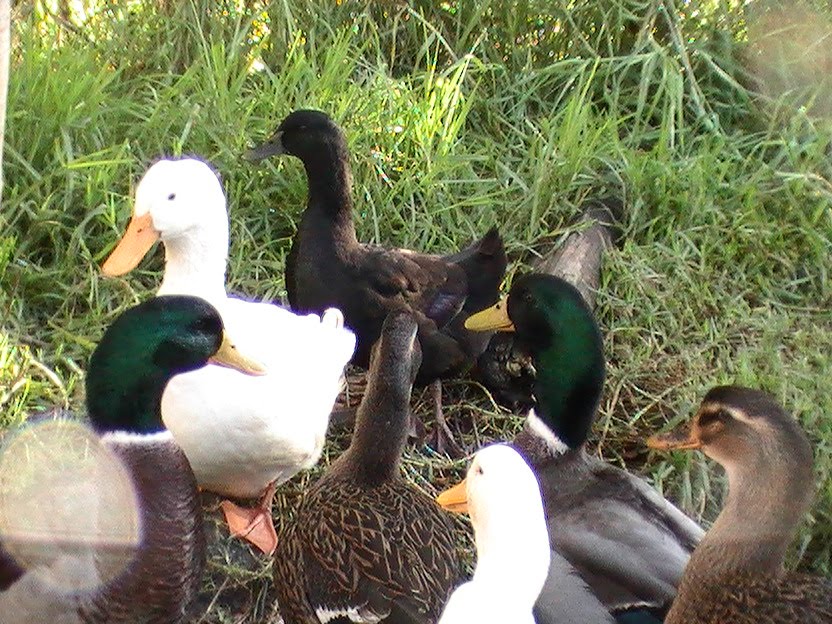
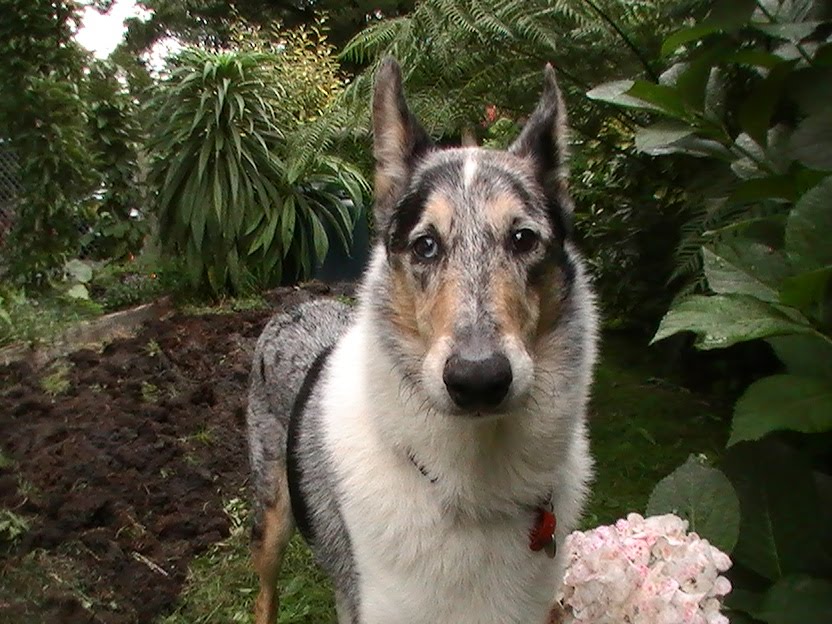
I am realising that this is a very sunny but also a very small little patch really. Therefore rather than fill it up with annuals I am going more for a perrenial garden bed interspersed with annuals. So far the herbs are in. I have found the sunniest and also the driest patches and made these the mediterranean corner! This is the top corner. I have planted thyme here and some New Zealand spinach and Nasturtiams. I have also replanted a dear blue berry which was struggling where it was. I have placed this at the top of the path. Along the V at the top of the path I have planted lemon grass which was in need of splitting after two years or so of no harvesting! This lemon grass wall provides a wind break and also stops the pup from running across it to get to her favourite past time of patrolling the front fence (as seen in photo two the mad white flash across the fence!). The area where the compost bin is now will be planted with tomatoes this summer and root veg next winter. I want to put some asparagus in with the lettuces and some garlic (if its not too late). The bird bath is a bit of an experiment at the moment. So far the birds are loving it and scratching around in the soil which was something I wanted to encourage with not having chookies to serve this purpose. They splash about and sprinkle a little water down below. Also their gifts of poop are full of nitrogen – not to mention unwanted seeds – but eh they are great entertainment. chen was having her bone the other day and took a leap in the direction of the bird bath – the bird didn’t faulter – kept on with its morning cleanse and ignored the protest of pup who quickly went straight back to her bone.

Back Sprial Garden


Now the front key hole garden has taken shape I have focused my energies on the back spiral garden. It took shape this weekend and I was able to navigate a lot of the roses to find a path way that would give me access and at the same time nurture what is already planted.

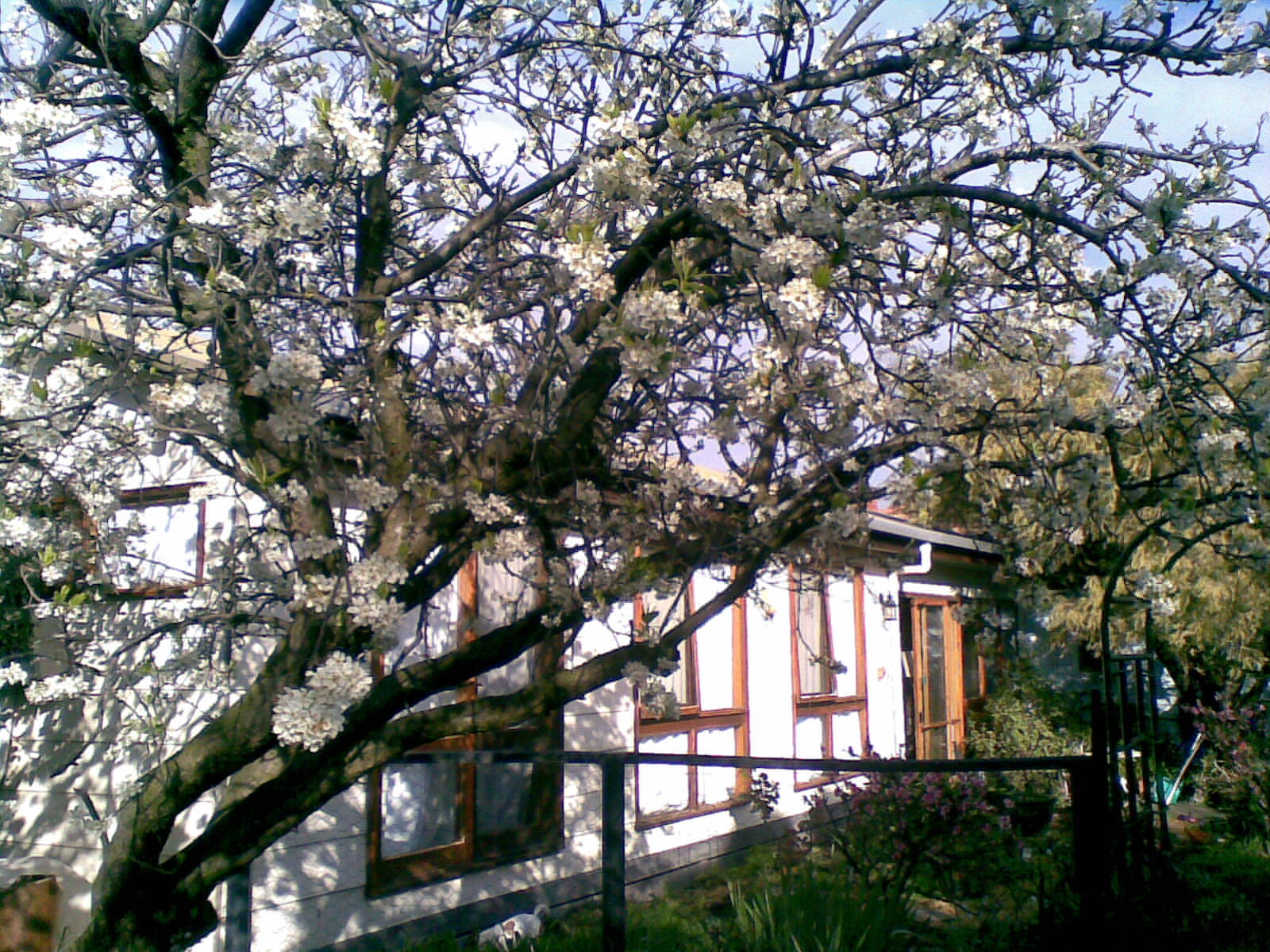
After finishing the initial spiral I stood at the front of the garden – under the plum tree and knew already that I would be much too tempted to walk through the middle – rather than walking the full length of the spiral in order to do a little weeding or picking.

Then AHA an image dropped in ! The chokurei symbol which I had been inducted into during Reiki 1. Is is absolutely perfect for the garden. It allows a long spiral path for meditative walk and instant access to the center – or right across to the top of spiral near the olive.

I am absolutely thrilled with using this healing symbol and maintaining a functional space.

An example of a Chokurei
http://www.energyenhancement.org/MorePictures/chokurei.jpg

Aloysia triphylla or Lemon Verbena

It is this time of year when I am ever so grateful for having dried the Lemon Verbena leaves cut during summer to make a warm tea. I always knew of this tea’s high Vitamin A content – and that it was good for the skin but wasn’t aware of its anti stress and spasm qualities as well!! Aha perfect, will be tucking up on the couch with a cup soon. I am very lucky to have a neighbor who I garden for that lets me take her cuttings and am hoping my weee little verbena will take off this summer – where to put it once it is out of the pot is something that needs some thought. I have just removed a fuscia from the yoga room window perhaps the verbena can tolerate this sunny spot.

http://www.ageless.co.za/herbal-encyclopedia.htm

Kale

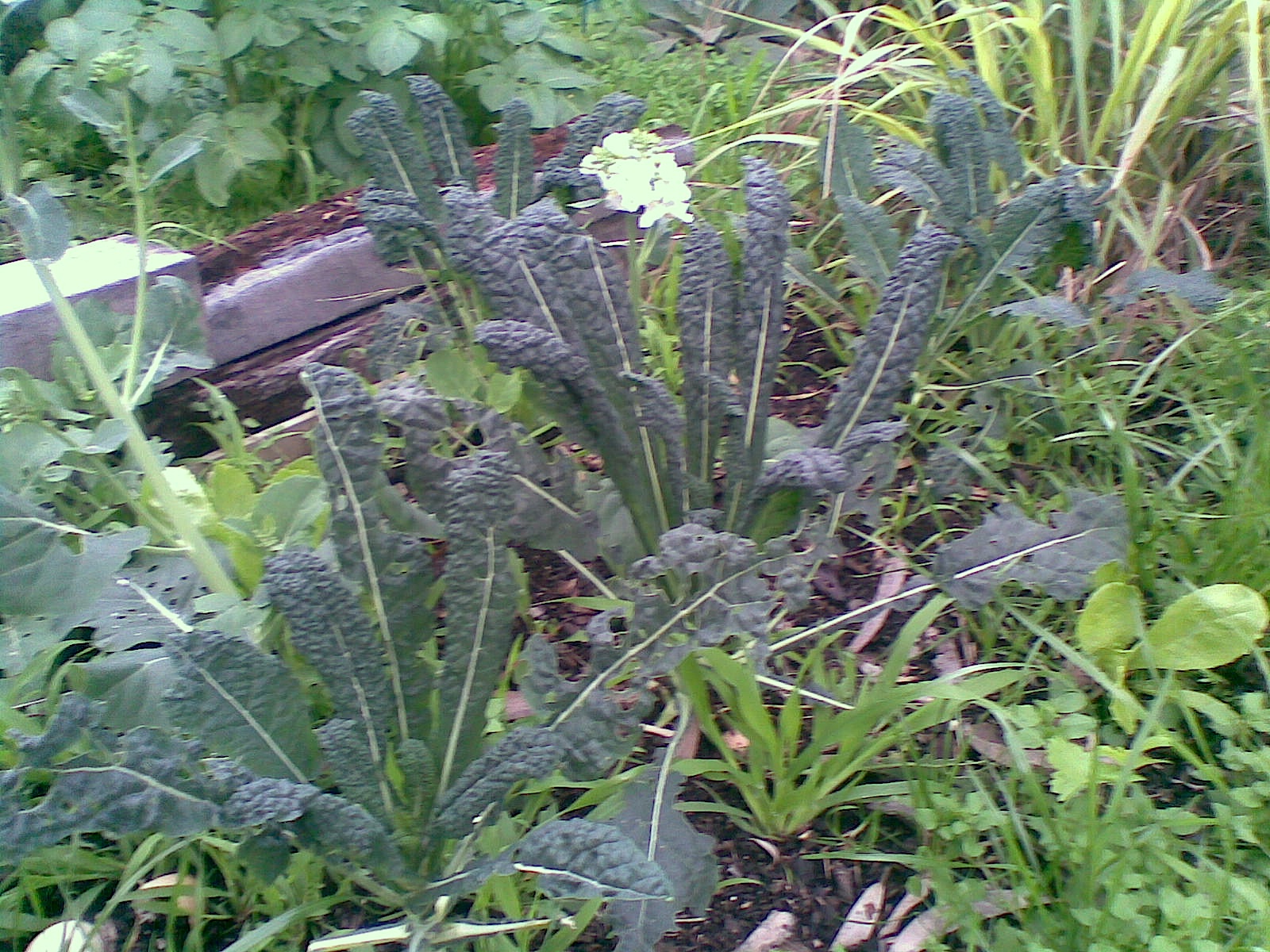
After being ravaged as seedlings the Kale has finally taken off!! As for the broccoli it bolted – but is now providing a nice bit of white to keep the cabbage butterfly away – although I think they’ve all gone for the winter!

Key Hole Garden


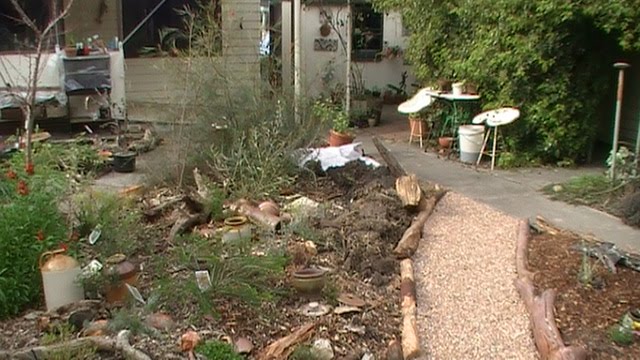
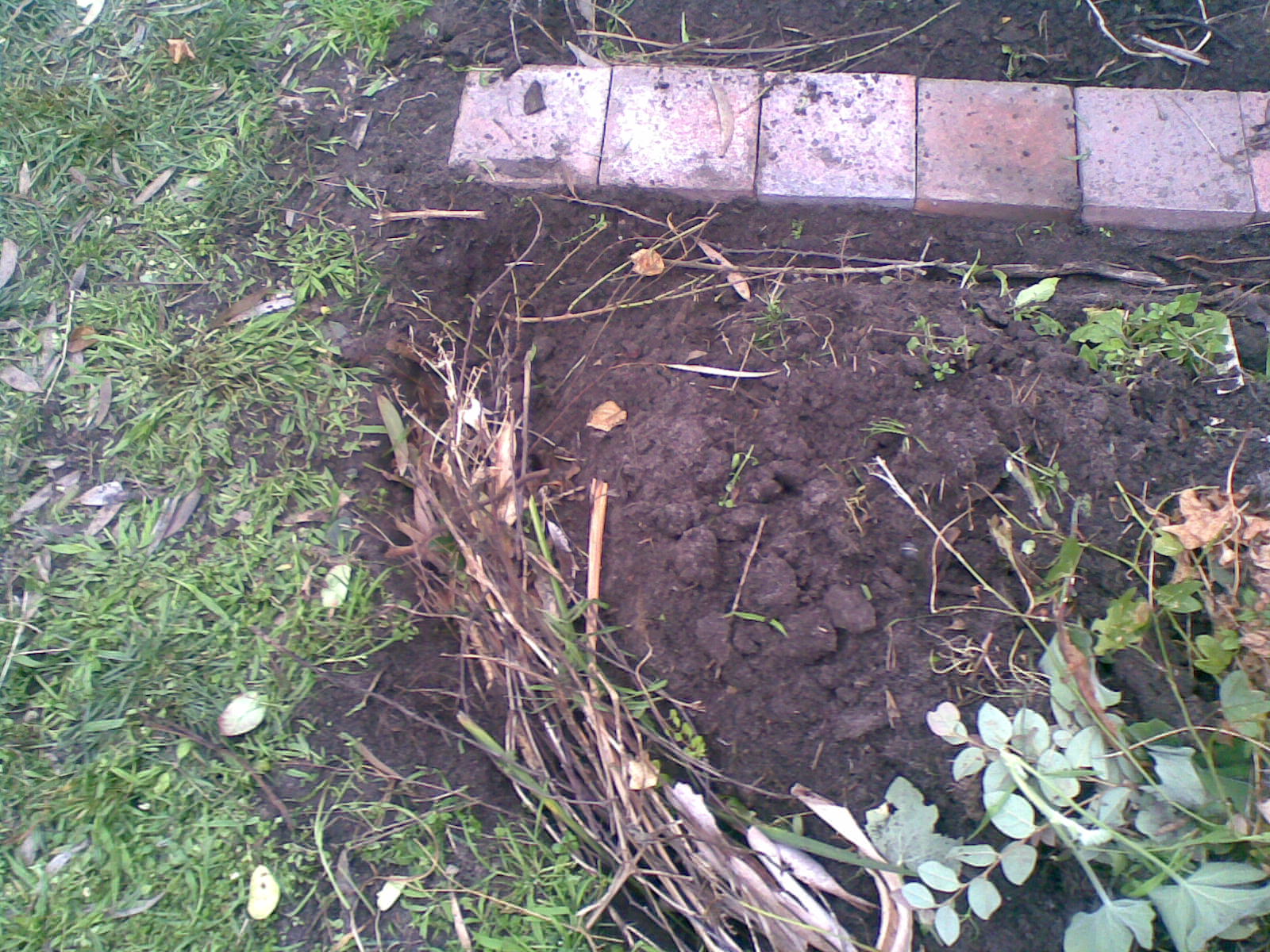
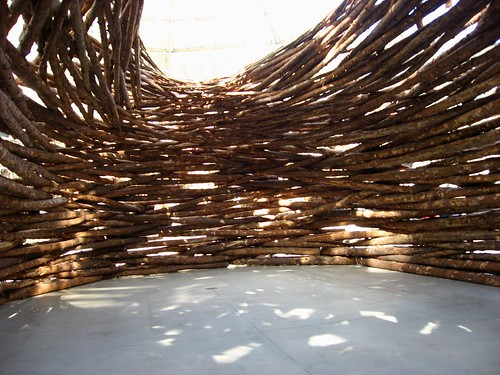
Well a weekend of no rain – meant getting the roses pruned and also finishing off preparations for the front key hole garden! I am determined to have produce in it by spring and the soil from the compost and piling cutting is looking great! After seeing the food forest at Southern Cross Permaculture Institute I got thinking about natural edging methods. Listening to Rick speak about the food source created by dead trees and hard cuttings I have decided to use ALL of the woody prunings that have piled up in the back garden as an edge. I am also going to use this method for the back keyhole garden also. So to make this work – I have edged the boundaries to make a ditch and cut the prunings into lengths to be stacked continuously around the circle and also around the edge of the ‘keyhole’ beside the pavers. This provides a use for a huge amount of waste – which would otherwise end up on the nature strip and will hopefully house helpful insects and healthy bacterias. I am yet to discover how well it will keep the weeds away – but if it is thickly stacked enough with plenty of small mixed in with large cuttings – hopefully it will work well. It will also work as a water catching mote when it rains! I am rather thrilled with this as I haven’t seen it anywhere else – but like all good ideas – probably it has been done before ! Most of all it just looks lovely – like a big nest in the middle of my garden waiting for life!

This brings to mind on of my favorite artists – Andy Goldsworthy and his use of ‘nesting’ spaces:

http://www.rwc.uc.edu/artcomm/web/w2005_2006/maria_Goldsworthy/TEST/index.html

Southern Cross Permaculture Institute


Queens Birthday weekend was spent at the Souther Cross Permaculture Institute taking the tour with Rick. It was fairly overwhelming to stand on the land – knowing that it had been flat grazing land just 16 or so years ago and that every tree planted had been done so by Rick and Naomi. The use of water as a Sun Catcher was the most impressive element that I came away with and have since been paying more attention to the reflection of water in even small things around the garden like bird baths. Photos and video to come!

Permaculture UK Video

A Farm for the Future

http://www.viddler.com/explore/PermaScience/videos/4/

After just having dug up my front lawn for my 1st key hole garden… I was feeling a little guilty when the permie interviewed in the above video described ploughing the land as practically skinning the earth! Cringe. OK I am going to have to live with my self – but I did discover that the recent efforts with the compost in this position has brought what was dead sandy soil to life in the past 6 months. Also the radish/NewZealand Spinach and Endive have self seeded in parts – which gives me a lot of hope for this patch.

Cabbage Butterfly Trap

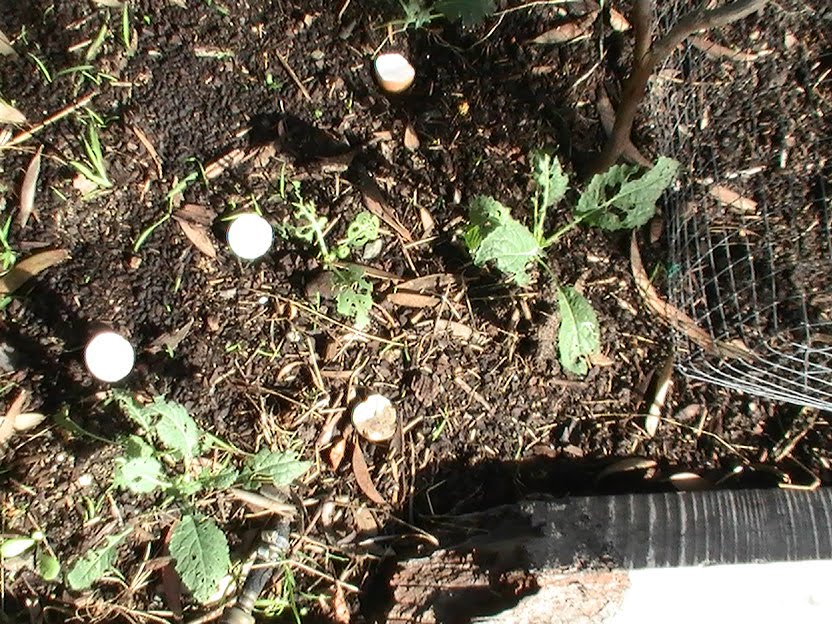
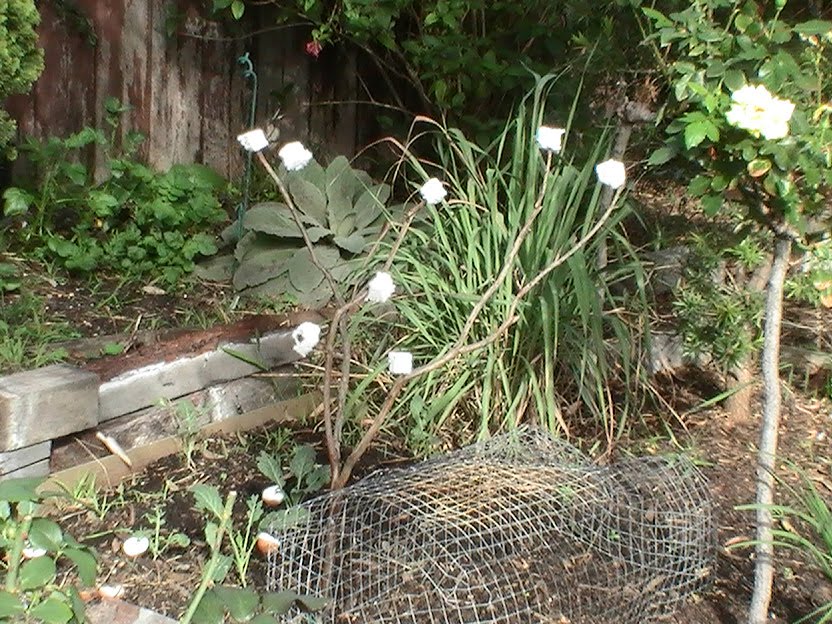
Recently at BAAG (Buleen Art and Garden) I learnt that if you tie white plastic bags to sticks the cabbage butterfly take it for another butterfly and will leave the area alone as they are territorial. Mimi has adopted this method with open egg shells which I have implemented.

Then yesterday walking the dog – I noticed that a large piece of polystyrene foam had blown up on my front garden. I put it straight in the bin and continued on my walk. Just a few paces in – I thought about how very white the foam was. Perfect for deterring cabbage butterflies – further down the walk I came across a lovely branch and decided it would make a perfect polystyrene tree. So with the tree and egg shells in place hopefully the catter-pillers will be kept at bay. This morning was the first morning that I have gone out and not had to pick any off the kale seedlings!

Moon Gardening

I have always wanted to tune into the moon phase and experiment with this method of gardening. Even if there is a sceptic in me (I have no material proof yet) it is a way to organise and plan my next step in the process.

Basic Guidelines

For Gardening purposes we divide the moon cycle into 4 phases. Divided in half these equate to the waxing and waning cycle.

WAXING 1st and 2nd Quater = Dark to Full (the period of growth – at this time the earth is releasing nutrients. Sap is pulled above ground)
WANING 3rd and 4th Quater = Returning from full to Dark (the period of rest, a good time to harvest root veg especially if you are in the earth sign)

How does this relate to New Moon?

1st Qtr New Moon
2nd Qtr Full Moon
3rd Qtr Full Moon
4th Qtr New Moon

Each qtr lasts for around 7 days

According to meterological records the highest amount of rain falls at full and new moon.

Think of the Moon as a growing organism itself – As the new moon grows, from darkness to light, the gravitational pull it has over life increases. After the full moon the gravitational pull decreases and the water table drops – encouraging the roots to dive down after it – creating strong roots growth.

What to do when

It is suggested that the full and new moon are a time of rest and reflection.

New Moon (12 hrs after dark moon to 1st qtr)
A time of balanced root and leaf growth
At this time don’t plant anything (wait until the light increases)

Beginning of 1st Qrt (cresent moon)
Start planting above ground annual crops that produce seeds outside of the fruit
To increase lawn growth – mow now
This is when the seeds swell with water and can germinate much more quickly)
Not a good time to harvest at your bounty will spoil more quickly

1st Quater
Plant leafy crops/cereals/grains and ‘above ground’ croppers – broccoli/lettuces
Start to sew seeds/ transplant seedlings/graft

late 1st Quater
(towards full, end of waning)
Plant seedy above-ground groups (tomatoe/cucumber/chilli/peppers)
Plant annuals/roses

2nd Quater (waxing)
Moonlight becomes stronger
A good planting time right up to the full moon

3rd Quater
Sew and plant root vegetables

4th Quater – graviational pull decreases
Prune/mow/landscape/maintenance/tidy

Any pruning at this time will retard growth (I have also heard that this applies to hair cuts!!!) So if you want to keep your lawn short for longer – now is the time!

Best Time to Harvest – just before the full moon

Full Moon
After full moon – Waning Begins – light decreases – energy goes into roots

Cancer Scorpio and Pisces are the best zodiac signs to plant during

Good Resources

http://www.abc.net.au/gardening/stories/s734935.htm

http://www.gardeningbythemoon.com/

Himalayan Institute – Soil to Soul

A marathon of ideas!

Very clear about his position and loved how he integrated the spiritual / political / economical / ecological.

From Soil to Soul Video Conference


Key topic of this conference include
-Value = intrinsic and extrinsic (social/spiritual/psychological and financial)
-Custodianship of the land
-Returning to ‘basic’ value and realising the potential of the past
-Selling the value of the project
-Self worth
-When what you need is seen as outside your self – you loose value and belief if your self.
-Bio fuel – its sources and uses
-Bio Gas
-Cake – the bio-product of pressing oil for bio fuel – makes a valuable fertilizer
-De-centralized bio gas production – returning the power to small scale projects


Weekend

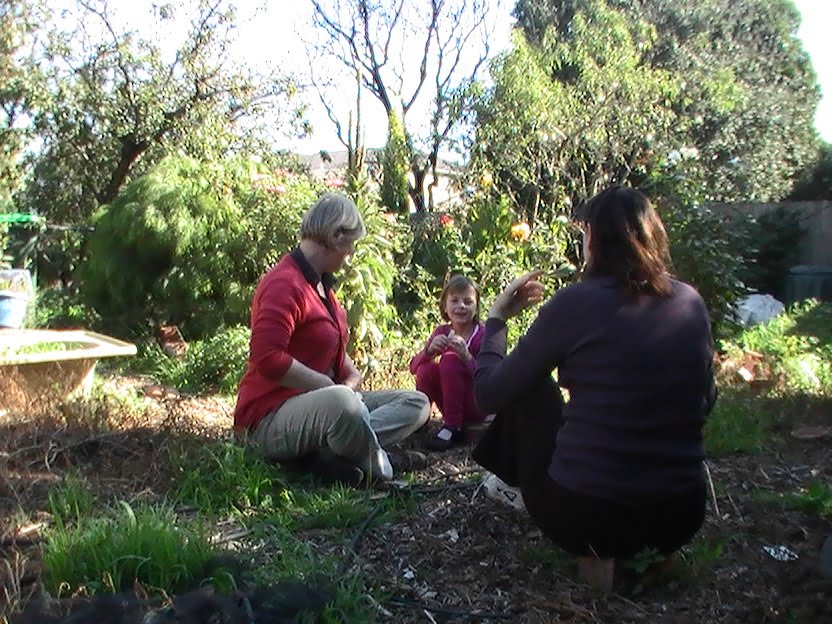
This weekend provided a great example of the importance of the garden as a social space. Shaynie’s studies have taken her into the realm of Steiner stories. The garden seemed like an ideal space to share. We found a shady spot – as it is a suprisingly hot April morning. I will consider making this a meeting circle in the plan.

Walking the Land


I want to approach the garden as I would a yoga practice.
The block of land has served as a yoga school for many years and its healing presence is well known by those who visit. It is important for me to work with this existing character. How the garden will impact on the yoga studio and how the students and the purpose of the land will impact the garden will be considered in the plan.

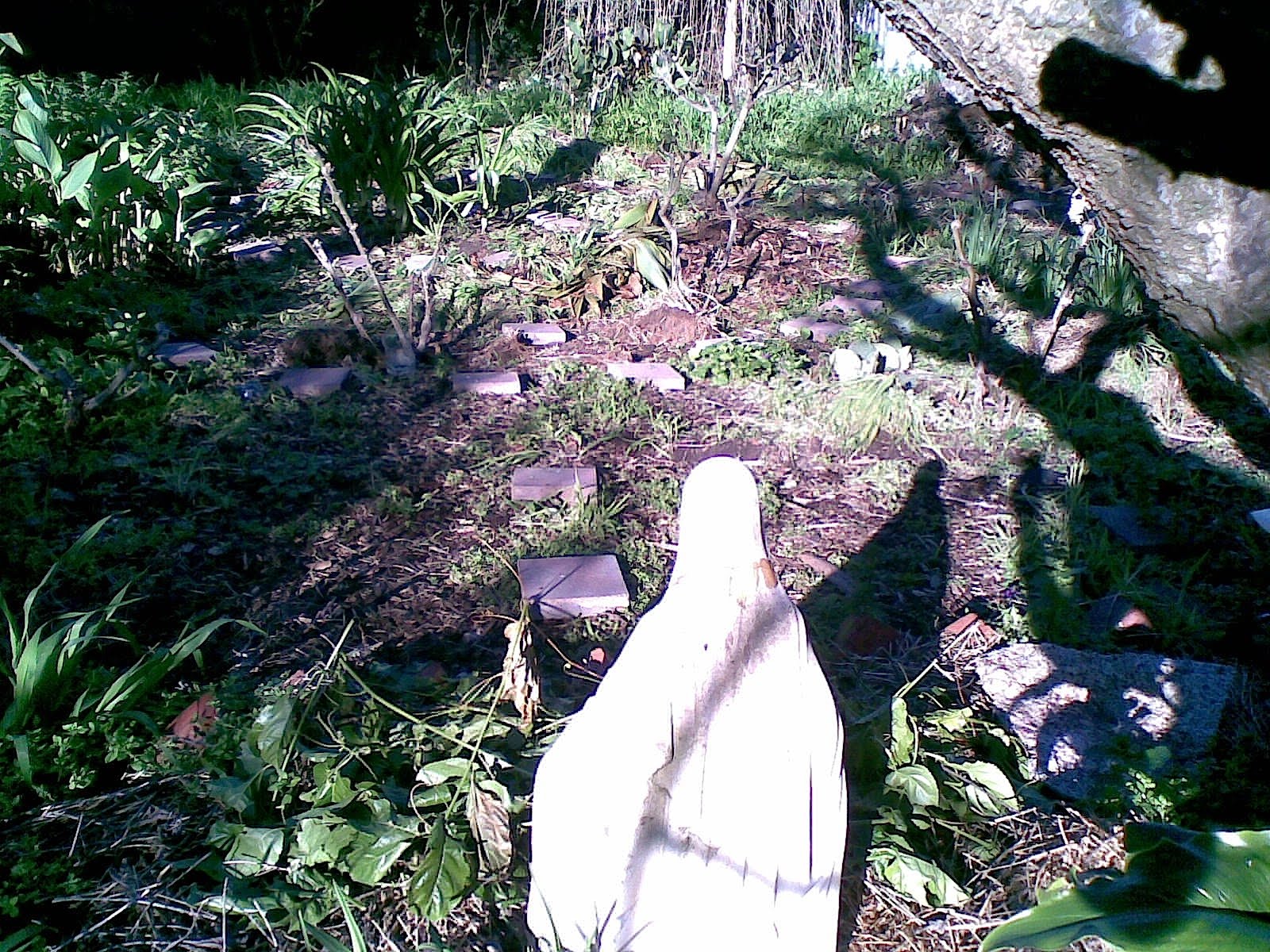
A walking meditation path and also a space for seated meditation has long been a vision for the garden. A large key-hole garden will be the main feature of the back garden (Zone 3). For this reason the walking path will have to move around and not through the garden as previously invisioned. The back left corner of the property must be accessible to council workers as there is a sewege access point here. A pavilion has been put in place over the man hole and currently a grape and chocko is growing beside the structure – waiting to be trained. This could be an ideal place in summer for seated meditation.

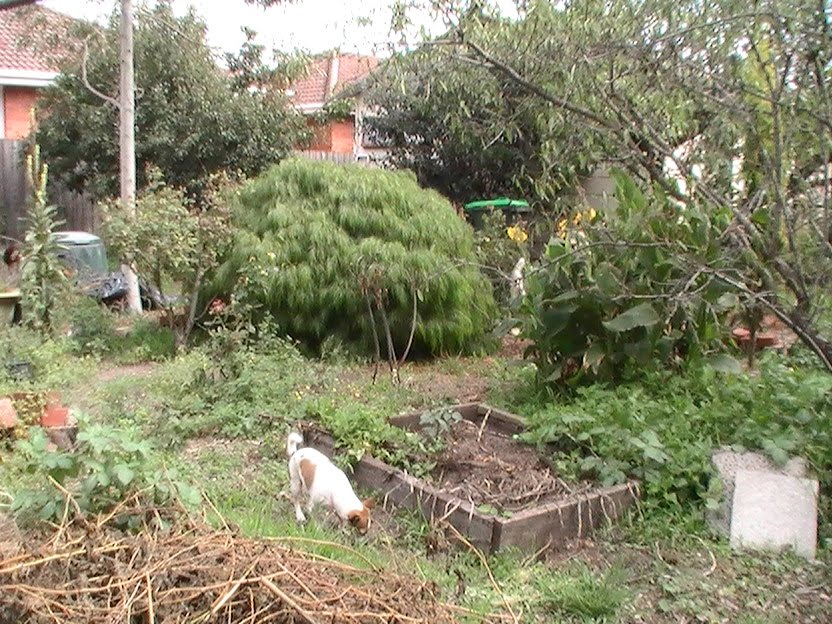
This photo captures the area where the main key hole bed is planned for. This the far end of the garden. The Cana-lillies and weeping native will have to be moved this Autumn/Winter.