The use of non-native, alongside native plants for a Permaculture design for working with the elements of water and fire: The Blogger’s Opinion
The use of fire (other than that started by lightening) developed not naturally, but was recognized by Indigenous Australians to assist in both hunting and promoting species that were essential to their diets (for example tubars)(1). This had significant ecological consequences that we are living with today and that have made back burning an integral element to responsible environmental management.
For the sake of this discussion I am examining an urban fringe property for modern day human inhabitants.
Permaculture is a system for human inhabited regions, urban, semi-urban and rural. The connection between Human/Nature is key to understanding why ‘exoitcs’ are selected and integrated into the design.
Permaculture was established in Tasmania in the shadow of the 1970’s bushfires and provided, a then radical, means to plant for both your needs (of food, fodder, timber, shelter) and for your protection (against fire, wind, flood). On a personal note – I know that the apple orchid which divided the national forest from a friend’s property in the Tarra Bulga National Forrest saved not only his life but the home that he had built and was determined to protect on Black Saturday. The radiation thrown off by the Blue Gums, which both line the street and ridge directly opposite his property, fried the Apple Orchid (which stoically has re-sprouted in places) and gave just that moments grace to continue spot fire management.
Exotics – is an interesting word. As a ‘white fella’ I am an ‘exotic’ to this land. Widen the scope… as only recent inhabitant of the planet ‘indigenous’ Australians could be considered exotic to the Australian Landscape. Their introduction of fire to the environment altered which species were suppressed and which were promoted for them to thrive and survive.
Within the context of the Victorian Forrest, the Blue Gum is a relatively young addition to the system – which has flourished in bush fire conditions, out numbering the more historic native Pines and Myrtles. Where do we draw the line between what belongs (regardless of its intrinsic value) and what is ‘exotic’, foreign and therefore displaced?
Nomenclature terms (native/non-native, exotic/natural) used for the naming of things and categorization are useful in creating clarity and understanding, and offer a chance to define a subject for the sake of argument. (I more than anyone love to stroll the Bot Gardens and see how creatively and beautifully they have divided and categorized the plant collection). However this classification of belonging vs displaced is entirely redundant, and in fact detrimental to forming deeper connection, understanding and discovering (now) critical advantages for everyday use of plant species.
Now more than ever – with population off the scale and our primary energy source (cheap oil) rapidly diminishing – we have to be savy if we want future generations to have half a chance at survival. This means avoiding “throwing the baby out with bath water”. Imagine a world where the plastics manufactured from cheap oil were valued as a precious resource. Compared with the gluttony we now are faced with. If we had acted with the foresight of treasuring oil rather than exploiting it, we would not be now facing the Peak Oil crisis which comes just 2 generation after the discovery of this incredible resource.
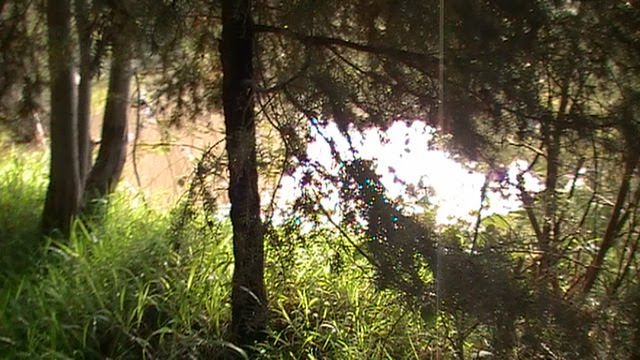
Back to the context of this discussion; along waterways and creeks Holmgren advocates for the acceleration, rather than reversal of the natural succession already in motion ‘towards a close canopy of deciduous trees that will reduce long term hazard, improve access and amenity and improve water quality … ”:
Past practice of promoting indigenous revegetation on private and public land in urban and urban fringe areas should be modified to prioritise low fire hazard and actively fire retardant species both native and non-native.(2)
This approach takes into account the events of history (colonization) and works to include the consequent changes to the environment within a managed system.
At long last the mainstream is catching on: “Aid is only temporary; lasting solutions are more likely to be found in community based projects that tap into existing economic models and to produce improvement” (Seeds of Hope: A Journey with Hugh Jackman, The Age Green Guide 16/09/10).
Much too late (in my opinion) – we are realising that we have to work with what we’ve got – and what we’ve got right now is a long-held inhabited and altered environment that was later colonized and dramatically changed once again. The linear time frame alone does not rationalize what plants are most appropriate for current day planning within an inhabited setting. The argument that this was here first therefore it must be the ‘natural’ state of things works against, rather than with what is right now in this very reality.
While at Bunnings today I read the label “I’m Aussie, be proud to plant me” – I thought yeah I am proud – but what does being “aussie” mean these days – it means much much more than “native”. And I think any Australian, Indigenous or Non-indigenous would agree we can learn and achieve more by working together and integrating the wisdom available – regardless of its category, label or status, much the same way that planting native next to non-native can offer a safer, healthier and smarter (not to mention more bio-diverse) eco-system. So long as it is done with discernment.
1 Saleh, A., (http://www.abc.net.au/science/news/stories/s1398157.htm)
2 Holmgren, D., ‘Flywire House; A case study in design against bushfire’.



 Soil to Stars