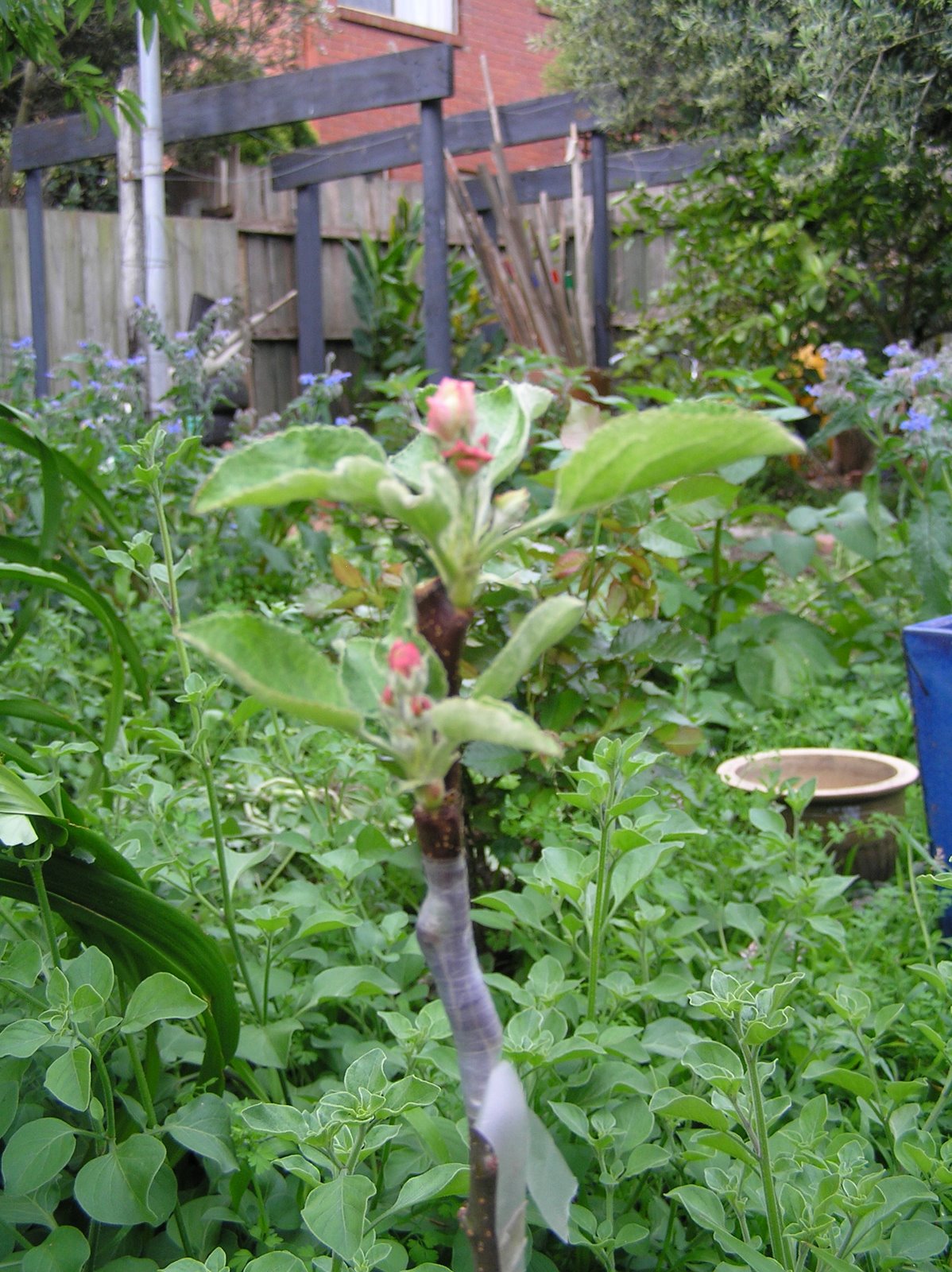
Its been just about a month and the grafting has been a success.
The objective for grafting came after a visit to Mama Longo’s garden last year. She wanted to have a graft of the plum tree we have here at the Miyoga Garden.
Unfortunately by the time the grafting workshop at BAAG was organised it was too late to graft Plums. Also Mama Longo didn’t have a plum so we have this weekend planted one ready to graft next year!
Some tips for Grafting sucess:
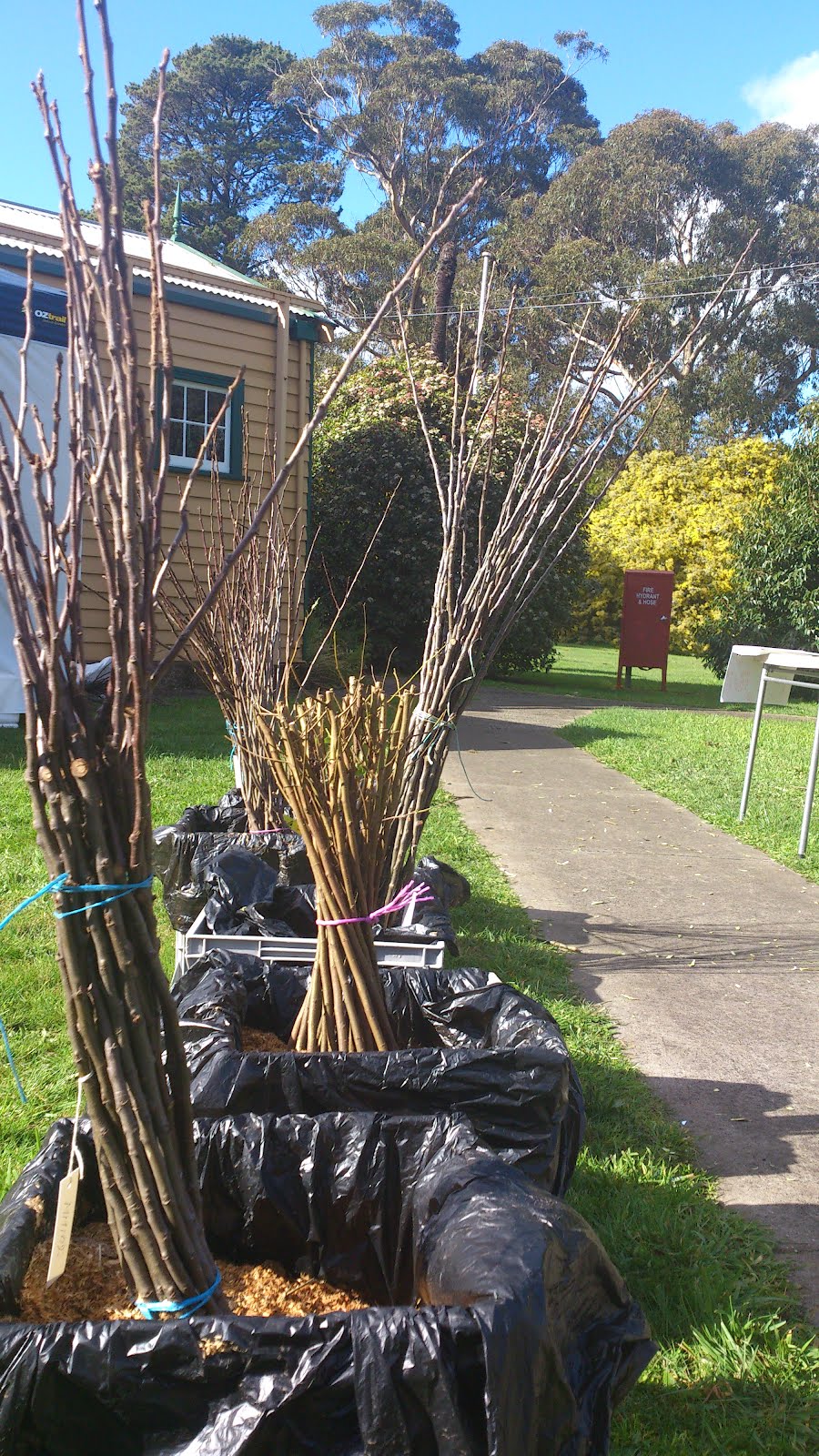
In the Southern Hemisphere July – August is the grafting season. When the sap is rising, the tree must be growing, not dormant, but also not flowering.
Drop flowers off below the graft as you don’t want them taking precious moisture away from the area.
For Soft Wood a cleft graft is recommended – for other woods a tongue and whip
Keep your grafting knife sterilised with a jar of 1/2 metho and 1/2 water – this is also a good practice for your pruning tools.
Dwarfing trees is made possible by intersecting a species with a segment of a dwarf stock. For example a Pear tree – grafted with a dwarf apple – followed once again by the pear species.
Use small plastic bags to seal the graft and keep moisture in – however watch the temperature on the day.
If you are north facing – then make the graft on the south side of the plant – so that it won’t be dried out too quickly.
Always remove buds off the root stock – otherwise it will take over.
Who goes with whom?
Apricot go with Plum
Citrus go with Citrus
Apple go with Pear
Quince go with Pear
Persimon go with Persimon
Plums go with Plums
Apples go with Apples
Nectarines go with peaches
Figs on with Loquot
Benefits of grafting include choosing root stock that is suitable to your land and conditions. For example if you are flood prone then you can grow on root stock that tolerates a wet soil and graft an apple that normally wouldn’t survive these conditions.
It also assists in cross pollination and allows for a longer fruiting season. Ideally you could have an apple tree that provides fruit all year round! A challenge.

 Soil to Stars