 Gardening for renters can be a fruitful experience with a little planning and some open discussion with your agent. With a series of heat waves and all of my transplanted plants already showing the stress of being uprooted I was looking for an alternative to slowly dying pot plants. When I constructed this raised veggie bed I began to realise the cost of filling it with enough quality compost was going to out way the benefits of growing my own greens. So by interplanting established pot plants within the veggie bed, I have not only cut back on the amount of soil needed, but also provided some shade for my soon to arrive seedlings and provided the pots with some insulation from evaporation. It also means year round green and diversity for me to look out at while admiring my veggies. Here are the steps I took:
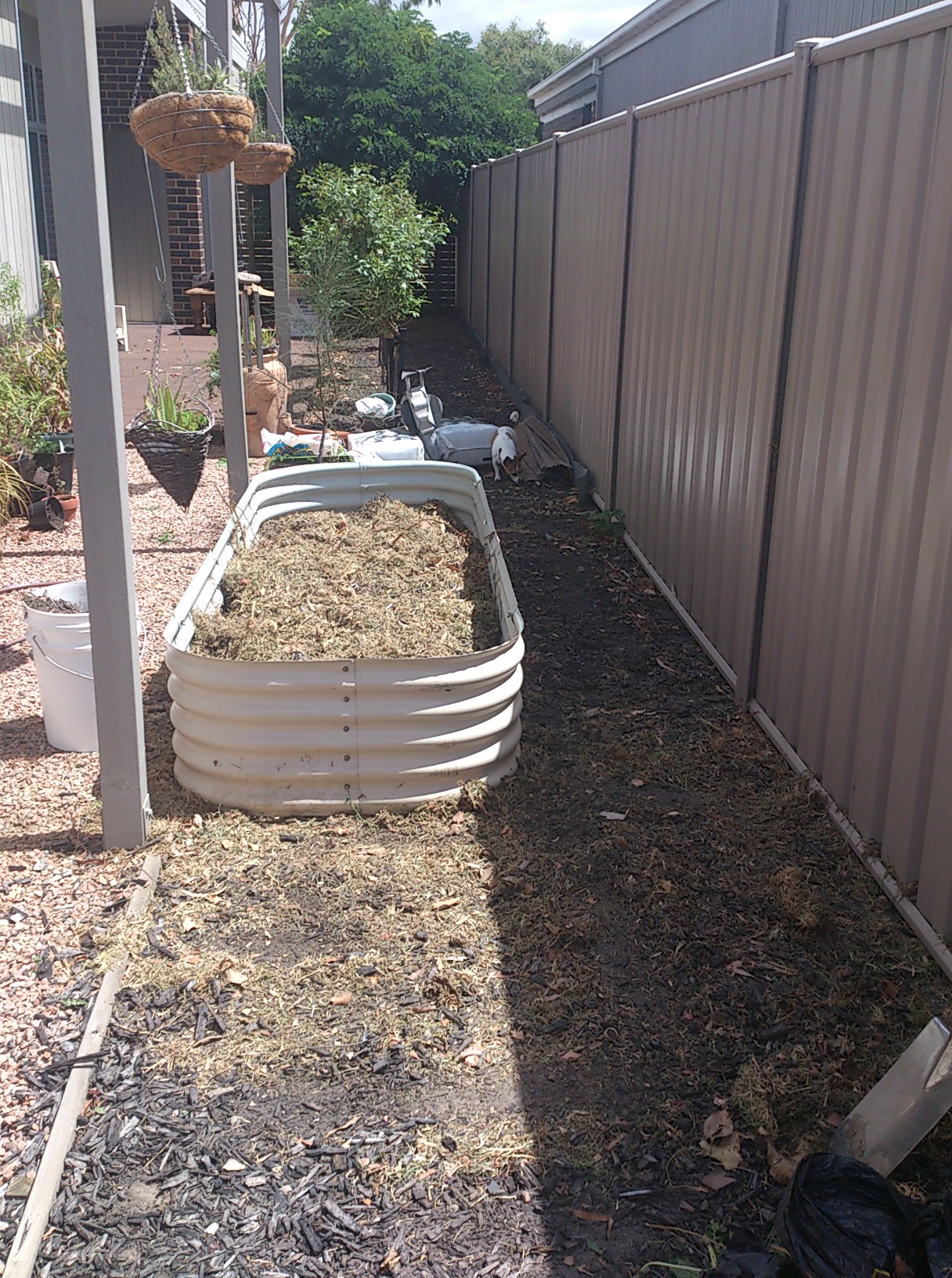
Step 1: Begin to collect lawn clippings.
Keep half of them in sealed garbage bags with several holes in the bottom, this will break down quickly; keep the other half unsealed to dry for more bulk. Mix both piles with animal manure to balance the PH levels. Hose this layer down thoroughly.

Step 2:
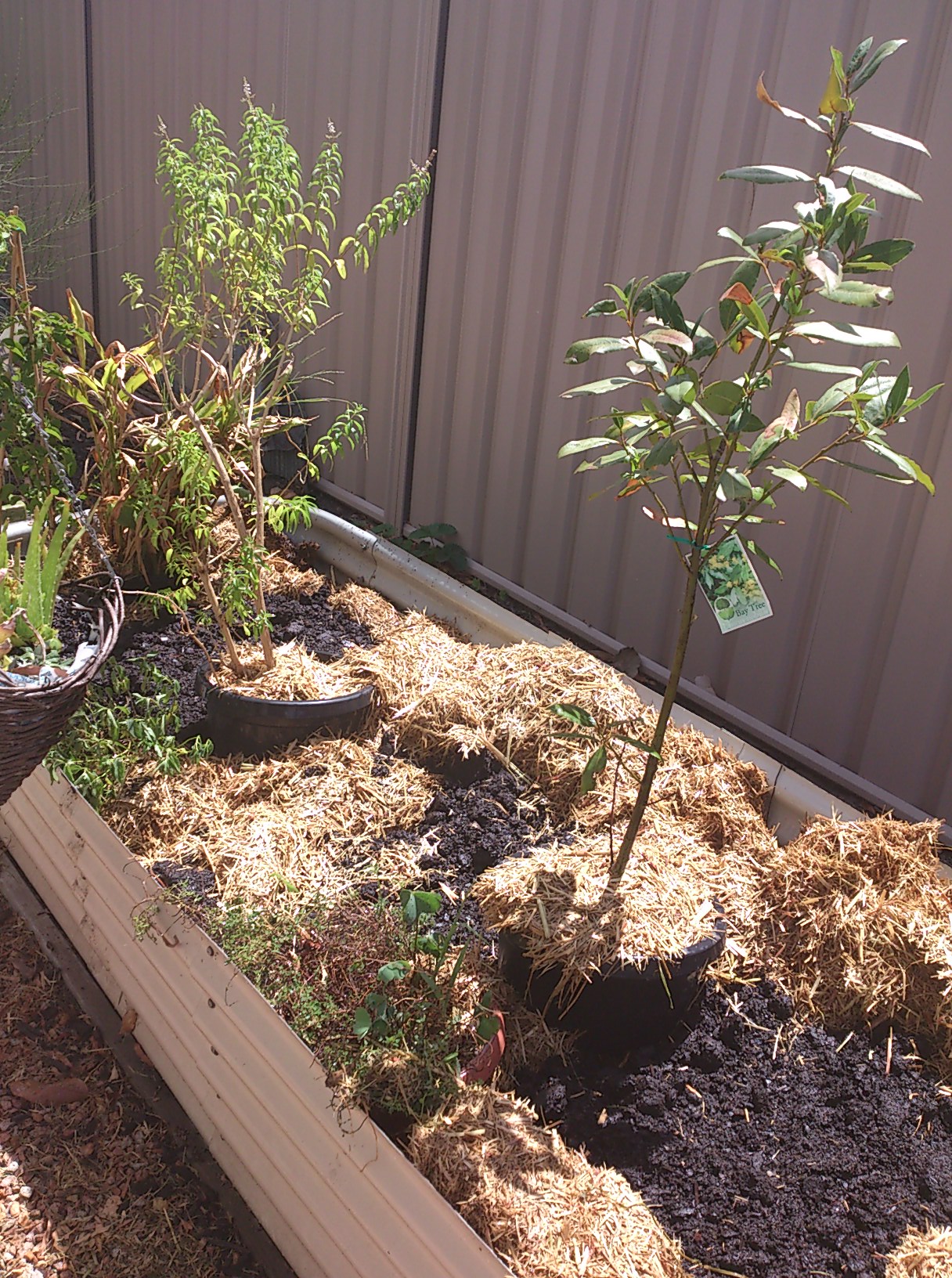
Once the grass clippings reach half way up the veggie bed place the bags of compost where you will be planting your seedings or seeds. Then place your potter plants around them keeping in mind shade lines and companion planting techniques. Hose this layer down
Step 3:
Pile sugar cane mulch or lucern around the boundaries of the soil, walling them in and insulating the edges. Then empty the compost into the holes formed. To this compost add organic fertilisers and wetting agents (coffee grinds are a great alternative to the manufactured varieties). Hose thoroughly and get planting!!!
 Soil to Stars